Laboratory of Pharmacology, School of Pharmacy, Nihon University, 7-7-1 Narashinodai, Funabashi-shi, Chiba 274-8555, Japan.
Oxid Med Cell Longev. 2020 Jan 11;2020:6101838. doi: 10.1155/2020/6101838. eCollection 2020.
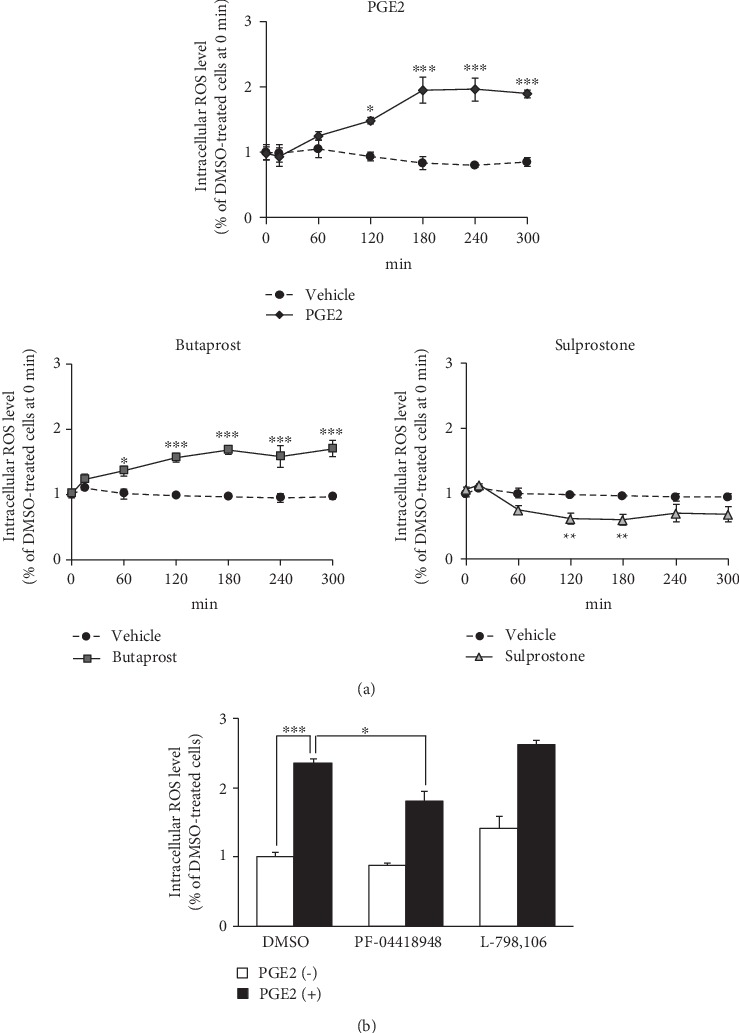
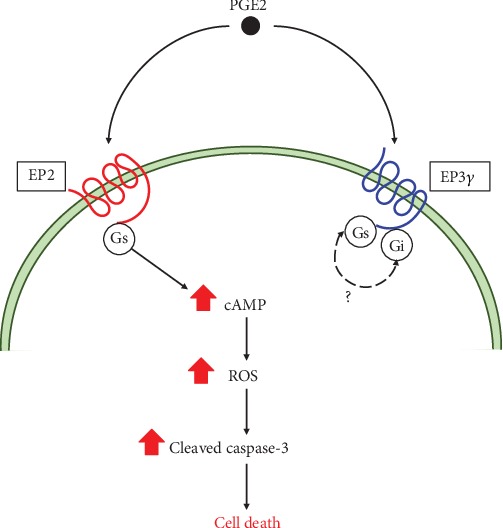
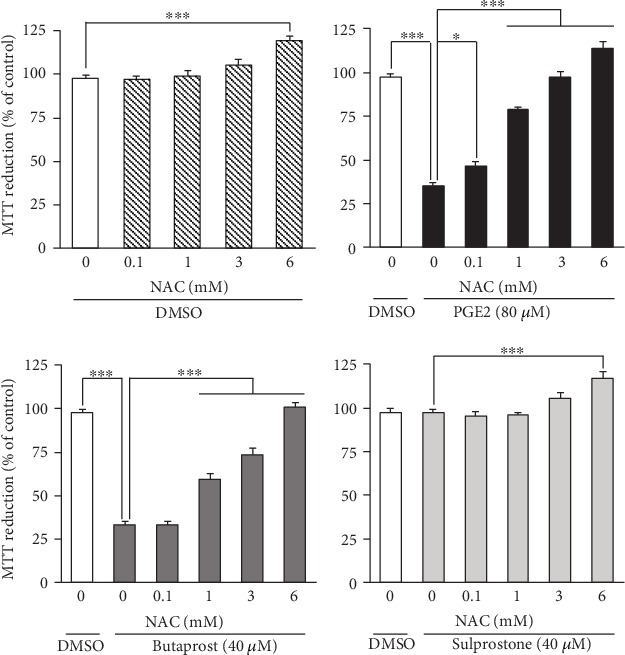
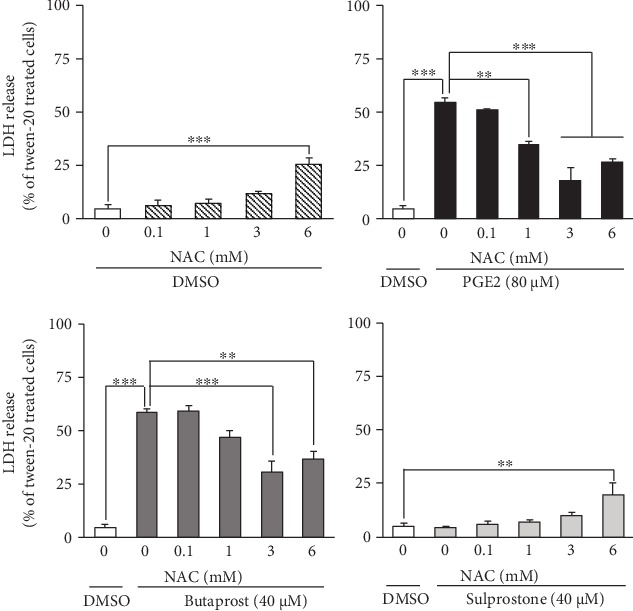
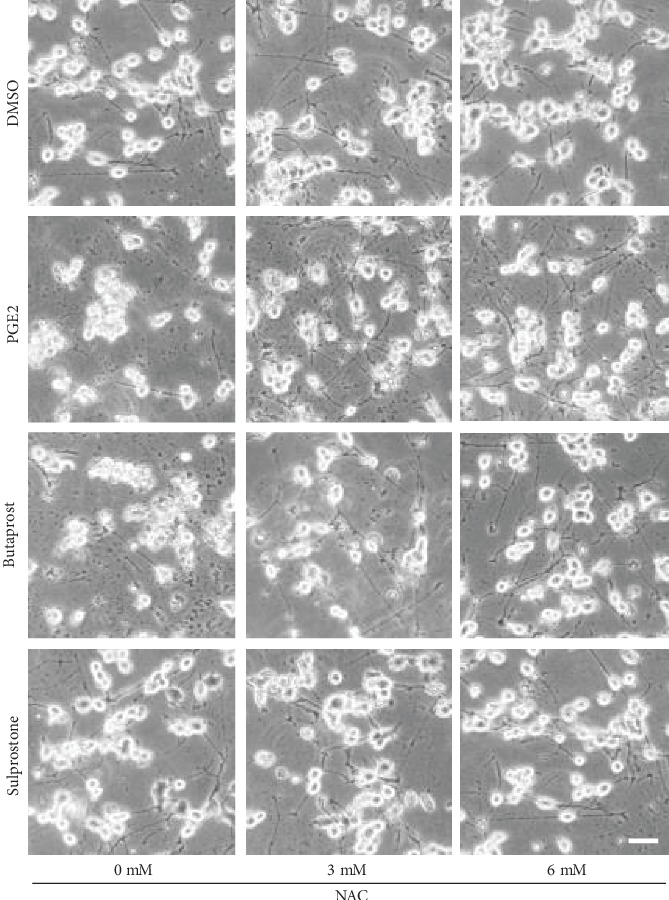
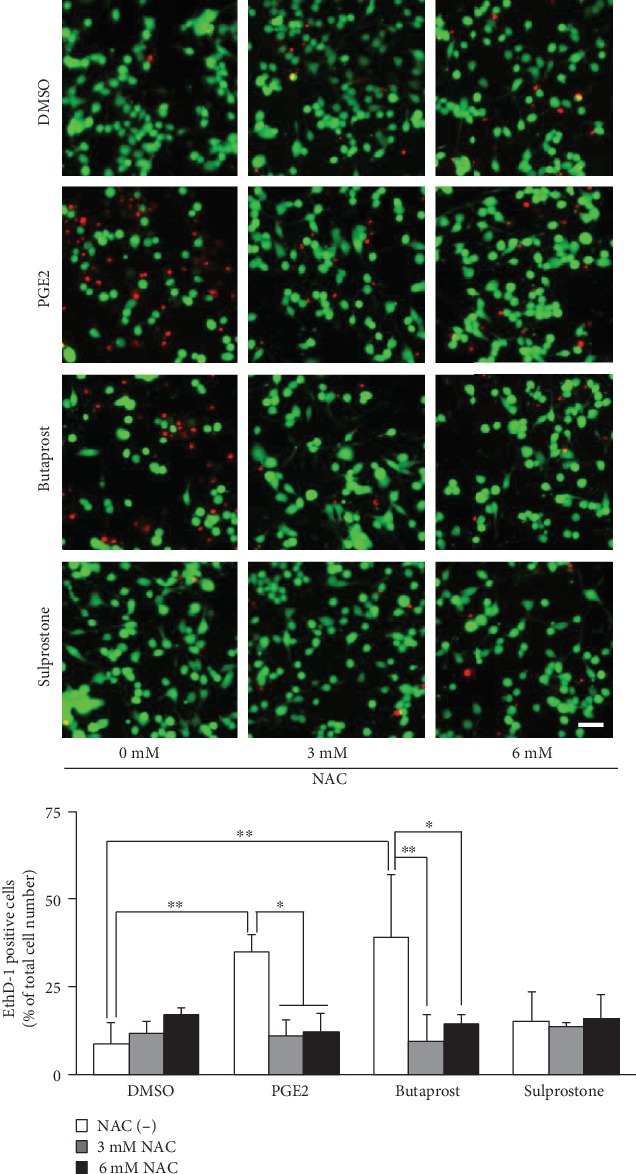
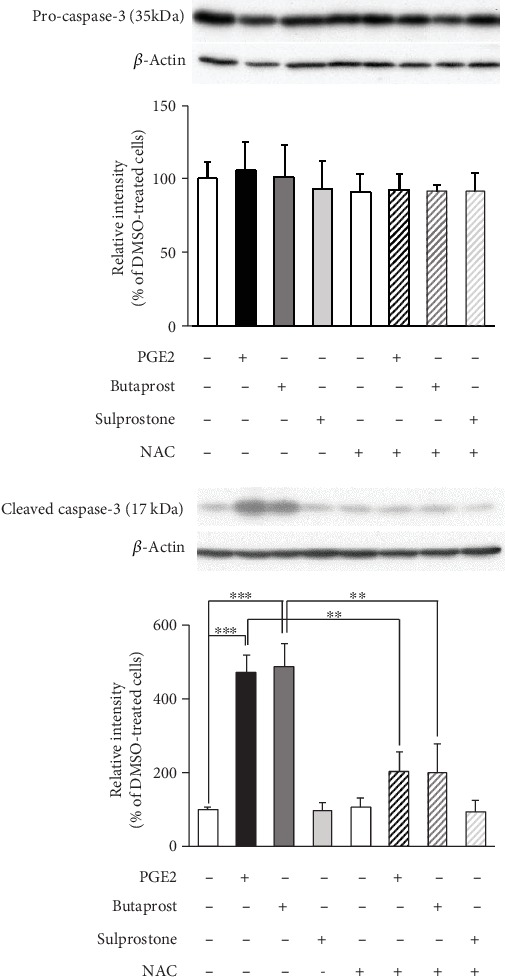
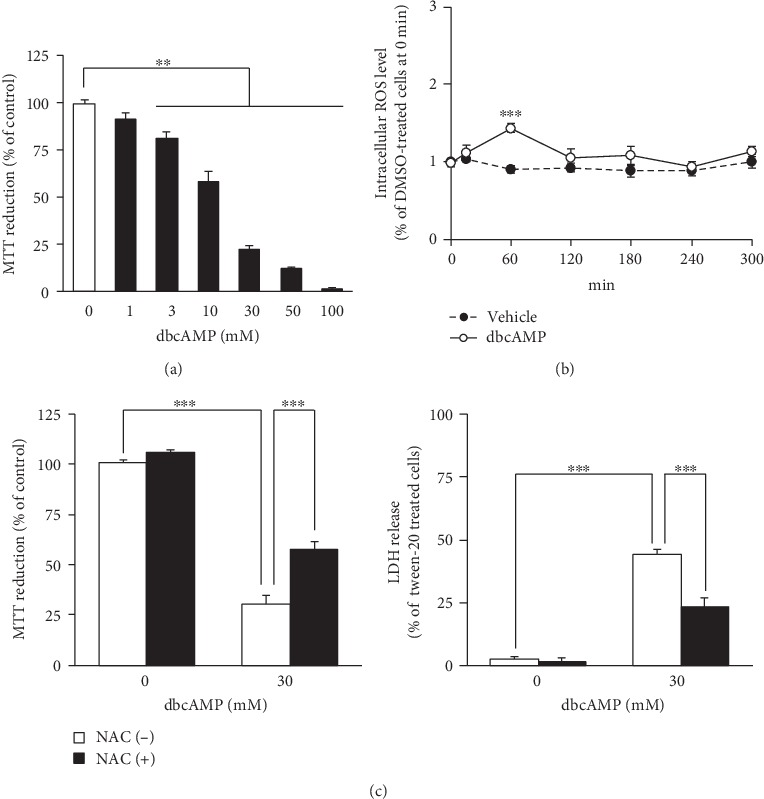
Amyotrophic lateral sclerosis (ALS) is a devastating motor neuron disease characterized by progressive degeneration of motor neurons in the central nervous system. Prostaglandin E2 (PGE2) plays a pivotal role in the degeneration of motor neurons in human and transgenic models of ALS. We have shown previously that PGE2 directly induces neuronal death through activation of the E-prostanoid (EP) 2 receptor in differentiated NSC-34 cells, a motor neuron-like cell line. In the present study, to clarify the mechanisms underlying PGE2-induced neurotoxicity, we focused on generation of intracellular reactive oxygen species (ROS) and examined the effects of N-acetylcysteine (NAC), a cell-permeable antioxidant, on PGE2-induced cell death in differentiated NSC-34 cells. Dichlorofluorescein (DCF) fluorescence analysis of PGE2-treated cells showed that intracellular ROS levels increased markedly with time, and that this effect was antagonized by a selective EP2 antagonist (PF-04418948) but not a selective EP3 antagonist (L-798,106). Although an EP2-selective agonist, butaprost, mimicked the effect of PGE2, an EP1/EP3 agonist, sulprostone, transiently but significantly decreased the level of intracellular ROS in these cells. MTT reduction assay and lactate dehydrogenase release assay revealed that PGE2- and butaprost-induced cell death were each suppressed by pretreatment with NAC in a concentration-dependent manner. Western blot analysis revealed that the active form of caspase-3 was markedly increased in the PGE2- and butaprost-treated cells. These increases in caspase-3 protein expression were suppressed by pretreatment with NAC. Moreover, dibutyryl-cAMP treatment of differentiated NSC-34 cells caused intracellular ROS generation and cell death. Our data reveal the existence of a PGE2-EP2 signaling-dependent intracellular ROS generation pathway, with subsequent activation of the caspase-3 cascade, in differentiated NSC-34 cells, suggesting that PGE2 is likely a key molecule linking inflammation to oxidative stress in motor neuron-like NSC-34 cells.
肌萎缩侧索硬化症(ALS)是一种毁灭性的运动神经元疾病,其特征是中枢神经系统中的运动神经元进行性退化。前列腺素 E2(PGE2)在人类和 ALS 转基因模型中的运动神经元退化中起着关键作用。我们之前已经表明,PGE2 通过在分化的 NSC-34 细胞(一种类似于运动神经元的细胞系)中激活 E-前列腺素(EP)2 受体直接诱导神经元死亡。在本研究中,为了阐明 PGE2 诱导的神经毒性的机制,我们专注于细胞内活性氧物种(ROS)的产生,并研究了 N-乙酰半胱氨酸(NAC)对 PGE2 诱导的分化 NSC-34 细胞死亡的影响,NAC 是一种细胞可渗透的抗氧化剂。用 PGE2 处理的细胞的二氯荧光素(DCF)荧光分析表明,细胞内 ROS 水平随时间显著增加,这种作用被选择性 EP2 拮抗剂(PF-04418948)拮抗,但不被选择性 EP3 拮抗剂(L-798,106)拮抗。虽然 EP2 选择性激动剂,但普司特模拟了 PGE2 的作用,而 EP1/EP3 激动剂舒前列素则短暂但显著降低了这些细胞内 ROS 的水平。MTT 还原测定和乳酸脱氢酶释放测定表明,PGE2 和但普司特诱导的细胞死亡均通过 NAC 预处理呈浓度依赖性抑制。Western blot 分析表明,PGE2 和但普司特处理的细胞中 caspase-3 的活性形式明显增加。NAC 预处理可抑制 caspase-3 蛋白表达的增加。此外,二丁酰环磷酸腺苷处理分化的 NSC-34 细胞引起细胞内 ROS 生成和细胞死亡。我们的数据揭示了在分化的 NSC-34 细胞中存在 PGE2-EP2 信号依赖性细胞内 ROS 生成途径,随后激活 caspase-3 级联,表明 PGE2 可能是将炎症与运动神经元样 NSC-34 细胞中的氧化应激联系起来的关键分子。