Malik Hammad, Sarkar Sayan, Mohanty Swomitra, Carlson Krista
Department of Materials Science and Engineering, University of Utah, Salt Lake City, Utah, 84112, USA.
Department of Chemical Engineering, University of Utah, Salt Lake City, Utah, 84112, USA.
Sci Rep. 2020 May 15;10(1):8050. doi: 10.1038/s41598-020-64918-0.
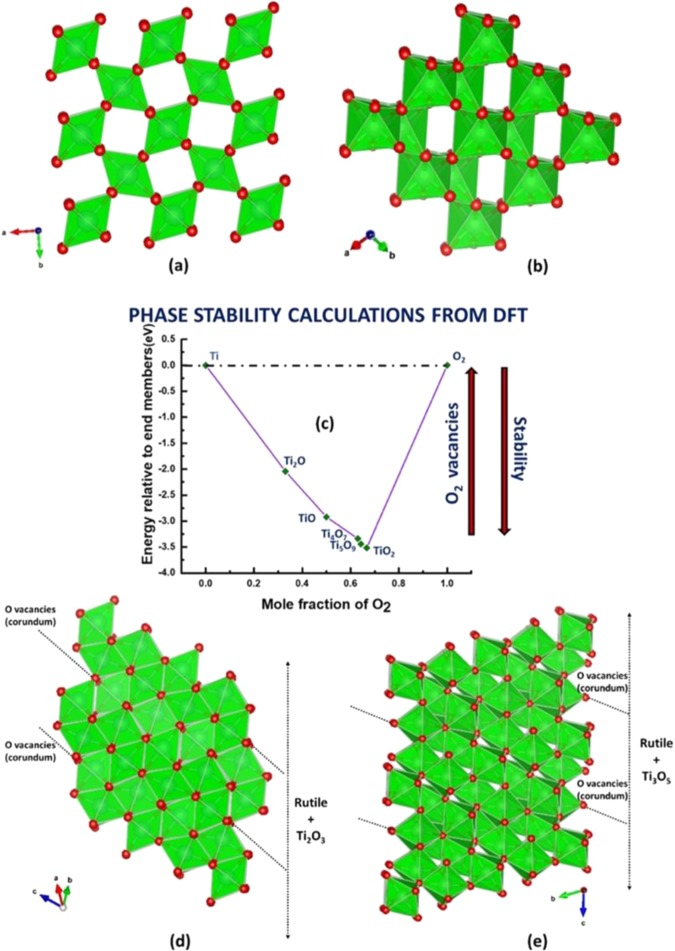
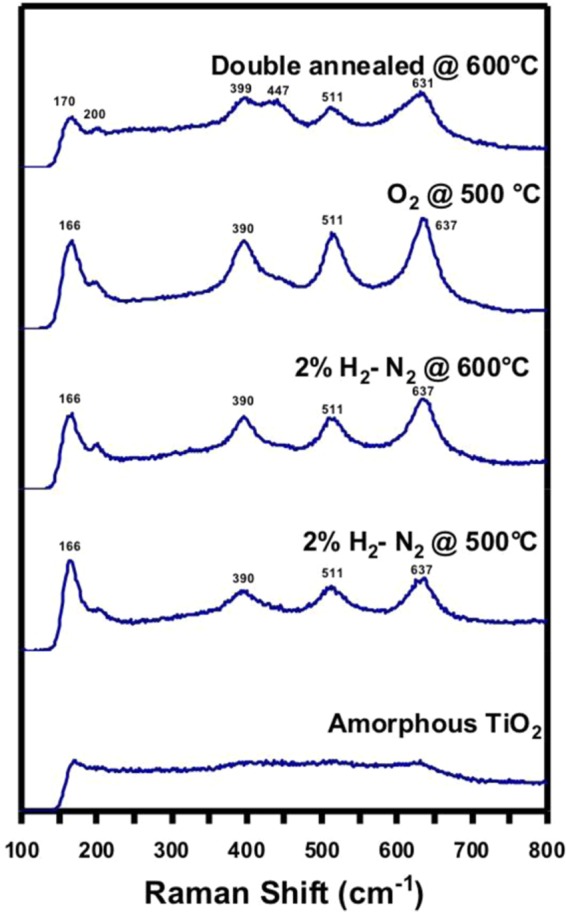
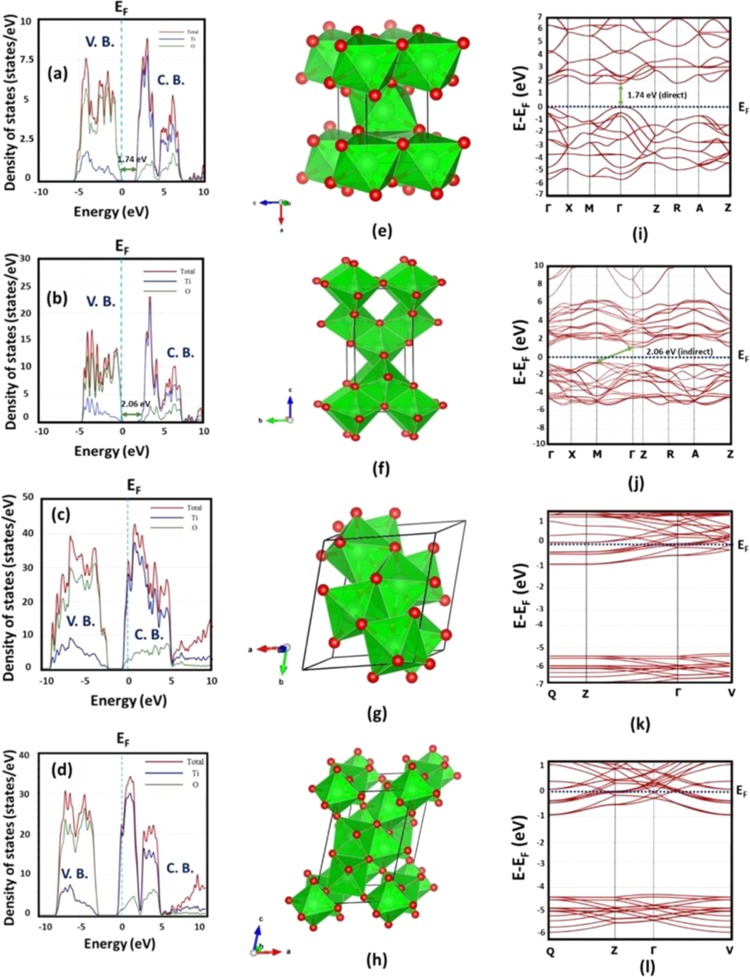
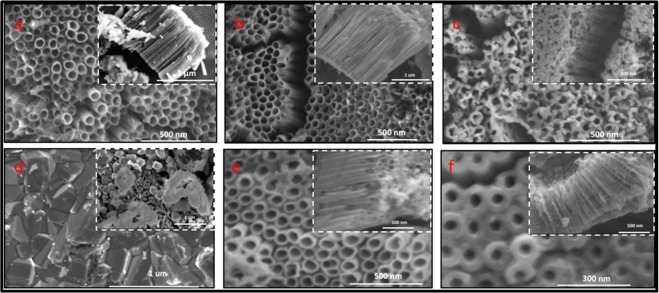
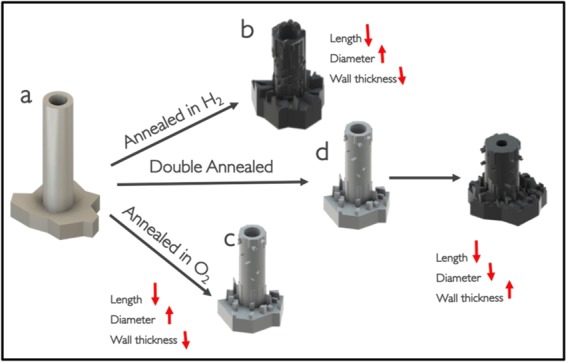
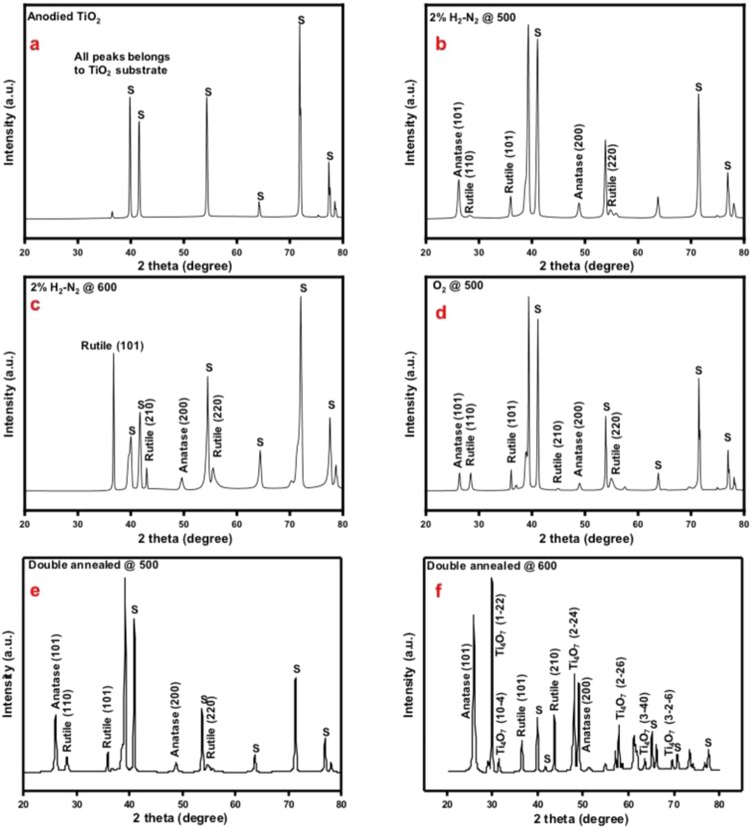
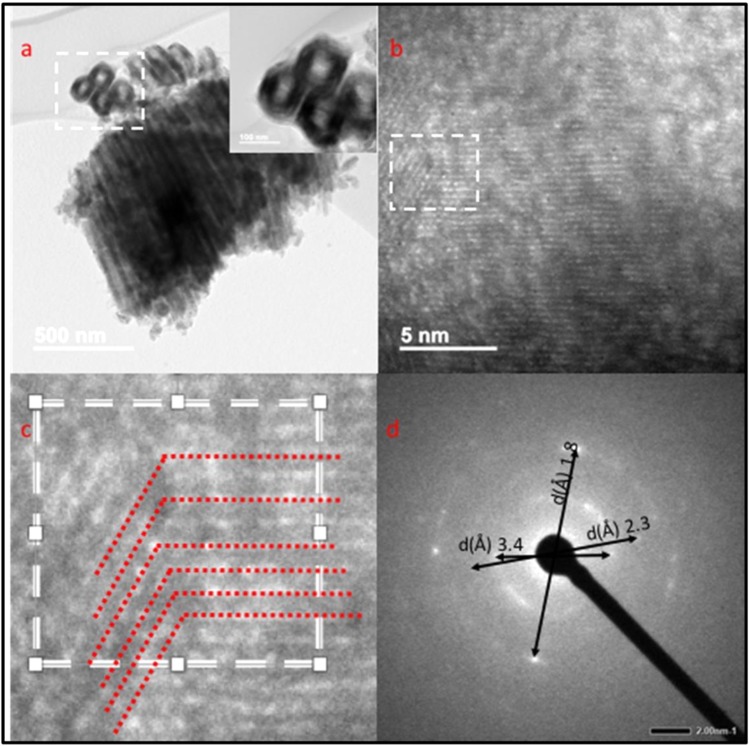
The presence of Magnéli phases in titanium oxide nanotubes (NTs) can open up frontiers in many applications owing to their electrical and optical properties. Synthesis of NTs with Magnéli phases have posed a challenge due to the degradation and loss of morphology in NTs upon high-temperature treatments (>600 °C) in a reducing environment. This study reports on the synthesis of anodically formed NTs containing Magnéli phases through a double annealing route: oxygen (O) annealing followed by annealing in 2% hydrogen with a nitrogen balance (2%H-N). The nucleation, growth, and transformation of anodized amorphous NTs into crystalline phases was investigated. The NTs obtained through this route were highly ordered and composed of mixed phases of anatase, rutile, and the Magnéli phase (TiO). Experimental results from scanning electron microscopy (SEM), X-ray diffraction (XRD), scanning transmission electron microscopy (S/TEM), and Raman spectroscopy were combined with first principle calculations to develop an understanding of the sequential phase transformations during annealing. A predictive model was developed using density functional theory (DFT) to potentially predict the titanium oxides formed and their stability with reference to the mole fraction of oxygen. The change in the density of states (DOS), band structure, optical properties, and stability of phases are also discussed using DFT simulations. The combination of experimental characterization and modelling helped to understand the nucleation of anatase and rutile and the reorganization of these phases to form Magnéli phases on the anodized amorphous NTs through annealing treatment.
由于其电学和光学性质,氧化钛纳米管(NTs)中Magnéli相的存在可为许多应用开辟新领域。由于在还原环境中进行高温处理(>600°C)时NTs会发生降解和形态损失,因此合成含有Magnéli相的NTs颇具挑战性。本研究报告了通过双重退火路线合成含Magnéli相的阳极形成NTs:先进行氧(O)退火,然后在含2%氢气和氮气平衡的气氛(2%H-N)中退火。研究了阳极氧化非晶NTs的成核、生长以及向晶相的转变。通过该路线获得的NTs高度有序,由锐钛矿、金红石和Magnéli相(TiO)的混合相组成。将扫描电子显微镜(SEM)、X射线衍射(XRD)、扫描透射电子显微镜(S/TEM)和拉曼光谱的实验结果与第一性原理计算相结合,以深入了解退火过程中的连续相变。利用密度泛函理论(DFT)建立了一个预测模型,以潜在地预测形成的钛氧化物及其相对于氧摩尔分数的稳定性。还使用DFT模拟讨论了态密度(DOS)、能带结构、光学性质和相稳定性的变化。实验表征与建模相结合,有助于理解锐钛矿和金红石的成核以及这些相通过退火处理在阳极氧化非晶NTs上重新组织形成Magnéli相的过程。