Shanghai Mental Health Center, Shanghai Jiao Tong University School of Medicine, Shanghai 200030, China.
Department of Integrative Medicine, Shanghai Public Health Clinical Center, Fudan University, Shanghai 201508, China; Graduate School, Nanjing University of Chinese Medicine, Nanjing 210046, China.
Brain Behav Immun. 2020 Aug;88:17-27. doi: 10.1016/j.bbi.2020.05.038. Epub 2020 May 19.
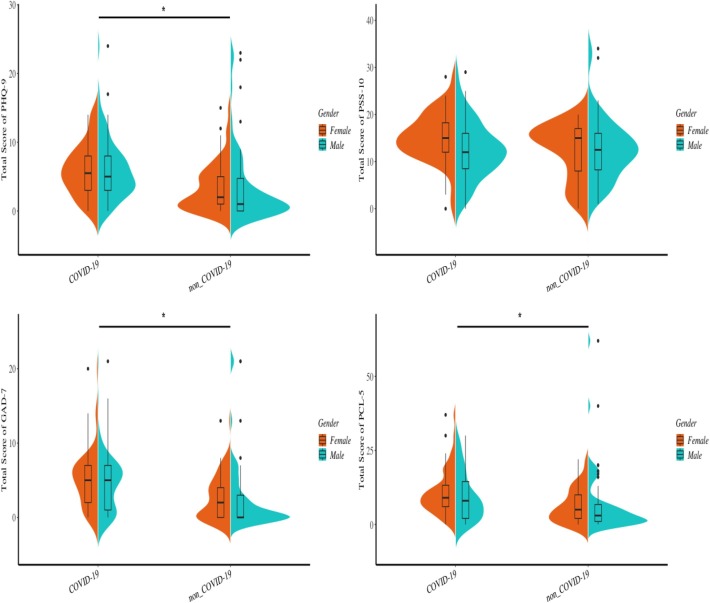
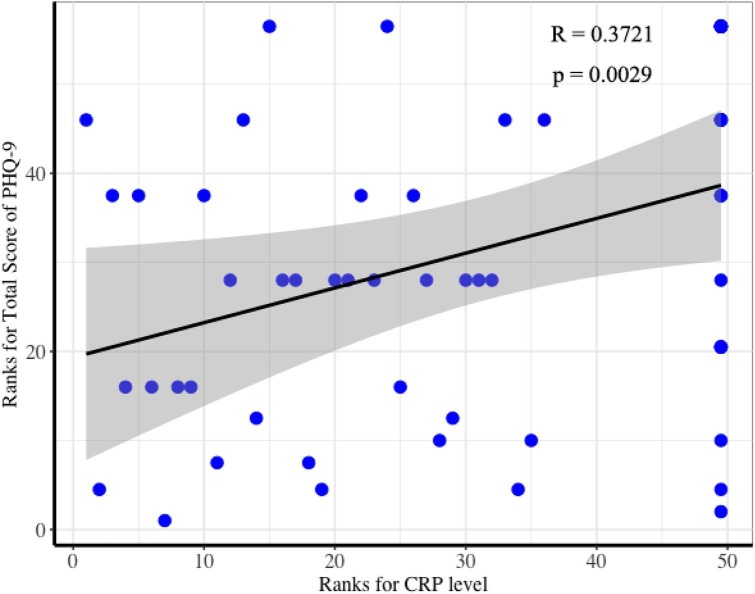
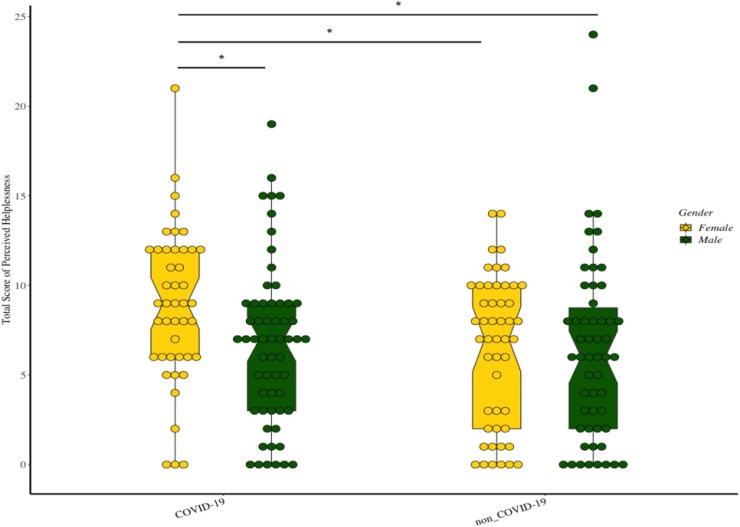
Since the end of 2019, Corona Virus Disease 2019 (COVID-19) has been the cause of a worldwide pandemic. The mental status of patients with COVID-19 who have been quarantined and the interactions between their psychological distress and physiological levels of inflammation have yet to be analyzed. Using a mixed-method triangulation design (QUAN + QUAL), this study investigated and compared the mental status and inflammatory markers of 103 patients who, while hospitalized with mild symptoms, tested positive with COVID-19 and 103 matched controls that were COVID-19 negative. The severity of depression, anxiety, and post-traumatic stress symptoms (PTSS) was measured via an on-line survey. Using a convenience sampling technique, qualitative data were collected until the point of data saturation. In addition, a semi-structured interview was conducted among five patients with COVID-19. Peripheral inflammatory markers were also collected in patients, both at baseline and within ± three days of completing the on-line survey. Results revealed that COVID-19 patients, when compared to non-COVID controls, manifested higher levels of depression (P < 0.001), anxiety (P < 0.001), and post-traumatic stress symptoms (P < 0.001). A gender effect was observed in the score of "Perceived Helplessness", the subscale of PSS-10, with female patients showing higher scores compared to male patients (Z = 2.56, P = 0.010), female (Z = 2.37, P = 0.018) and male controls (Z = 2.87, P = 0.004). Levels of CRP, a peripheral inflammatory indicator, correlated positively with the PHQ-9 total score (R = 0.37, P = 0.003, Spearman's correlation) of patients who presented symptoms of depression. Moreover, the change of CRP level from baseline inversely correlated with the PHQ-9 total score (R = -0.31, P = 0.002), indicative of improvement of depression symptoms. Qualitative analysis revealed similar results with respect to patient reports of negative feelings, including fear, guilt, and helplessness. Stigma and uncertainty of viral disease progression were two main concerns expressed by COVID-19 patients. Our results indicate that significant psychological distress was experienced by hospitalized COVID-19 patients and that levels of depressive features may be related to the inflammation markers in these patients. Thus, we recommend that necessary measures should be provided to address depression and other psychiatric symptoms for COVID-19 patients and attention should be paid to patient perceived stigma and coping strategies when delivering psychological interventions.
自 2019 年底以来,2019 年冠状病毒病(COVID-19)已在全球范围内引发大流行。被隔离的 COVID-19 患者的精神状态以及他们的心理困扰与生理炎症水平之间的相互作用尚未得到分析。本研究采用混合方法三角测量设计(QUAN + QUAL),调查并比较了 103 名因 COVID-19 检测呈阳性而住院治疗的轻症患者与 103 名 COVID-19 阴性匹配对照者的精神状态和炎症标志物。通过在线调查测量了抑郁、焦虑和创伤后应激症状(PTSS)的严重程度。使用便利抽样技术收集定性数据,直到数据饱和。此外,对五名 COVID-19 患者进行了半结构式访谈。还在患者中收集了基线和完成在线调查后±3 天的外周炎症标志物。结果表明,与非 COVID 对照组相比,COVID-19 患者表现出更高水平的抑郁(P < 0.001)、焦虑(P < 0.001)和创伤后应激症状(P < 0.001)。在 PSS-10 的“无助感”子量表的“感知无助感”评分中观察到性别效应,与男性患者相比,女性患者的得分更高(Z = 2.56,P = 0.010),女性(Z = 2.37,P = 0.018)和男性对照组(Z = 2.87,P = 0.004)。外周炎症标志物 CRP 水平与出现抑郁症状的患者 PHQ-9 总分呈正相关(R = 0.37,P = 0.003,Spearman 相关)。此外,CRP 水平从基线的变化与 PHQ-9 总分呈负相关(R = -0.31,P = 0.002),表明抑郁症状有所改善。定性分析显示,患者对负面情绪的报告也有类似的结果,包括恐惧、内疚和无助。病毒疾病进展的污名化和不确定性是 COVID-19 患者表达的两个主要关注点。我们的结果表明,住院 COVID-19 患者经历了显著的心理困扰,抑郁特征的水平可能与这些患者的炎症标志物有关。因此,我们建议为 COVID-19 患者提供必要的措施来解决抑郁和其他精神症状,并在提供心理干预时关注患者感知的污名和应对策略。