Li Wei, Wang Hao, Chen Bin, Zhao Sha, Zhang Xiaoshen, Jia Keyi, Deng Juan, He Yayi, Zhou Caicun
Department of Medical Oncology, Shanghai Pulmonary Hospital, Tongji University Medical School Cancer Institute, Tongji University School of Medicine, Shanghai 200433, China.
Tongji University, Shanghai 200433, China.
Transl Lung Cancer Res. 2020 Apr;9(2):379-388. doi: 10.21037/tlcr.2020.03.05.
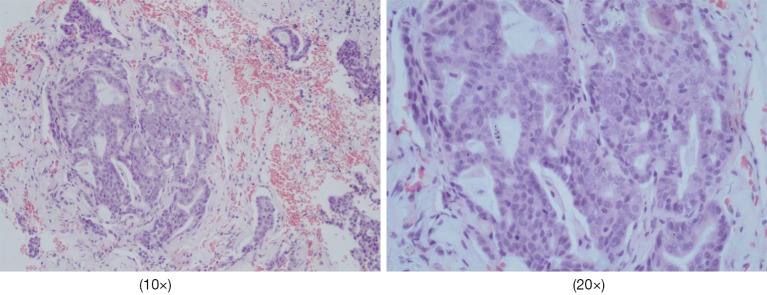
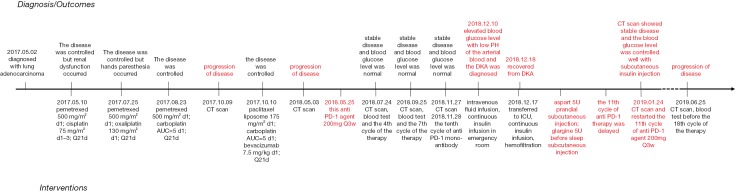
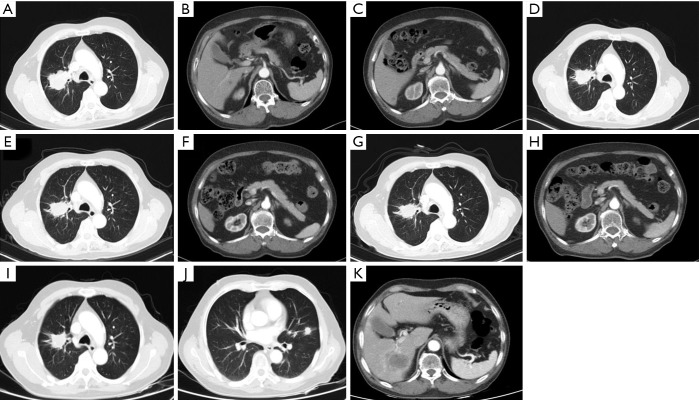
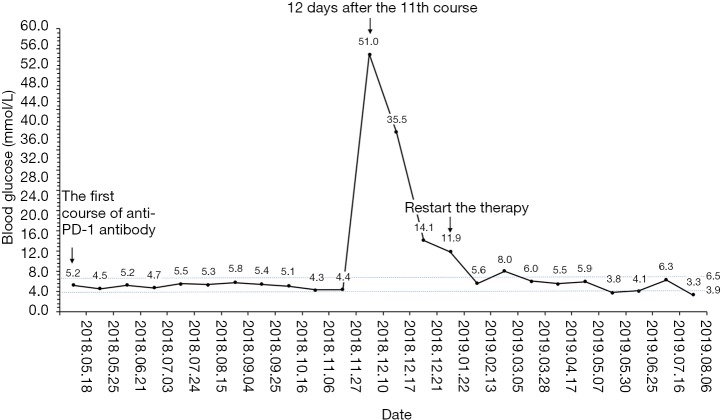
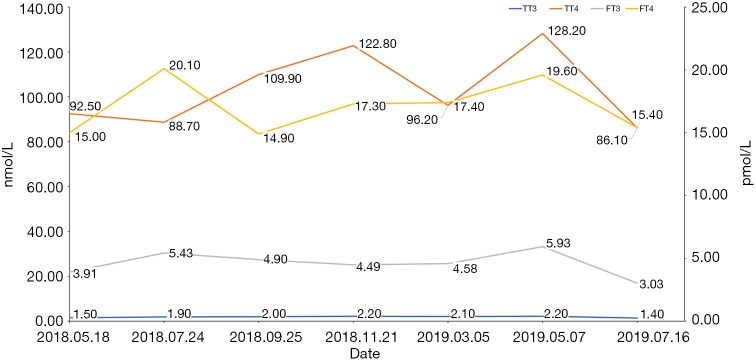
Nowadays, immune checkpoint inhibitor therapy has been used in more and more cancer patients. These agents were associated with immune-related adverse effects, and autoimmune diabetes mellitus is one of them. And it is not common but can be potentially fatal. Anti PD-1 monoclonal antibody is a humanized IgG4 antibody against PD-1, which has been applied in advanced non-small cell lung cancer (NSCLC) treatment. In this paper, we reported the case of autoimmune diabetes mellitus induced by anti PD-1 monoclonal antibody in NSCLC treatment. Here is a 73-year-old male patient with no diabetes history who had anti PD-1 monoclonal antibody 200 mg every 3 weeks for NSCLC treatment. After 10 cycles of the therapy, his blood glucose level elevated and he suffered diabetic ketoacidosis (DKA). And his C-peptide was significantly decreased with negative relative auto-antibodies. Combined with his medical history and the laboratory examination, anti PD-1 monoclonal antibody induced autoimmune diabetes mellitus was diagnosed. After recovering from DKA and controlling his blood glucose, his anti PD-1 therapy was continued and he still got some benefit. This report suggested that glycemic monitoring is imperative during this anti PD-1 monoclonal antibody treatment. Moreover, after controlling the blood glucose level, continuing the immune therapy could still be benefit and safe for the patient.
如今,免疫检查点抑制剂疗法已被越来越多的癌症患者所使用。这些药物与免疫相关的不良反应有关,自身免疫性糖尿病就是其中之一。它并不常见,但可能会致命。抗PD-1单克隆抗体是一种针对PD-1的人源化IgG4抗体,已应用于晚期非小细胞肺癌(NSCLC)的治疗。在本文中,我们报告了在NSCLC治疗中抗PD-1单克隆抗体诱发自身免疫性糖尿病的病例。这是一位73岁的男性患者,无糖尿病史,每3周接受200mg抗PD-1单克隆抗体治疗NSCLC。经过10个周期的治疗后,他的血糖水平升高,并出现了糖尿病酮症酸中毒(DKA)。他的C肽显著降低,相关自身抗体呈阴性。结合他的病史和实验室检查,诊断为抗PD-1单克隆抗体诱发的自身免疫性糖尿病。在从DKA恢复并控制血糖后,继续进行抗PD-1治疗,他仍从中获益。该报告表明,在这种抗PD-1单克隆抗体治疗期间,血糖监测至关重要。此外,在控制血糖水平后,继续免疫治疗对患者仍然有益且安全。