Clinical Pharmacology, Division of Drug Research, Department of Biomedical and Clinical Sciences, Linköping University, 581 85 Linköping, Sweden.
Department of Laboratory Medicine, Örebro University Hospital, 701 85 Örebro, Sweden.
Genes (Basel). 2020 May 14;11(5):549. doi: 10.3390/genes11050549.
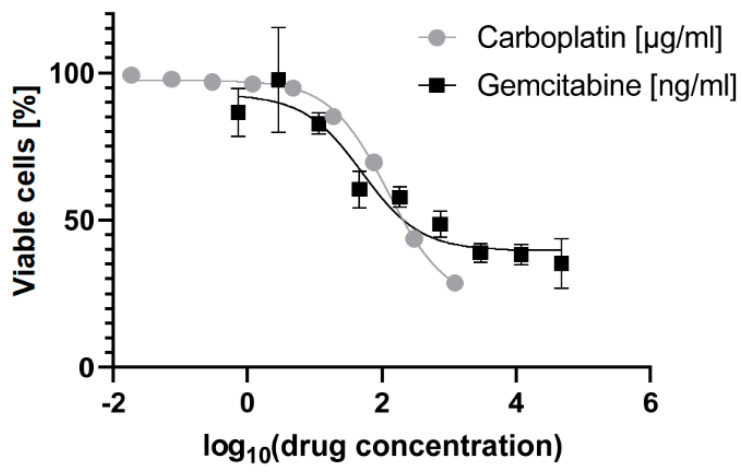
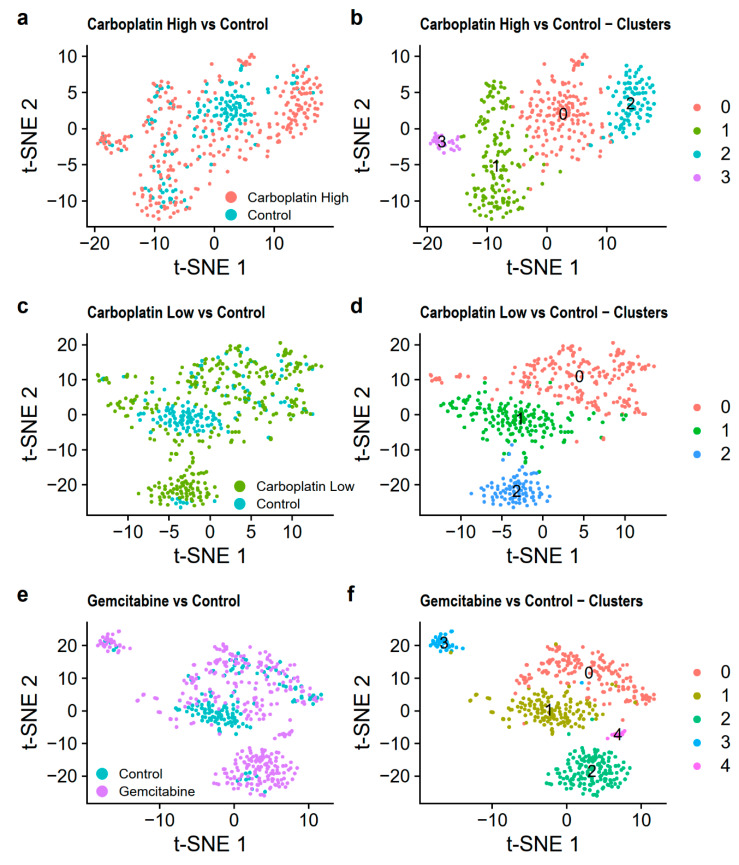
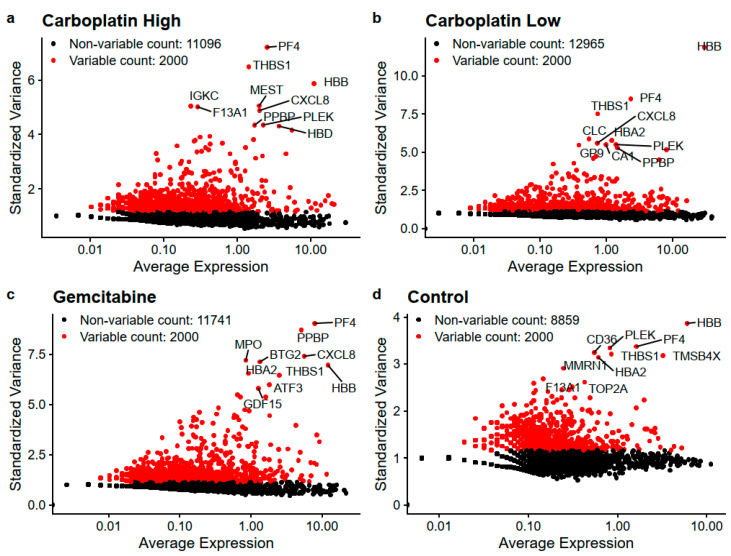
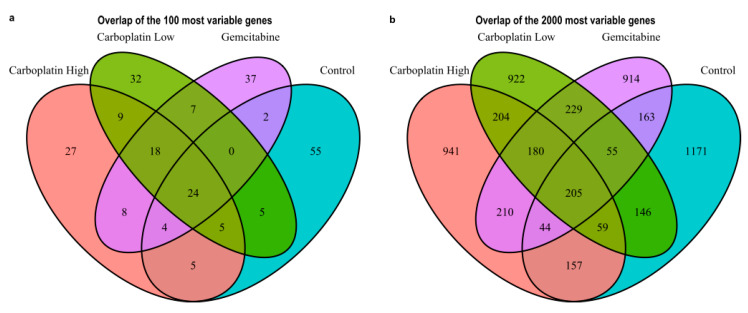
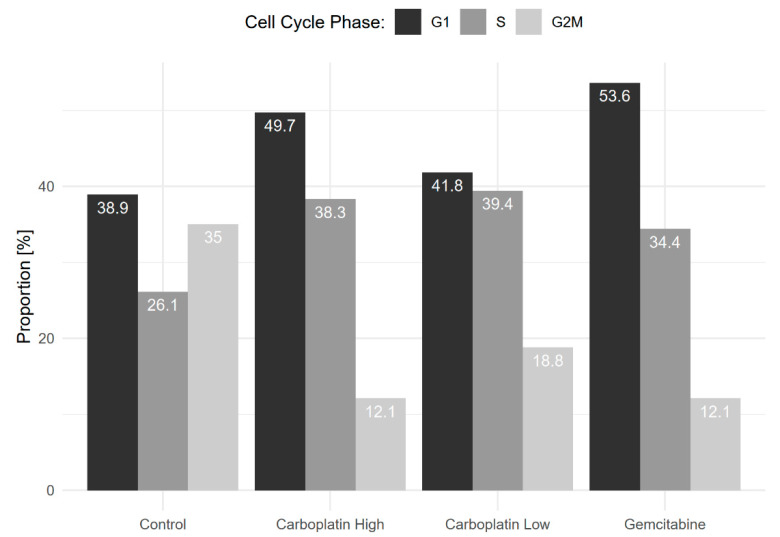
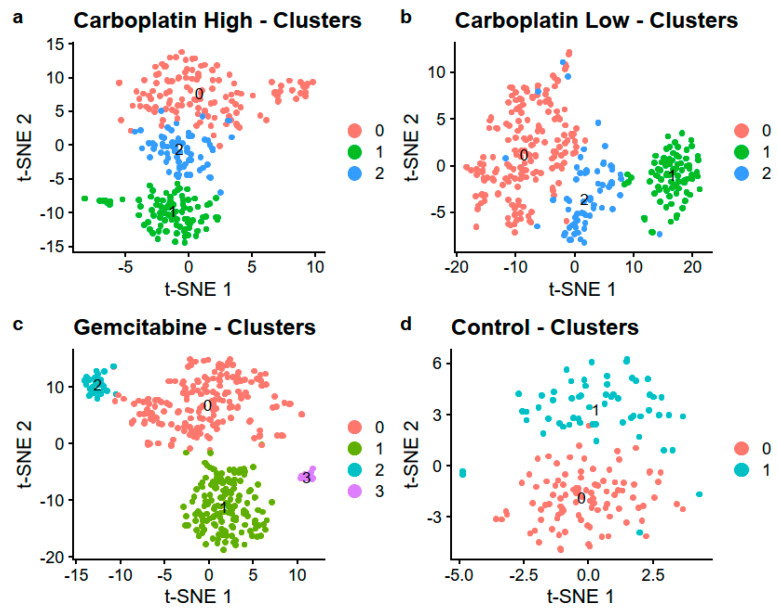
Treatments that include gemcitabine and carboplatin induce dose-limiting myelosuppression. The understanding of how human bone marrow is affected on a transcriptional level leading to the development of myelosuppression is required for the implementation of personalized treatments in the future. In this study, we treated human hematopoietic stem and progenitor cells (HSPCs) harvested from a patient with chronic myelogenous leukemia (CML) with gemcitabine/carboplatin. Thereafter, scRNA-seq was performed to distinguish transcriptional effects induced by gemcitabine/carboplatin. Gene expression was calculated and evaluated among cells within and between samples compared to untreated cells. Cell cycle analysis showed that the treatments effectively decrease cell proliferation, indicated by the proportion of cells in the G2M-phase dropping from 35% in untreated cells to 14.3% in treated cells. Clustering and t-SNE showed that cells within samples and between treated and untreated samples were affected differently. Enrichment analysis of differentially expressed genes showed that the treatments influence KEGG pathways and Gene Ontologies related to myeloid cell proliferation/differentiation, immune response, cancer, and the cell cycle. The present study shows the feasibility of using scRNA-seq and chemotherapy-treated HSPCs to find genes, pathways, and biological processes affected among and between treated and untreated cells. This indicates the possible gains of using single-cell toxicity studies for personalized medicine.
包含吉西他滨和顺铂的治疗方法会引起剂量限制的骨髓抑制。为了在未来实施个性化治疗,需要了解人类骨髓在转录水平上受到的影响,从而导致骨髓抑制的发生。在这项研究中,我们用吉西他滨/顺铂处理了从慢性髓性白血病(CML)患者中采集的造血干细胞和祖细胞(HSPCs)。然后,进行 scRNA-seq 以区分吉西他滨/顺铂诱导的转录效应。与未处理的细胞相比,计算并评估了细胞内和细胞间的基因表达。细胞周期分析表明,治疗方法可有效降低细胞增殖,表现为未处理细胞中 G2M 期细胞的比例从 35%下降到处理细胞中的 14.3%。聚类和 t-SNE 表明,样本内和处理与未处理样本之间的细胞受到的影响不同。差异表达基因的富集分析表明,治疗方法影响与髓样细胞增殖/分化、免疫反应、癌症和细胞周期相关的 KEGG 途径和基因本体论。本研究表明,使用 scRNA-seq 和化疗处理的 HSPC 来发现受处理和未处理细胞之间以及细胞内影响的基因、途径和生物学过程是可行的。这表明使用单细胞毒性研究进行个性化医学可能会带来收益。