National Institute of Neurological Disorders and Stroke, National Institutes of Health, Bethesda, MD 20892, USA.
Department of Neuroscience, Brown University, Providence, RI 02912, USA.
Dis Model Mech. 2020 Jun 26;13(6):dmm042986. doi: 10.1242/dmm.042986.
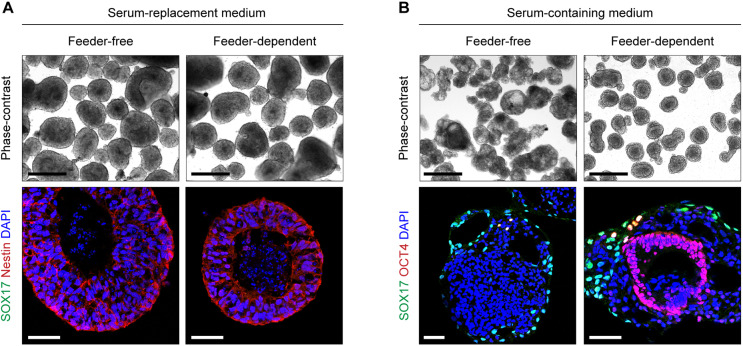
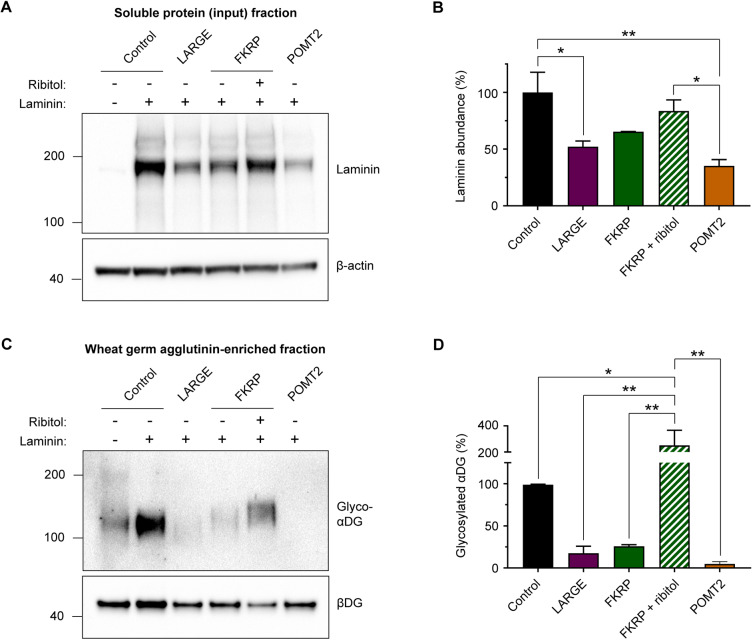
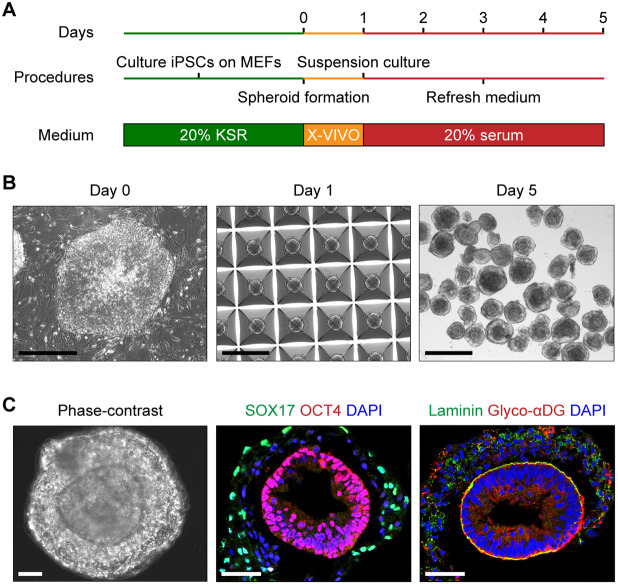
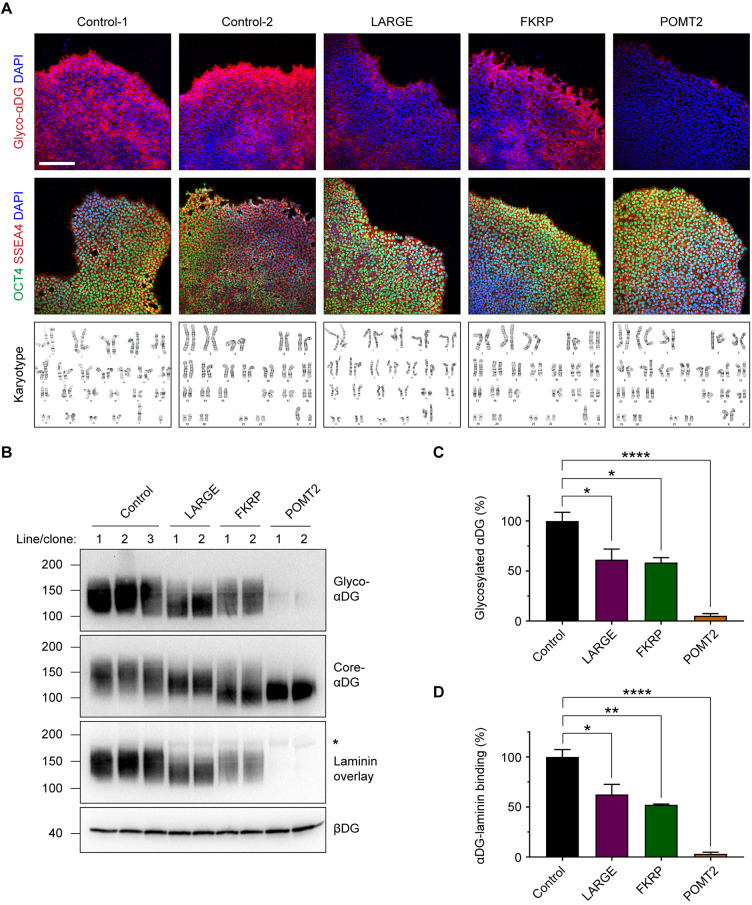
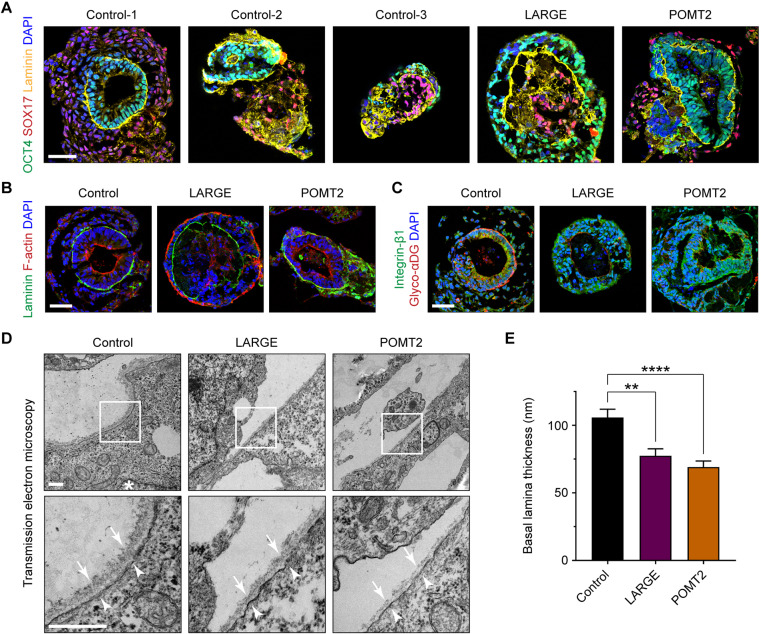
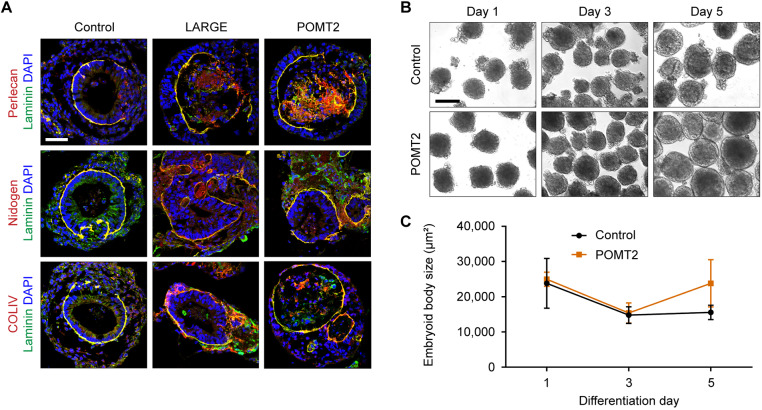
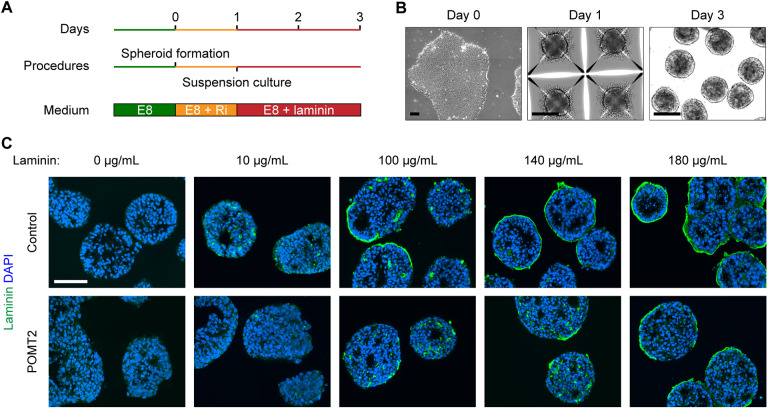
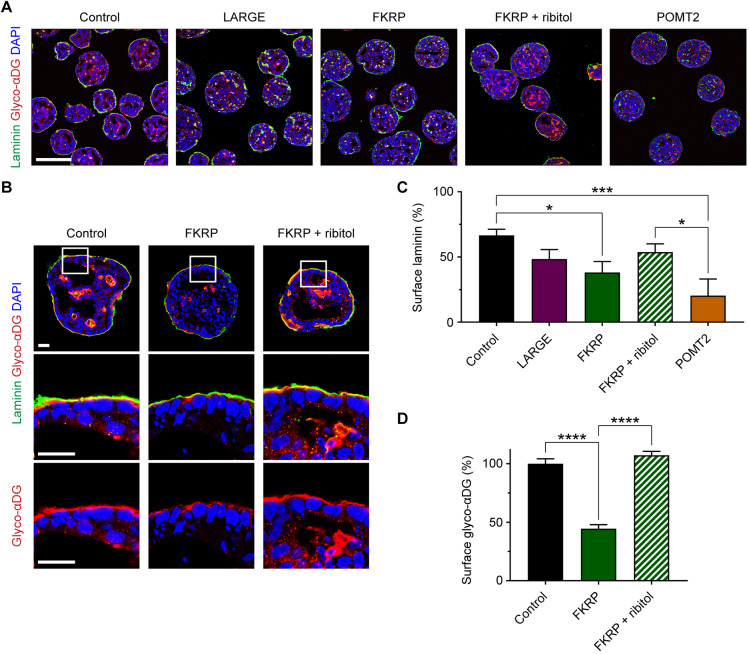
The basal lamina is a specialized sheet of dense extracellular matrix (ECM) linked to the plasma membrane of specific cell types in their tissue context, which serves as a structural scaffold for organ genesis and maintenance. Disruption of the basal lamina and its functions is central to many disease processes, including cancer metastasis, kidney disease, eye disease, muscular dystrophies and specific types of brain malformation. The latter three pathologies occur in the α-dystroglycanopathies, which are caused by dysfunction of the ECM receptor α-dystroglycan. However, opportunities to study the basal lamina in various human disease tissues are restricted owing to its limited accessibility. Here, we report the generation of embryoid bodies from human induced pluripotent stem cells that model the basal lamina. Embryoid bodies cultured via this protocol mimic pre-gastrulation embryonic development, consisting of an epithelial core surrounded by a basal lamina and a peripheral layer of ECM-secreting endoderm. In α-dystroglycanopathy patient embryoid bodies, electron and fluorescence microscopy reveal ultrastructural basal lamina defects and reduced ECM accumulation. By starting from patient-derived cells, these results establish a method for the synthesis of patient-specific basal lamina and recapitulate disease-relevant ECM defects seen in the α-dystroglycanopathies. Finally, we apply this system to evaluate an experimental ribitol supplement therapy on genetically diverse α-dystroglycanopathy patient samples.This article has an associated First Person interview with the first author of the paper.
基底层是一种特化的致密细胞外基质 (ECM) 薄片,与特定组织类型的细胞膜相连,作为器官发生和维持的结构支架。基底层及其功能的破坏是许多疾病过程的核心,包括癌症转移、肾脏疾病、眼部疾病、肌肉营养不良和特定类型的脑畸形。后三种病理情况发生在α- 聚糖蛋白病中,这是由 ECM 受体α- 聚糖蛋白的功能障碍引起的。然而,由于基底层的有限可及性,在各种人类疾病组织中研究基底层的机会受到限制。在这里,我们报告了从人类诱导多能干细胞中生成的类胚体,这些类胚体模拟基底层。通过该方案培养的类胚体模拟了原肠胚发育前的阶段,由上皮核心组成,周围是基底层和分泌 ECM 的内胚层的外围层。在α- 聚糖蛋白病患者的类胚体中,电子和荧光显微镜揭示了超微结构基底层缺陷和 ECM 积累减少。通过从患者来源的细胞开始,这些结果建立了一种合成患者特异性基底层的方法,并再现了α- 聚糖蛋白病中所见的与疾病相关的 ECM 缺陷。最后,我们将该系统应用于评估在遗传多样化的α- 聚糖蛋白病患者样本中进行的实验性肌醇补充治疗。本文有一篇与该论文第一作者的第一人称访谈。