Epigenetics Institute, Department of Cell and Developmental Biology, Perelman School of Medicine, University of Pennsylvania, Philadelphia, PA 19104, USA.
Epigenetics Institute, Department of Cell and Developmental Biology, Perelman School of Medicine, University of Pennsylvania, Philadelphia, PA 19104, USA
Dis Model Mech. 2020 May 26;13(5):dmm044123. doi: 10.1242/dmm.044123.
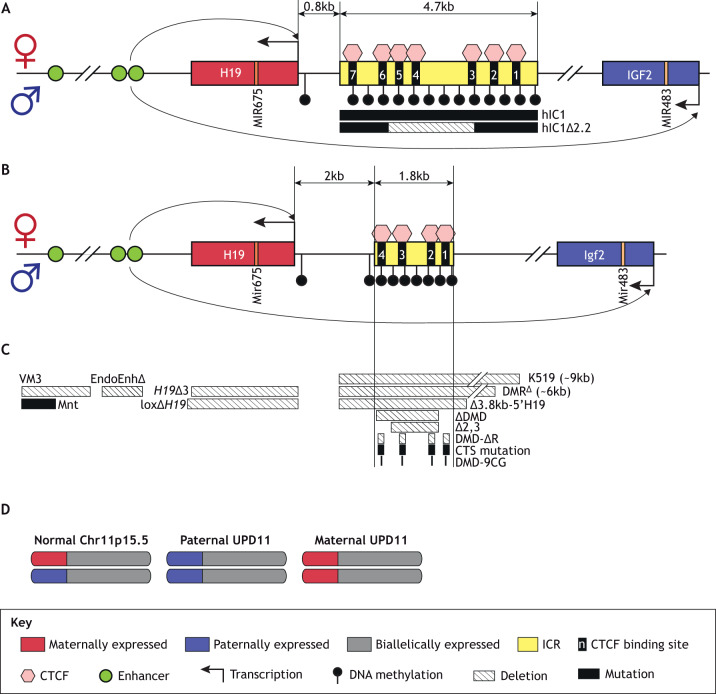
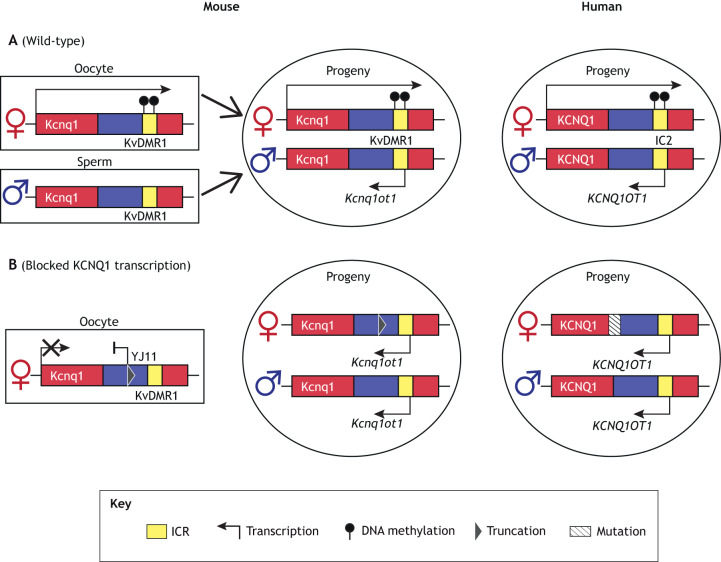
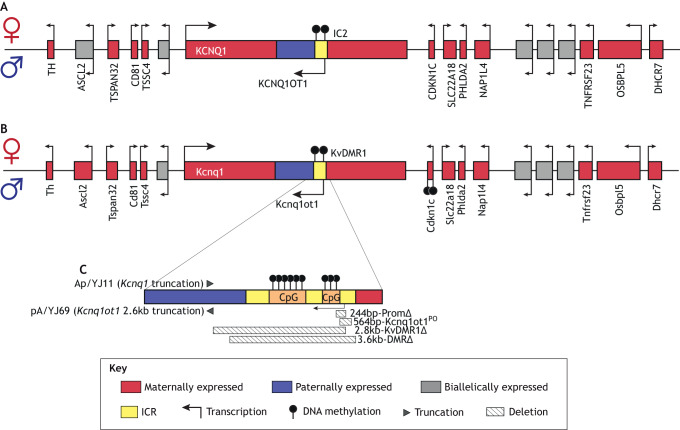
Genomic imprinting, a phenomenon in which the two parental alleles are regulated differently, is observed in mammals, marsupials and a few other species, including seed-bearing plants. Dysregulation of genomic imprinting can cause developmental disorders such as Beckwith-Wiedemann syndrome (BWS) and Silver-Russell syndrome (SRS). In this Review, we discuss (1) how various (epi)genetic lesions lead to the dysregulation of clinically relevant imprinted loci, and (2) how such perturbations may contribute to the developmental defects in BWS and SRS. Given that the regulatory mechanisms of most imprinted clusters are well conserved between mice and humans, numerous mouse models of BWS and SRS have been generated. These mouse models are key to understanding how mutations at imprinted loci result in pathological phenotypes in humans, although there are some limitations. This Review focuses on how the biological findings obtained from innovative mouse models explain the clinical features of BWS and SRS.
基因组印迹是一种现象,即两个亲本等位基因受到不同的调控,在哺乳动物、有袋动物和其他一些物种中都有观察到,包括种子植物。基因组印迹的失调会导致发育障碍,如 Beckwith-Wiedemann 综合征(BWS)和 Silver-Russell 综合征(SRS)。在这篇综述中,我们讨论了(1)各种(表观遗传)遗传损伤如何导致临床相关印迹基因座的失调,以及(2)这种干扰如何导致 BWS 和 SRS 的发育缺陷。鉴于大多数印迹簇的调控机制在小鼠和人类之间很好地保守,已经产生了许多 BWS 和 SRS 的小鼠模型。这些小鼠模型是理解印迹基因座突变如何导致人类病理性表型的关键,尽管存在一些局限性。本综述重点讨论了从创新的小鼠模型中获得的生物学发现如何解释 BWS 和 SRS 的临床特征。