Department of Colorectal Anal Surgery, The First Affiliated Hospital of Guangxi Medical University, Nanning, Guangxi, China.
Sci Rep. 2020 May 18;10(1):8153. doi: 10.1038/s41598-020-65091-0.
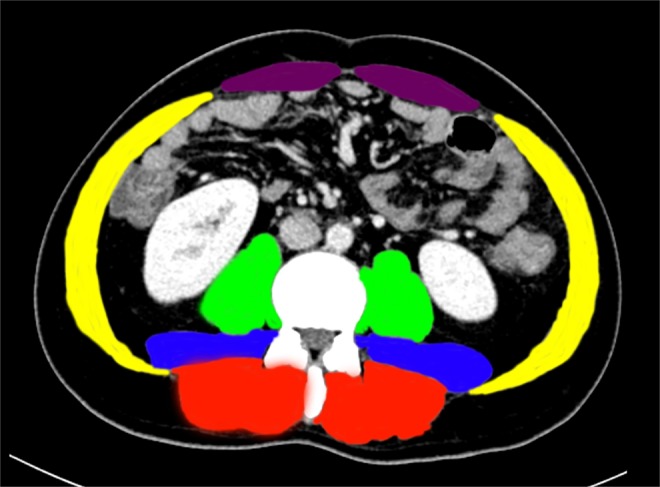
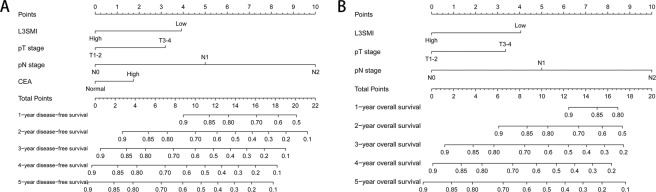
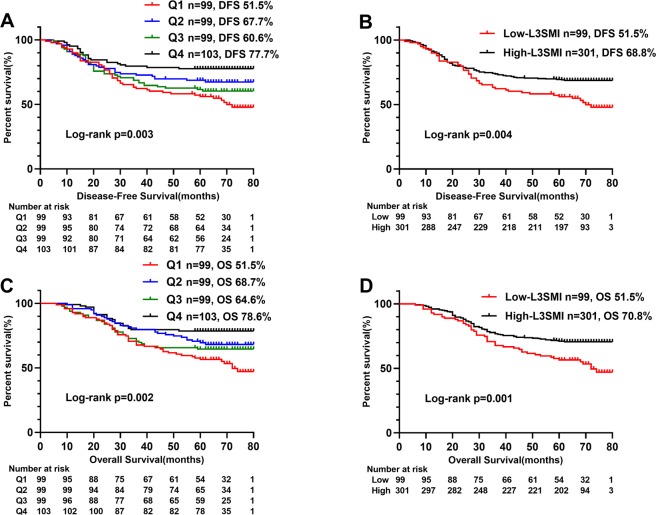
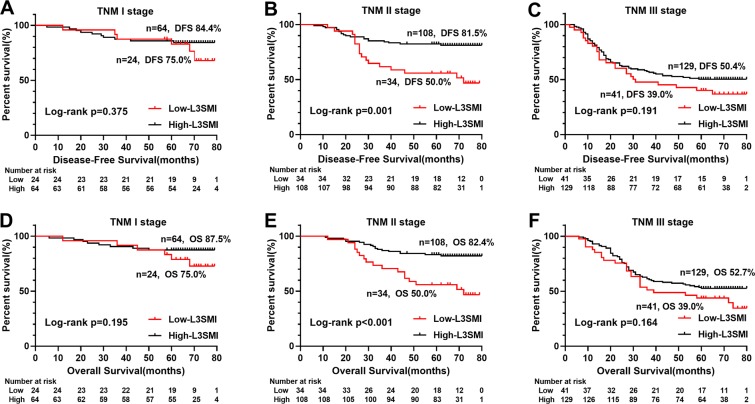
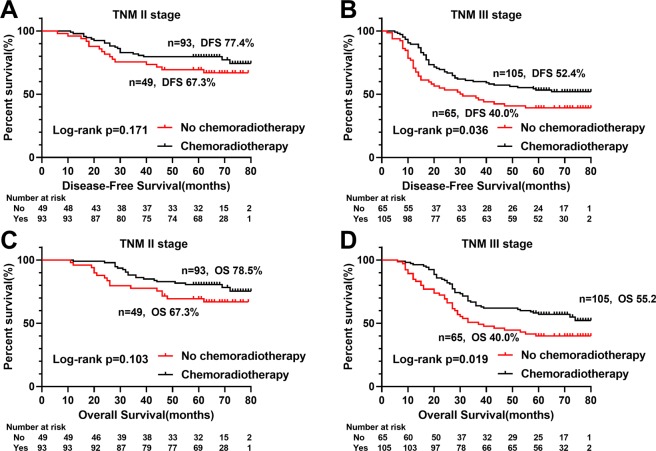
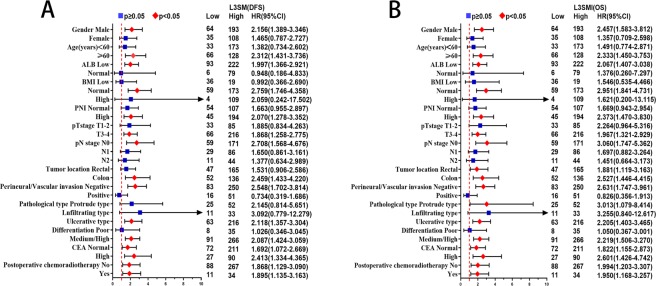
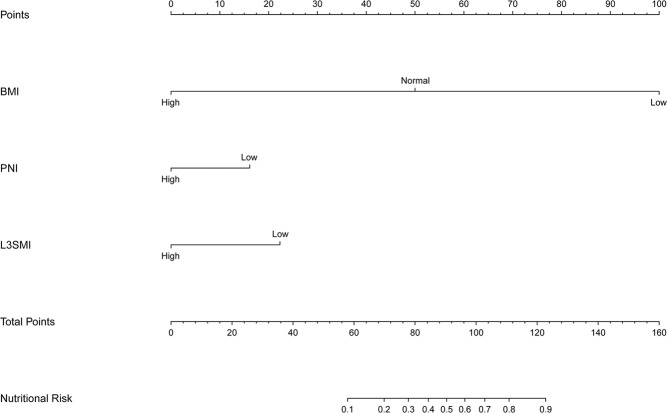
L3 skeletal muscle index (L3SMI) was reportedly related to postoperative outcomes. We aimed to investigate the value of L3SMI in evaluating preoperative nutritional risk and long-term prognosis in colorectal cancer (CRC) patients. We retrospectively enrolled 400 CRC patients who underwent surgery from January 2012 to December 2014. The L3SMI was calculated by preoperative computed tomography (CT) and classified into two groups by gender quartile method. We found that the CT diagnostic criteria of sarcopenia in South China population was: male ≤38.89cm/m, female ≤33.28cm/m. Multivariate logistic regression analysis showed that low L3SMI was an independent risk factor for preoperative nutritional risk (p < 0.001). Kaplan-Meier survival curves showed that low status group had significantly lower disease-free survival (p = 0.004) and overall survival (p = 0.001), especially in TNM II stage. Multivariate Cox regression analysis revealed preoperative low L3SMI adversely affected disease-free survival (p < 0.001, HR 1.894 (95% CI: 1.330-2.698)), and overall survival (p < 0.001, HR 2.030 (95% CI: 1.420-2.902)). In conclusion, L3SMI is a useful supplement for screening preoperative nutritional risk and diagnosing sarcopenia, and a potential clinical indicator that can be used to predict the prognosis of CRC patients, especially TNM stage II patients.
L3 骨骼肌指数(L3SMI)与术后结果有关。我们旨在研究 L3SMI 在评估结直肠癌(CRC)患者术前营养风险和长期预后中的价值。我们回顾性纳入了 2012 年 1 月至 2014 年 12 月期间接受手术的 400 例 CRC 患者。通过术前计算机断层扫描(CT)计算 L3SMI,并采用性别四分位法将其分为两组。我们发现华南人群 CT 诊断肌少症的标准为:男性≤38.89cm/m,女性≤33.28cm/m。多因素 logistic 回归分析显示,低 L3SMI 是术前营养风险的独立危险因素(p<0.001)。Kaplan-Meier 生存曲线显示,低状态组无病生存率(p=0.004)和总生存率(p=0.001)明显较低,尤其是在 TNM II 期。多因素 Cox 回归分析显示,术前低 L3SMI 对无病生存率(p<0.001,HR 1.894(95%CI:1.330-2.698))和总生存率(p<0.001,HR 2.030(95%CI:1.420-2.902))均有不利影响。总之,L3SMI 是筛查术前营养风险和诊断肌少症的有用补充,也是预测 CRC 患者预后的潜在临床指标,尤其是 TNM II 期患者。