Yang Shengdong, Chen Jin, Tan Tao, Wang Nan, Huang Yanran, Wang Yuping, Yuan Xiaohui, Zhang Ping, Luo Jinyong, Luo Xiaoji
Department of Orthopedics, The First Affiliated Hospital of Chongqing Medical University, Chongqing 400016, People's Republic of China.
Department of Dermatology, The First Affiliated Hospital of Chongqing Medical University, Chongqing 400016, People's Republic of China.
Cancer Manag Res. 2020 Apr 28;12:2875-2888. doi: 10.2147/CMAR.S238093. eCollection 2020.
Osteosarcoma is the most common primary malignant bone neoplasm and is associated with abysmal prognosis. There are limitations of current treatment methods. Therefore, developing new agents to treat osteosarcoma is exceptionally urgent.
This study aimed to evaluate the anticancer effects of evodiamine (EVO) on osteosarcoma cells and, meanwhile, to investigate the underlying mechanisms involved.
The effect of EVO on the proliferation of osteosarcoma was detected by MTT assay, crystal violet assay and colony formation assay. The effects of EVO on the migration and invasion of osteosarcoma were detected by wound-healing assay and transwell assay. The effect of EVO on apoptosis of osteosarcoma was measured by Hoechst 33258 staining and cell cycle assay. The protein expression levels were detected by Western blotting assay. The activity of Wnt/β-Catenin signaling pathway was detected by luciferase reporter assay and Western blotting assay.
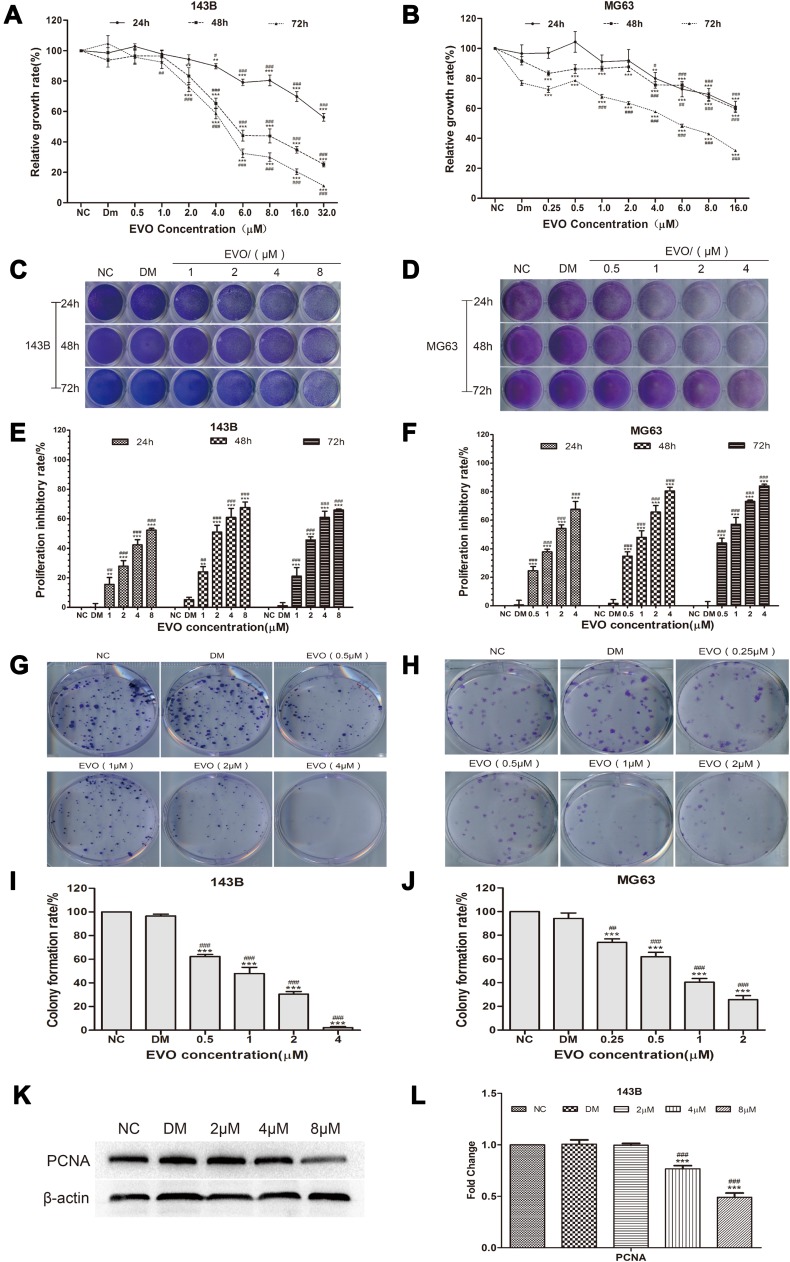
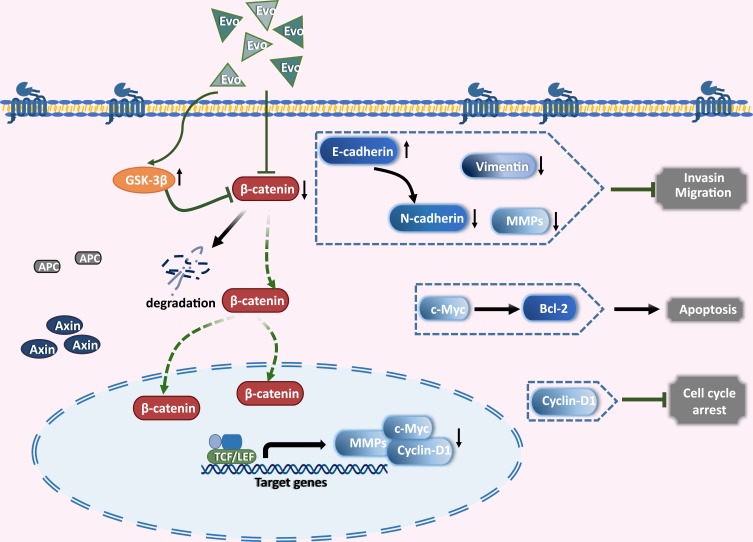
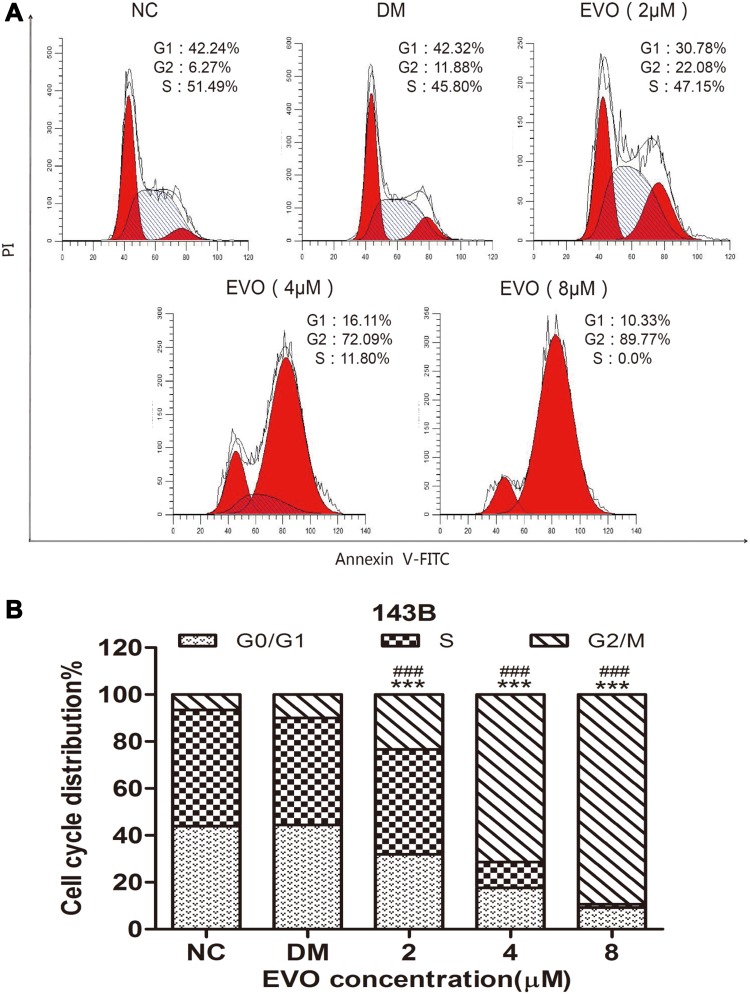
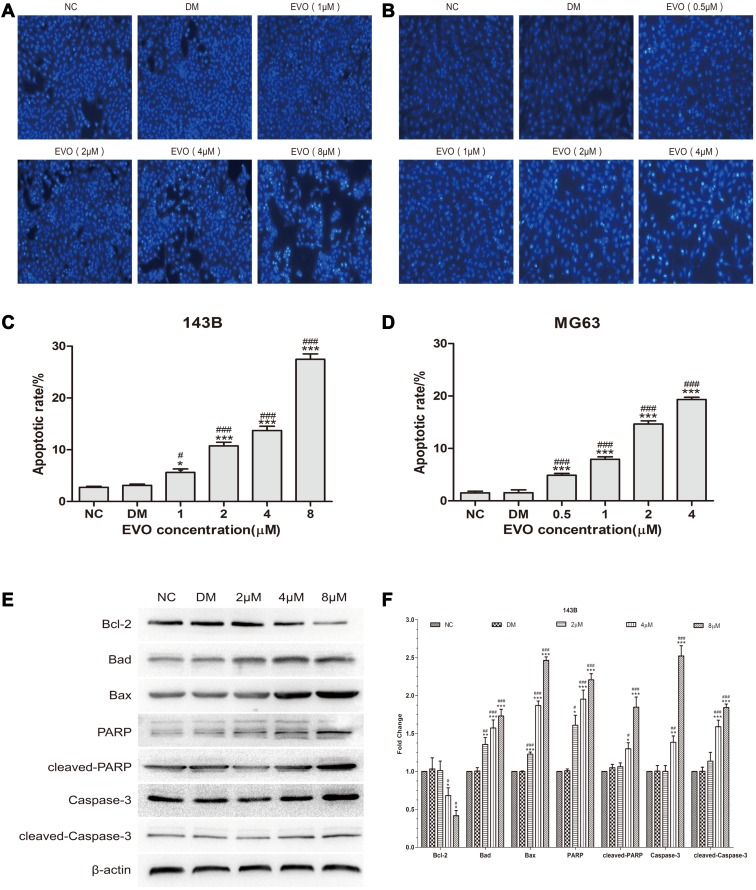
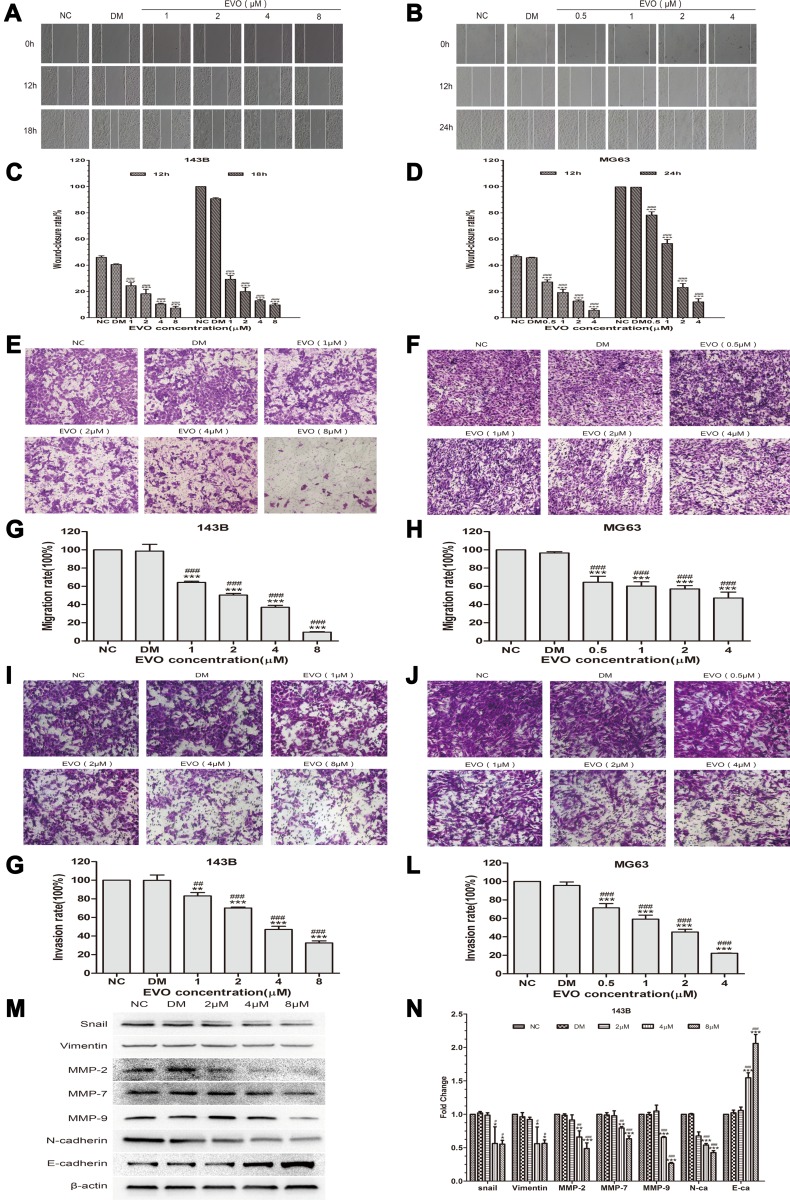
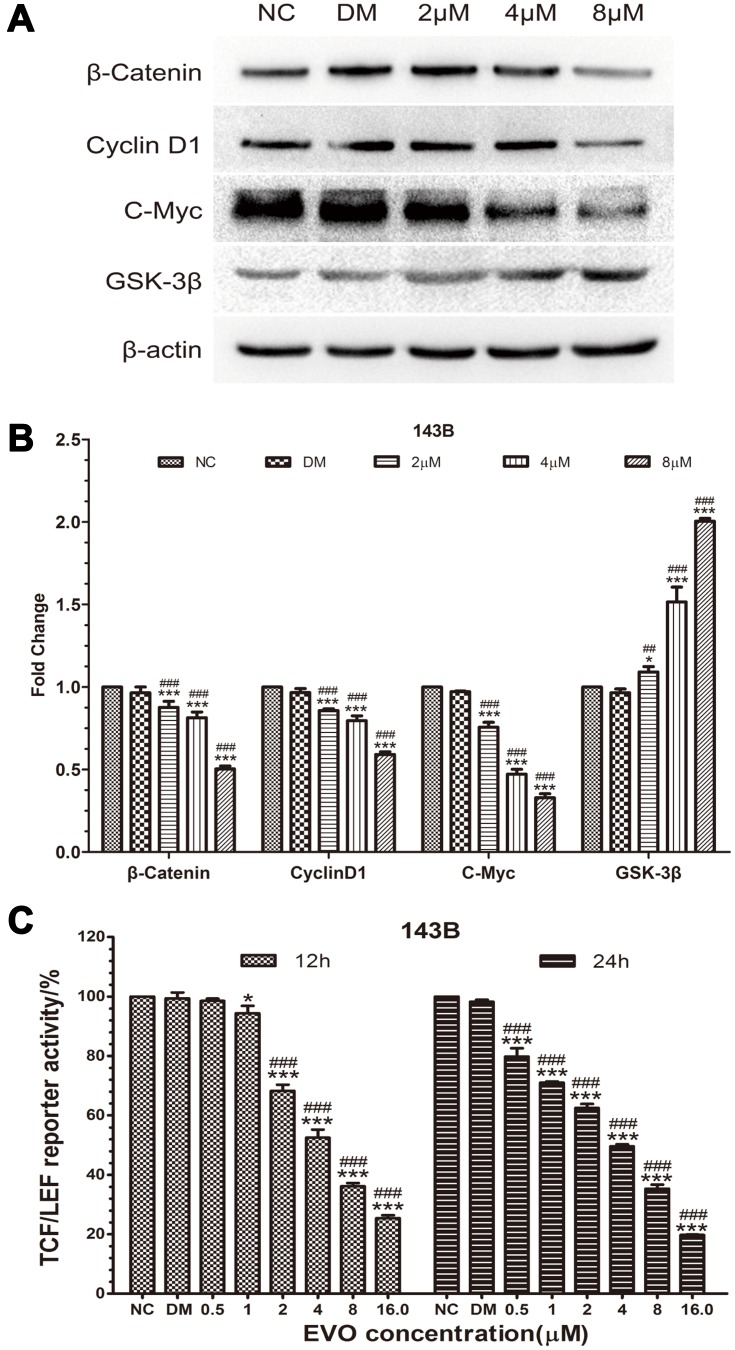
According to MTT, crystal violet and colony formation assay results, EVO significantly inhibited the cell proliferation in a dose-dependent manner. Hoechst 33258 staining assay revealed that EVO induced cell apoptosis in a concentration-dependent manner. Moreover, EVO inhibited the migration and invasion of the osteosarcoma cells. Mechanistic studies revealed that EVO suppresses metastatic through suppressing epithelial-mesenchymal transition (EMT) as indicated by elevating the expression of epithelial marker E-cadherin and reducing the expression of mesenchymal markers N-cadherin and vimentin, as well as EMT transcription factors Snail and MMPs. Subsequently, EVO induced cell cycle arrest at the G2/M phase that correlated with reduced levels of cyclin D1 protein, while the apoptotic effects of EVO were associated with the upregulation of Bax and Bad and a decrease in Bcl-2 protein levels. Furthermore, EVO exerted the anticancer effects by suppressing Wnt/β-catenin signal pathway in osteosarcoma cells.
In summary, EVO exhibited potent anticancer effects against human osteosarcoma cells and promoted apoptosis through suppressing Wnt/β-catenin signaling pathway. These results indicated that EVO may be regarded as a new approach for osteosarcoma treatment.
骨肉瘤是最常见的原发性恶性骨肿瘤,预后极差。目前的治疗方法存在局限性。因此,开发治疗骨肉瘤的新药物迫在眉睫。
本研究旨在评估吴茱萸碱(EVO)对骨肉瘤细胞的抗癌作用,并同时探究其潜在机制。
通过MTT法、结晶紫法和集落形成试验检测EVO对骨肉瘤增殖的影响。通过划痕愈合试验和Transwell试验检测EVO对骨肉瘤迁移和侵袭的影响。通过Hoechst 33258染色和细胞周期试验检测EVO对骨肉瘤细胞凋亡的影响。通过蛋白质印迹法检测蛋白质表达水平。通过荧光素酶报告基因试验和蛋白质印迹法检测Wnt/β-连环蛋白信号通路的活性。
根据MTT、结晶紫和集落形成试验结果,EVO以剂量依赖性方式显著抑制细胞增殖。Hoechst 33258染色试验表明,EVO以浓度依赖性方式诱导细胞凋亡。此外,EVO抑制骨肉瘤细胞的迁移和侵袭。机制研究表明,EVO通过抑制上皮-间质转化(EMT)来抑制转移,表现为上皮标志物E-钙黏蛋白表达升高,间质标志物N-钙黏蛋白和波形蛋白表达降低,以及EMT转录因子Snail和基质金属蛋白酶(MMPs)表达降低。随后,EVO诱导细胞周期停滞在G2/M期,这与细胞周期蛋白D1蛋白水平降低相关,而EVO的凋亡作用与Bax和Bad上调以及Bcl-2蛋白水平降低有关。此外,EVO通过抑制骨肉瘤细胞中的Wnt/β-连环蛋白信号通路发挥抗癌作用。
总之,EVO对人骨肉瘤细胞具有强大的抗癌作用,并通过抑制Wnt/β-连环蛋白信号通路促进细胞凋亡。这些结果表明,EVO可能被视为一种治疗骨肉瘤的新方法。