College of Ocean and Earth Sciences, Xiamen University, Xiamen, China.
College of Science and Engineering, James Cook University, Townsville, QLD, Australia.
Front Immunol. 2020 Apr 30;11:711. doi: 10.3389/fimmu.2020.00711. eCollection 2020.
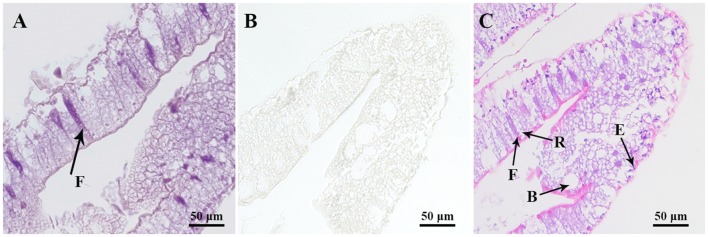
Crustacean cardioactive peptide (CCAP), a cyclic amidated non-apeptide, is widely found in arthropods. The functions of CCAP have been revealed to include regulation of heart rate, intestinal peristalsis, molting, and osmotic pressure. However, to date, there has not been any report on the possible involvement of CCAP in immunoregulation in crustaceans. In this study, a CCAP precursor (designated as -CCAP) was identified in the commercially important mud crab , which could be processed into four CCAP-associated peptides and one mature peptide (PFCNAFTGC-NH). Bioinformatics analysis indicated that -CCAP was highly conserved in crustaceans. RT-PCR results revealed that was expressed in nerve tissues and gonads, whereas the -CCAP receptor gene () was expressed in 12 tissues of , including hepatopancreas. hybridization further showed that an -positive signal is mainly localized in the F-cells of hepatopancreas. Moreover, the mRNA expression level of in the hepatopancreas was significantly up-regulated after lipopolysaccharide (LPS) or polyriboinosinic polyribocytidylic acid [Poly (I:C)] challenge. Meanwhile, the mRNA expression level of , nuclear transcription factor NF-κB homologs ( and ), member of mitogen-activated protein kinase (MAPK) signaling pathway (), pro-inflammatory cytokines factor ( and ), and antimicrobial peptide (, and ) in the hepatopancreas were all up-regulated after the administration of synthetic -CCAP mature peptide both and . The addition of synthetic -CCAP mature peptide also led to an increase in nitric oxide (NO) concentration and an improved bacterial clearance ability in the hepatopancreas culture medium. The present study suggested that -CCAP signaling system might be involved in the immune responses of by activating immune molecules on the hepatopancreas. Collectively, our findings shed new light on neuroendocrine-immune regulatory system in arthropods and could potentially provide a new strategy for disease prevention and control for mud crab aquaculture.
甲壳动物心脏活性肽(CCAP)是一种广泛存在于节肢动物中的环状酰胺非肽。其功能包括调节心率、肠道蠕动、蜕皮和渗透压。然而,迄今为止,尚未有任何关于 CCAP 可能参与甲壳动物免疫调节的报道。在这项研究中,在商业上重要的泥蟹中鉴定出一种 CCAP 前体(命名为 -CCAP),它可以被加工成四种 CCAP 相关肽和一种成熟肽(PFCNAFTGC-NH)。生物信息学分析表明 -CCAP 在甲壳动物中高度保守。RT-PCR 结果显示, 在神经组织和性腺中表达,而 -CCAP 受体基因()在 12 种组织中表达,包括肝胰腺。原位杂交进一步显示,-阳性信号主要定位于肝胰腺的 F 细胞。此外,肝胰腺中 的 mRNA 表达水平在脂多糖(LPS)或聚肌苷酸聚胞苷酸[Poly(I:C)] 挑战后显著上调。同时,肝胰腺中 NF-κB 同源物(和)、丝裂原激活蛋白激酶(MAPK)信号通路成员()、促炎细胞因子因子(和)和抗菌肽(、和)的 mRNA 表达水平在给予合成 -CCAP 成熟肽后均上调。合成 -CCAP 成熟肽 还导致肝胰腺培养物中一氧化氮(NO)浓度增加和细菌清除能力提高。本研究表明,-CCAP 信号系统可能通过激活肝胰腺上的免疫分子参与 的免疫反应。总之,我们的发现为节肢动物的神经内分泌-免疫调节系统提供了新的视角,并可能为泥蟹养殖的疾病预防和控制提供新的策略。