Feng Wenlong, Dean Dylan C, Hornicek Francis J, Spentzos Dimitrios, Hoffman Robert M, Shi Huirong, Duan Zhenfeng
Department of Obstetrics and Gynecology, The First Affiliated Hospital of Zhengzhou University, Zhengzhou, Henan, China.
Department of Orthopaedic Surgery, David Geffen School of Medicine at UCLA, Los Angeles, CA, USA.
Ther Adv Med Oncol. 2020 May 10;12:1758835920922055. doi: 10.1177/1758835920922055. eCollection 2020.
Over the past four decades, outcomes for osteosarcoma patients have plateaued as there have been few emerging therapies showing clinical results. Thus, the identification of novel biomarkers and therapeutic strategies are urgently needed to address these primary obstacles in patient care. Although the Myc-oncogene has known roles in oncogenesis and cancer cell growth, its expression and function in osteosarcoma are largely unknown.
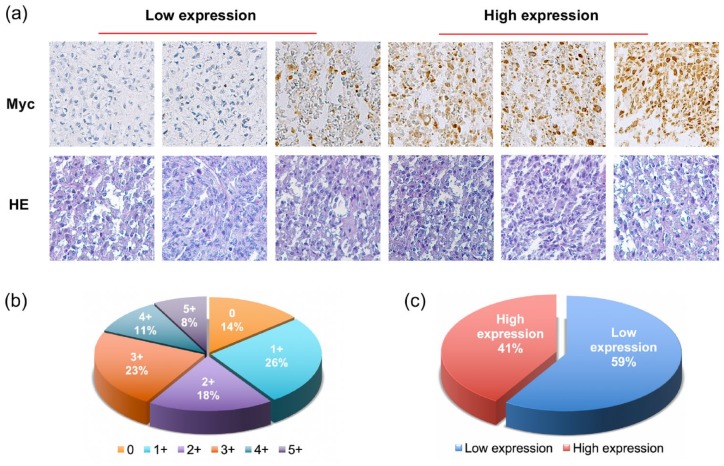
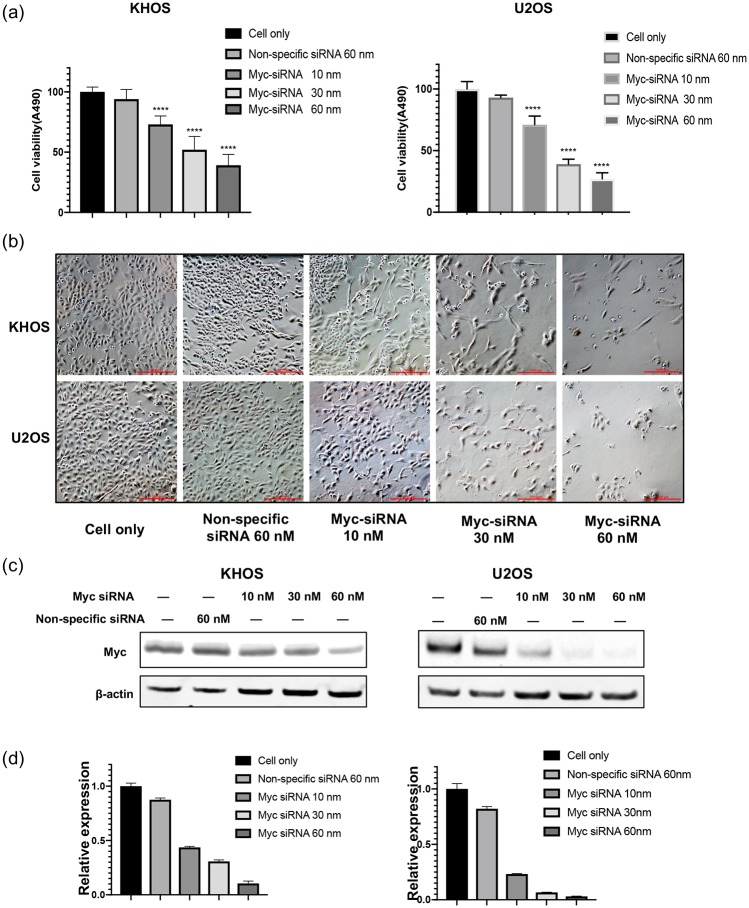
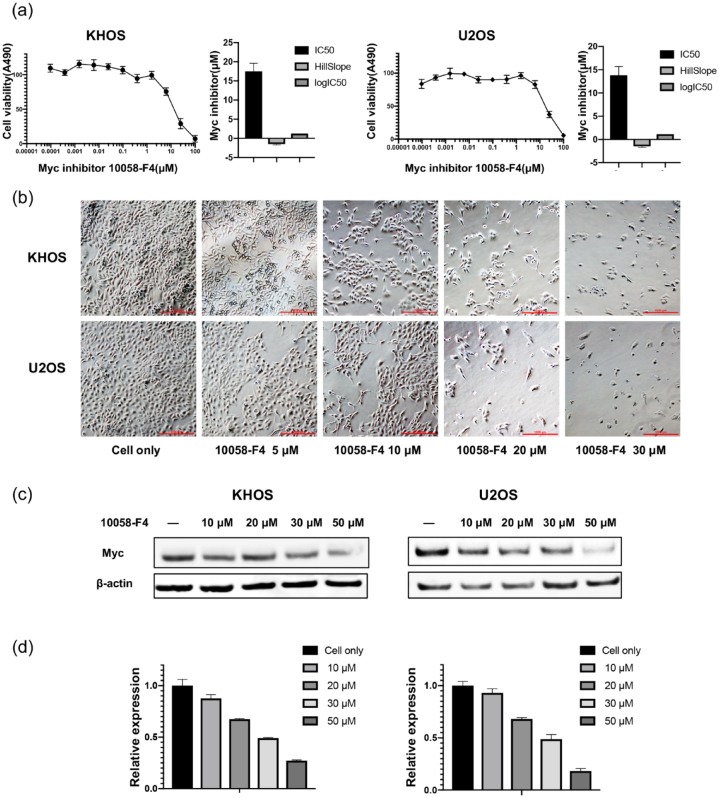
Expression of Myc was determined by Western blotting of osteosarcoma cell lines and patient tissues, and by immunohistochemistry of a unique osteosarcoma tissue microarray (TMA) constructed from 70 patient samples with extensive follow-up data. Myc specific siRNA and inhibitor 10058-F4 were applied to examine the effect of Myc inhibition on osteosarcoma cell proliferation. The clonogenicity and migration activity was determined by clonogenic and wound-healing assays. A mimic assay, three-dimensional (3D) cell culture model, was performed to further validate the effect of Myc inhibition on osteosarcoma cell tumorigenic markers.
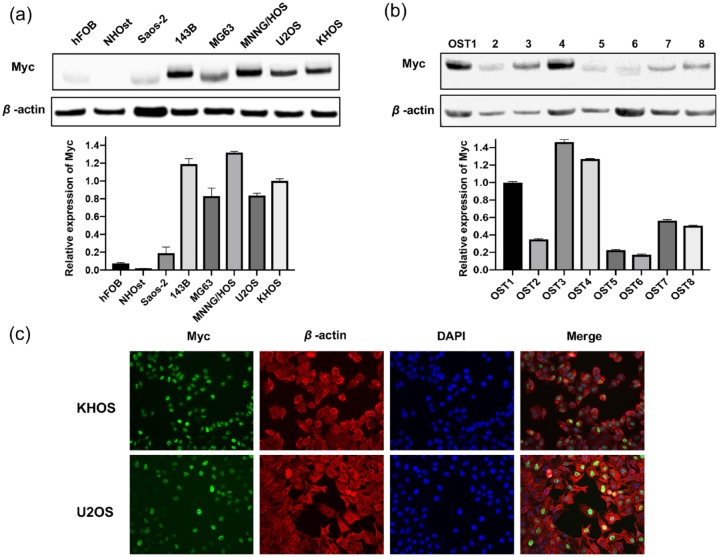
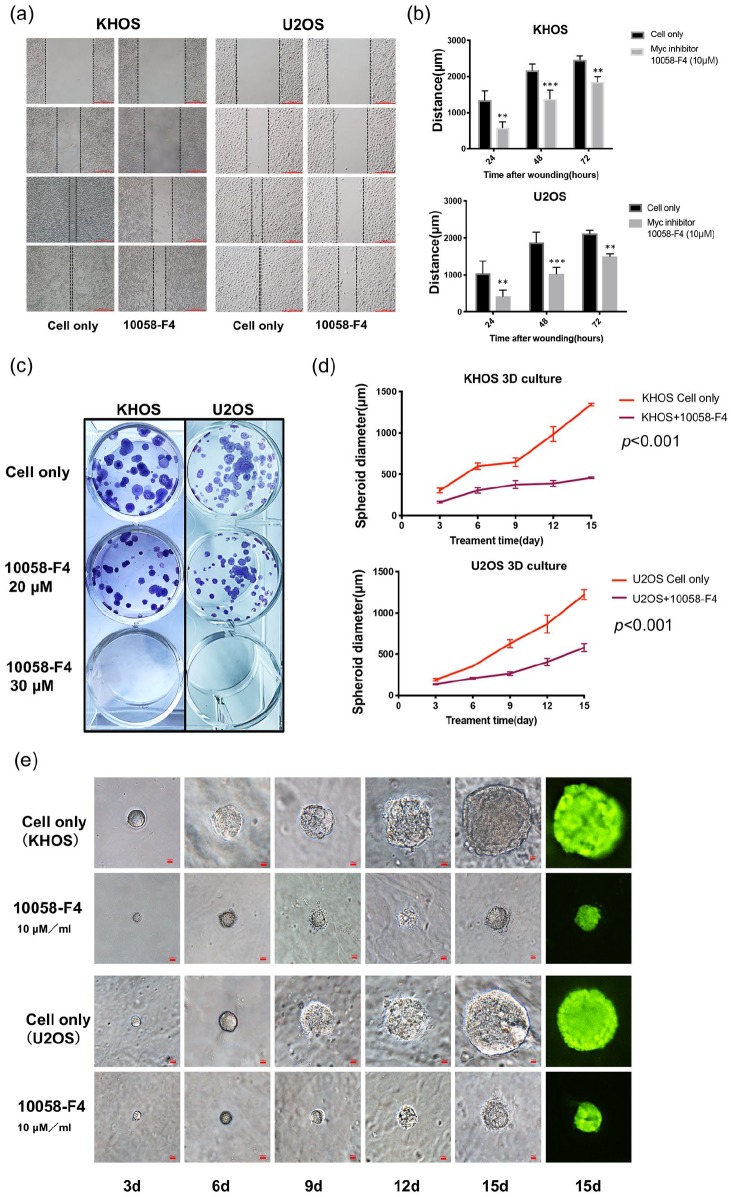
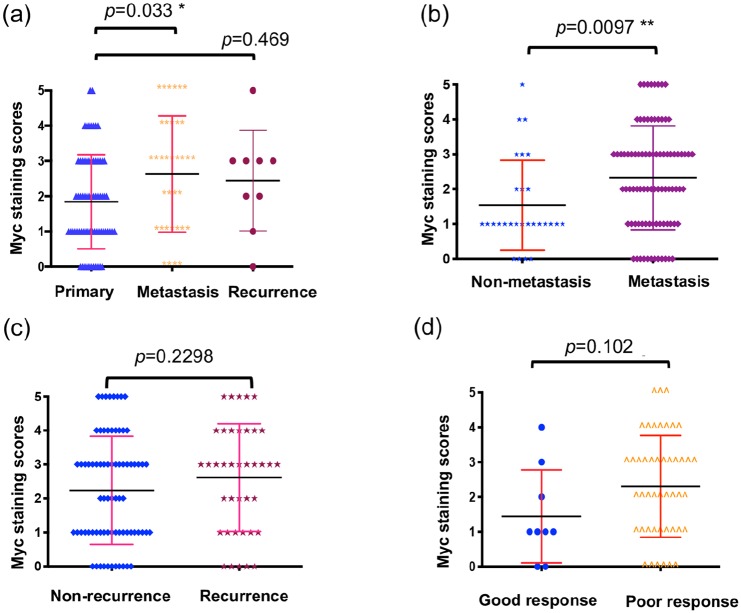
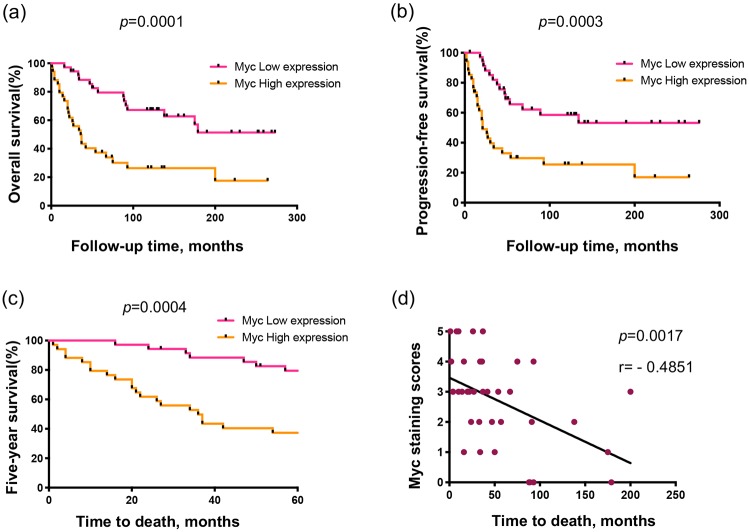
Myc was significantly overexpressed in human osteosarcoma cell lines compared with normal human osteoblasts, and also highly expressed in fresh osteosarcoma tissues. Higher Myc expression correlated significantly with metastasis and poor prognosis. Through the addition of Myc specific siRNA and inhibitor, we significantly reduced Myc protein expression, resulting in decreased osteosarcoma cell proliferation. Inhibition of Myc also suppressed the migration, clonogenicity, and spheroid growth of osteosarcoma cells.
Our results support Myc as an emerging prognostic biomarker and therapeutic target in osteosarcoma therapy.
在过去的四十年里,骨肉瘤患者的治疗效果一直停滞不前,因为几乎没有新出现的疗法显示出临床效果。因此,迫切需要识别新的生物标志物和治疗策略,以解决患者护理中的这些主要障碍。尽管Myc原癌基因在肿瘤发生和癌细胞生长中已知有作用,但其在骨肉瘤中的表达和功能在很大程度上尚不清楚。
通过对骨肉瘤细胞系和患者组织进行蛋白质印迹法,以及对由70例患者样本构建的具有广泛随访数据的独特骨肉瘤组织微阵列(TMA)进行免疫组织化学,来确定Myc的表达。应用Myc特异性小干扰RNA(siRNA)和抑制剂10058 - F4来检测Myc抑制对骨肉瘤细胞增殖的影响。通过克隆形成试验和伤口愈合试验来确定克隆形成能力和迁移活性。进行一项模拟试验,即三维(3D)细胞培养模型,以进一步验证Myc抑制对骨肉瘤细胞致瘤标志物的影响。
与正常人成骨细胞相比,Myc在人骨肉瘤细胞系中显著过表达,并且在新鲜骨肉瘤组织中也高表达。较高的Myc表达与转移和不良预后显著相关。通过添加Myc特异性siRNA和抑制剂,我们显著降低了Myc蛋白表达,导致骨肉瘤细胞增殖减少。抑制Myc也抑制了骨肉瘤细胞的迁移、克隆形成能力和球体生长。
我们的结果支持Myc作为骨肉瘤治疗中一种新出现的预后生物标志物和治疗靶点。