Department of Neurosurgery, Hospital of the University of Pennsylvania, Philadelphia, Pennsylvania, USA.
Department of Neurosurgery, Hospital of the University of Pennsylvania, Philadelphia, Pennsylvania, USA.
World Neurosurg. 2020 Jul;139:549-557. doi: 10.1016/j.wneu.2020.05.066. Epub 2020 May 16.
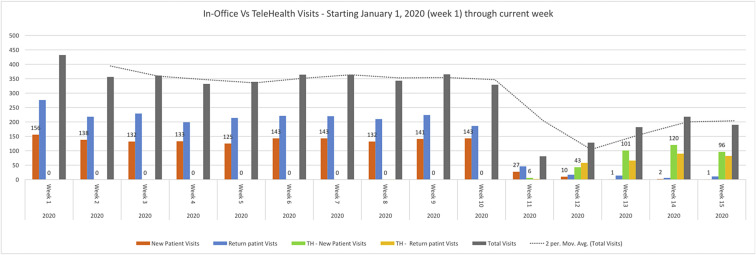
Despite the substantial growth of telemedicine and the evidence of its advantages, the use of telemedicine in neurosurgery has been limited. Barriers have included medicolegal issues surrounding provider reimbursement, interstate licensure, and malpractice liability as well as technological challenges. Recently, the coronavirus disease 2019 (COVID-19) pandemic has limited typical evaluation of patients with neurologic issues and resulted in a surge in demand for virtual medical visits. Meanwhile, federal and state governments took action to facilitate the rapid implementation of telehealth programs, placing a temporary lift on medicolegal barriers that had previously limited its expansion. This created a unique opportunity for widespread telehealth use to meet the surge in demand for remote medical care. After initial hurdles and challenges, our experience with telemedicine in neurosurgery at Penn Medicine has been overall positive from both the provider and the patients' perspective. One of the unique challenges we face is guiding patients to appropriately set up devices in a way that enables an effective neuroexamination. However, we argue that an accurate and comprehensive neurologic examination can be conducted through a telemedicine platform, despite minor weaknesses inherent to absence of physical presence. In addition, certain neurosurgical visits such as postoperative checks, vascular pathology, and brain tumors inherently lend themselves to easier evaluation through telehealth visits. In the era of COVID-19 and beyond, telemedicine remains a promising and effective approach to continue neurologic patient care.
尽管远程医疗有了实质性的发展,并且有证据表明其具有优势,但神经外科对远程医疗的使用仍受到限制。障碍包括围绕提供者报销、州际许可和医疗事故责任的医疗法律问题,以及技术挑战。最近,2019 冠状病毒病(COVID-19)大流行限制了对有神经问题患者的典型评估,并导致对虚拟医疗访问的需求激增。与此同时,联邦和州政府采取行动,促进远程医疗计划的快速实施,暂时取消了先前限制其扩张的医疗法律障碍。这为广泛使用远程医疗提供了一个独特的机会,以满足远程医疗护理需求的激增。在最初的障碍和挑战之后,我们在宾夕法尼亚大学医学中心的神经外科远程医疗经验从提供者和患者的角度来看总体上是积极的。我们面临的一个独特挑战是指导患者以一种能够进行有效神经检查的方式适当地设置设备。然而,我们认为,尽管缺乏身体存在带来了固有的一些弱点,但通过远程医疗平台可以进行准确和全面的神经检查。此外,某些神经外科就诊,如术后检查、血管病理学和脑瘤,本质上更容易通过远程医疗就诊进行评估。在 COVID-19 时代及以后,远程医疗仍然是继续进行神经患者护理的一种有前途和有效的方法。