Fulcher Jory A, Dunbar Sarah, Orlando Elizabeth, Woodruff Sarah J, Santarossa Sara
Faculty of Human Kinetics, University of Windsor, Canada.
Digit Health. 2020 Apr 27;6:2055207620922389. doi: 10.1177/2055207620922389. eCollection 2020 Jan-Dec.
#selfharm has been blocked by Instagram, but manoeuvring hashtags (e.g. #selfharn) are beginning to appear in order for secret non-suicidal self-injury (NSSI) communities to communicate. The purpose of this study was to (a) determine the nature of the #selfharn conversation on Instagram, (b) analyze common properties of the visual content (i.e. images and videos; = 93) tagged with #selfharn, and (c) discover what kind of environment the authors ( = 50) of #selfharn were creating.
A multi-method approach was utilized for this study. Netlytic was used to generate a text and content analysis to examine the authors' captions and comments ( = 8772) associated with #selfharn (collected over a seven-day period).
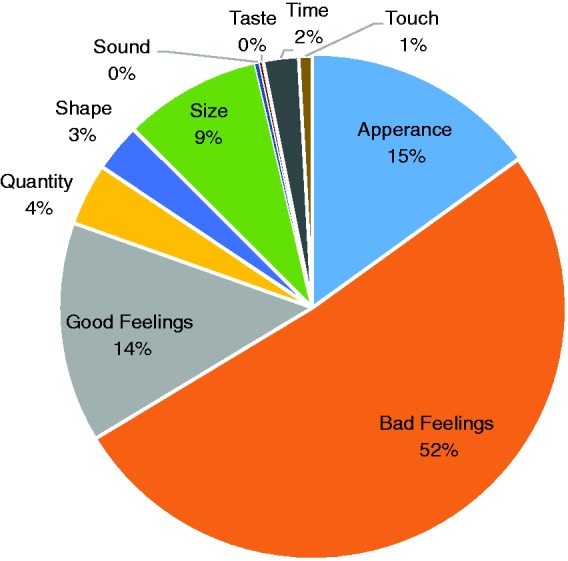
After removing #selfharn from the dataset, the text analysis revealed that #depression ( = 3081) and #suicide ( = 2270) were the most commonly used terms associated with #selfharn. Overall, 52% ( = 4386) of the popular words/phrases related with #selfharn posts were categorized as 'bad feelings'. Through manual coding, it was determined that the majority of #selfharn visual content ( = 92; 99%) did not generate an advisory warning but did contain a wound ( = 70; 75%). The #selfharn author analysis suggests that most were women ( = 18; 36%) with a dark-coloured profile aesthetic ( = 37; 74%) determined by an overwhelming amount of grey, black, blue, red, or purple colours.
According to the text and content analyses, #selfharn on Instagram may be contributing negatively to an online community of mental-health issues. More resources should be provided by Instagram to those who are involved in the NSSI Instagram community.
“#selfharm”已被照片墙(Instagram)屏蔽,但诸如“#selfharn”之类的变通标签开始出现,以便非自杀性自伤(NSSI)秘密社群进行交流。本研究的目的是:(a)确定照片墙上“#selfharn”对话的性质;(b)分析带有“#selfharn”标签的视觉内容(即图片和视频;共93条)的共同特征;(c)探究“#selfharn”的发布者(共50人)营造了何种环境。
本研究采用了多方法途径。利用Netlytic进行文本和内容分析,以检查与“#selfharn”相关的发布者说明和评论(共8772条,在七天内收集)。
从数据集中移除“#selfharn”后,文本分析显示,与“#selfharn”相关的最常用词汇是“#depression”(3081条)和“#suicide”(2270条)。总体而言,与“#selfharn”帖子相关的流行词汇和短语中,52%(4386条)被归类为“负面情绪”。通过人工编码确定,大多数“#selfharn”视觉内容(92条,占99%)未生成警示警告,但确实包含伤口(70条,占75%)。对“#selfharn”发布者的分析表明,大多数是女性(18人,占36%),其个人资料页面的审美风格偏暗(37人,占74%),这由大量的灰色、黑色、蓝色、红色或紫色所决定。
根据文本和内容分析,照片墙上的“#selfharn”可能对心理健康问题的在线社群产生负面影响。照片墙应向参与NSSI照片墙社群的人提供更多资源。