Shirasawa Kenta, Hirakawa Hideki, Fukino Nobuko, Kitashiba Hiroyasu, Isobe Sachiko
Kazusa DNA Research Institute, Kisarazu, Chiba 292-0818, Japan.
Institute of Vegetable and Floriculture Science, NARO, Tsu, Mie 514-2392, Japan.
DNA Res. 2020 Apr 1;27(2). doi: 10.1093/dnares/dsaa010.
The complex genome of a Japanese radish (Raphanus sativus) cultivar named 'Okute-Sakurajima' with an extremely large edible round root was analysed to explore its genomic characteristics.
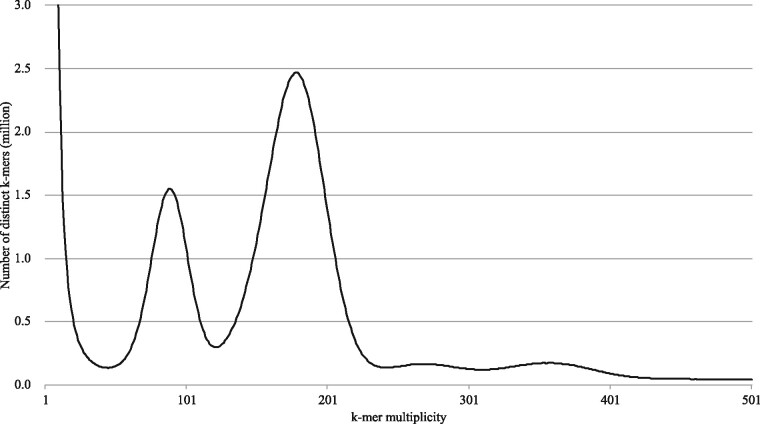
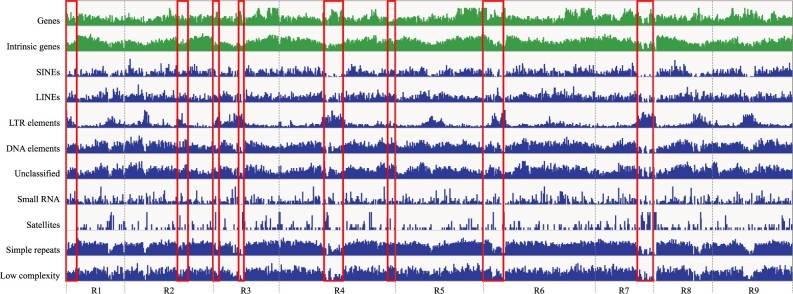
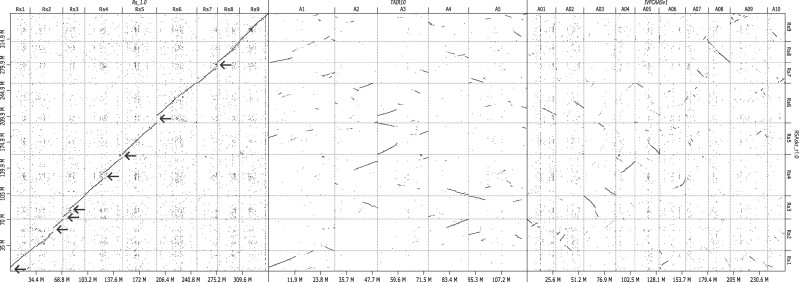
Single-molecule real-time technology was used to obtain long sequence reads to cover 60× of the genome. De novo assembly generated 504.5 Mb contigs consisting of 1,437 sequences with the N50 value of 1.2 Mb and included 94.1% of the core eukaryotic genes. Nine pseudomolecules, comprising 69.3% of the assembled contigs, were generated along with a high-density SNP genetic map. The sequence data thus established revealed the presence of structural variations and rearrangements in the Brassicaceae genomes.
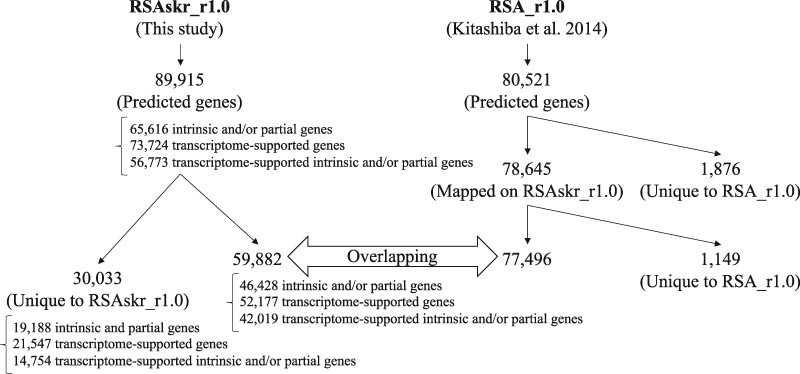
A total of 89,915 genes were identified in the 'Okute-Sakurajima' genome, 30,033 of which were newly found in this study. The genome information reported here will not only contribute to the establishment of a new resource for the radish genomics but also provide insights into the molecular mechanisms underlying formation of the giant root.
分析名为“奥库特 - 樱岛”的日本萝卜(萝卜属)品种的复杂基因组,该品种具有极大的可食用圆形根,以探索其基因组特征。
使用单分子实时技术获取长序列读数以覆盖基因组的60倍。从头组装产生了由1437个序列组成的504.5 Mb重叠群,N50值为1.2 Mb,包含94.1%的核心真核基因。生成了九个假分子,占组装重叠群的69.3%,同时还构建了高密度SNP遗传图谱。由此建立的序列数据揭示了十字花科基因组中存在结构变异和重排。
在“奥库特 - 樱岛”基因组中总共鉴定出89,915个基因,其中30,033个是本研究中新发现的。此处报道的基因组信息不仅将有助于建立萝卜基因组学的新资源,还将为巨型根形成的分子机制提供见解。