Department of Radiation Oncology, University of Colorado, Aurora, CO, USA.
J Appl Clin Med Phys. 2020 Jul;21(7):100-106. doi: 10.1002/acm2.12894. Epub 2020 May 19.
To identify causes of error, and present the concept of an automated technique that improves efficiency and helps to reduce transcription and manual data entry errors in the treatment planning of total body irradiation (TBI).
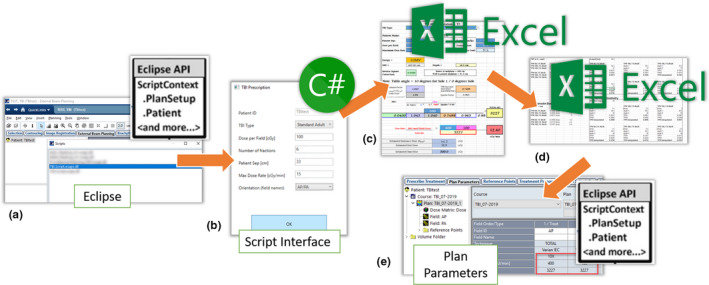
Analysis of incidents submitted to incident learning system (ILS) was performed to identify potential avenues for improvement by implementation of automation of the manual treatment planning process for total body irradiation (TBI). Following this analysis, it became obvious that while the individual components of the TBI treatment planning process were well implemented, the manual 'bridging' of the components (transcribing data, manual data entry etc.) were leading to high potential for error. A C#-based plug-in treatment planning script was developed to remove the manual parts of the treatment planning workflow that were contributing to increased risk.
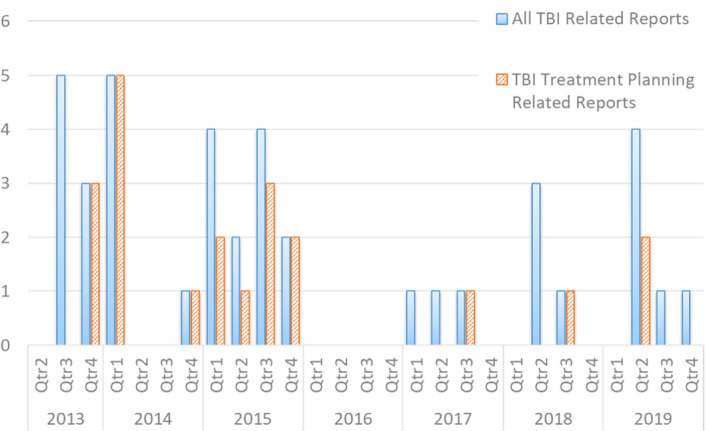
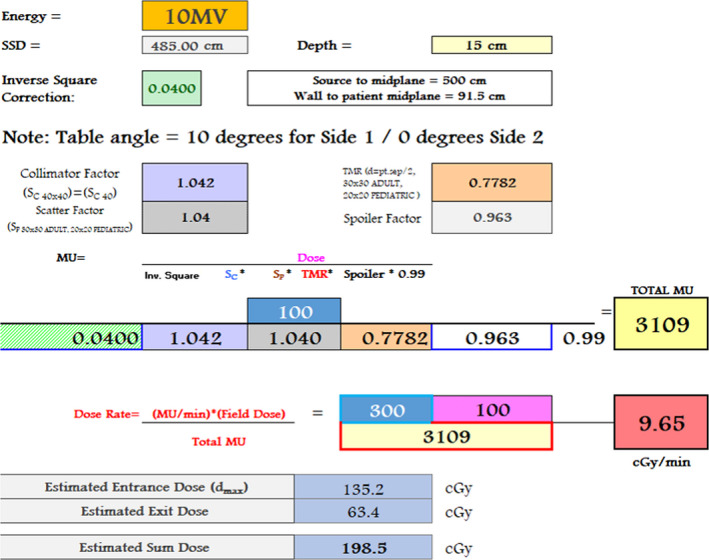
Here we present an example of the implementation of "Glue" programming, combining treatment planning C# scripts with existing spreadsheet calculation worksheets. Prior to the implementation of automation, 35 incident reports related to the TBI treatment process were submitted to the ILS over a 6-year period, with an average of 1.4 ± 1.7 reports submitted per quarter. While no incidents reached patients, reports ranged from minor documentation issues to potential for mistreatment if not caught before delivery. Since the implementation of automated treatment planning and documentation, treatment planning time per patient, including documentation, has been reduced; from an average of 45 min pre-automation to <20 min post-automation.
Manual treatment planning techniques may be well validated, but they are time-intensive and have potential for error. Often the barrier to automating these techniques becomes the time required to "re-code" existing solutions in unfamiliar computer languages. We present the workflow here as a proof of concept that automation may help to improve clinical efficiency and safety for special procedures.
识别错误原因,并提出一种自动化技术的概念,该技术可提高效率,并有助于减少全身照射(TBI)治疗计划中的转录和手动数据输入错误。
对事件学习系统(ILS)提交的事件进行分析,以确定通过自动化全身照射(TBI)的手动治疗计划流程来提高效率的潜在途径。在进行了这项分析之后,很明显,虽然 TBI 治疗计划过程的各个组成部分都得到了很好的实施,但组件之间的手动“桥接”(转录数据、手动数据输入等)导致了高出错风险。开发了一个基于 C#的插件治疗计划脚本,以消除导致风险增加的治疗计划工作流程的手动部分。
在这里,我们展示了“Glue”编程的实施示例,将治疗计划 C#脚本与现有的电子表格计算工作表相结合。在实施自动化之前,在 6 年的时间内,有 35 份与 TBI 治疗过程相关的事件报告提交给 ILS,平均每季度提交 1.4±1.7 份报告。虽然没有事件涉及到患者,但报告的范围从轻微的文档问题到如果在交付前没有发现可能的不当治疗。自从实施了自动化治疗计划和文档记录以来,每位患者的治疗计划时间(包括文档记录)已从自动化前的平均 45 分钟减少到自动化后的<20 分钟。
手动治疗计划技术可能已经得到充分验证,但它们耗时且存在出错的风险。通常,将这些技术自动化的障碍是在不熟悉的计算机语言中“重新编码”现有解决方案所需的时间。我们在此提出工作流程,作为一个概念验证,证明自动化可能有助于提高特殊程序的临床效率和安全性。