Discipline of Pathology, Sydney Medical School, Brain and Mind Centre, The University of Sydney, Sydney, New South Wales, Australia.
Department of Neuropathology, Royal Prince Alfred Hospital, Brain and Mind Centre, Sydney, New South Wales, Australia.
PLoS One. 2020 May 19;15(5):e0233300. doi: 10.1371/journal.pone.0233300. eCollection 2020.
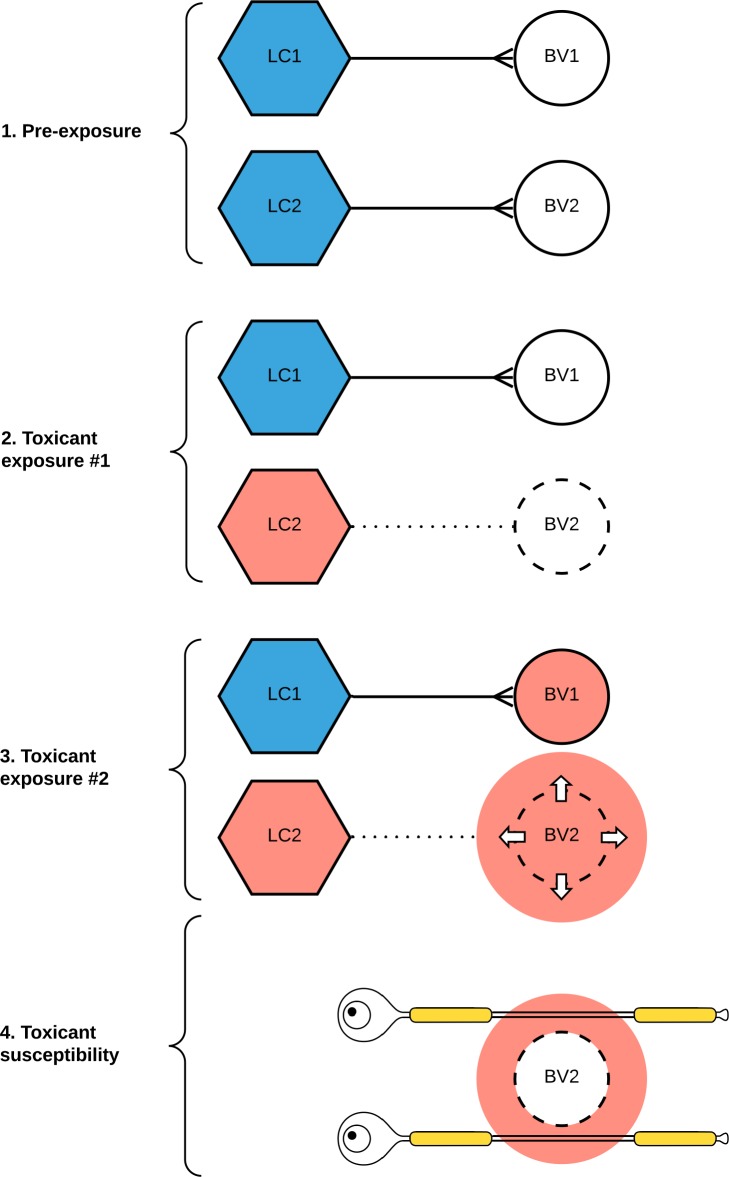
Damage to locus ceruleus neurons could play a part in the pathogenesis of neurodegenerative disorders such as Alzheimer's disease, Parkinson's disease, and multiple sclerosis because of impairment of the blood-brain barrier and enhanced neuroinflammation. The locus ceruleus has connections throughout the brain and spinal cord, so the characteristic widespread multifocal pathology in these disorders could be due to damage to different subsets of locus ceruleus neurons. Previous studies have shown that only certain locus ceruleus neurons accumulate the neurotoxic metal mercury. To find out if concentrations of other toxic metals or of essential trace elements also vary between individual locus ceruleus neurons, we used synchrotron X-ray fluorescence microscopy on frozen sections of locus ceruleus neurons taken from people with multiple sclerosis, in whom the locus ceruleus is structurally intact.
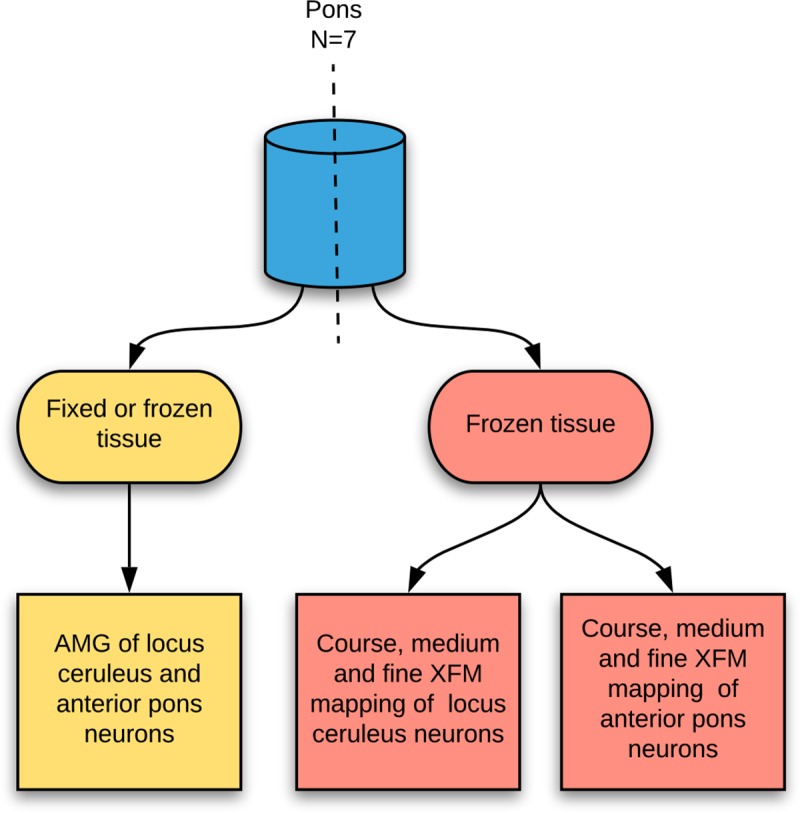
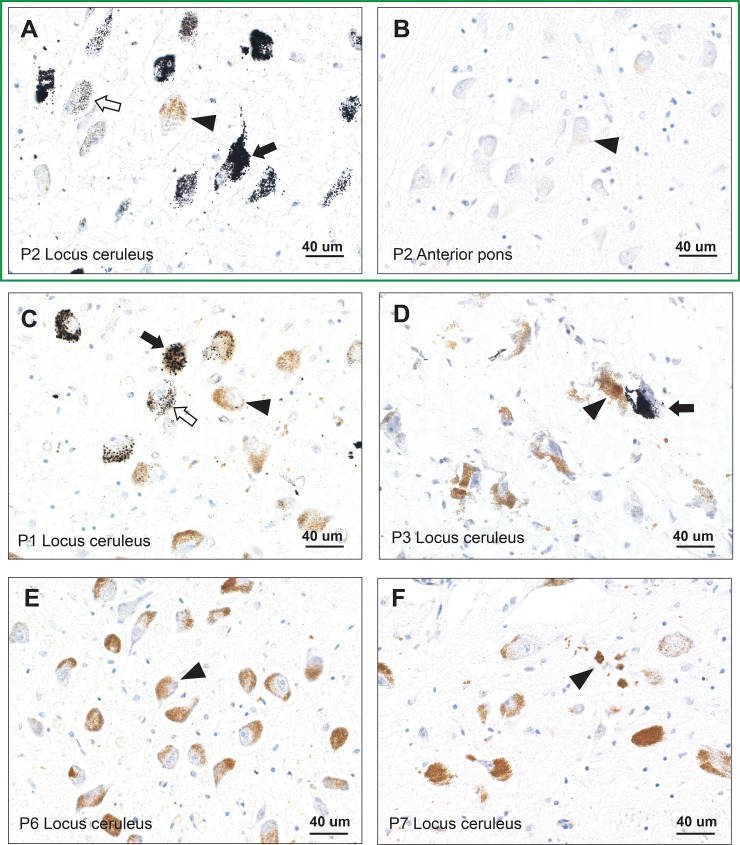
Paraffin embedded sections containing the locus ceruleus from seven people with multiple sclerosis were stained with autometallography that demonstrates accumulations of mercury, silver and bismuth. These were compared to maps of multiple elements obtained from frozen sections of locus ceruleus neurons from the same people using X-ray fluorescence microscopy. Neurons in the anterior pons from three of these donors were used as internal controls.
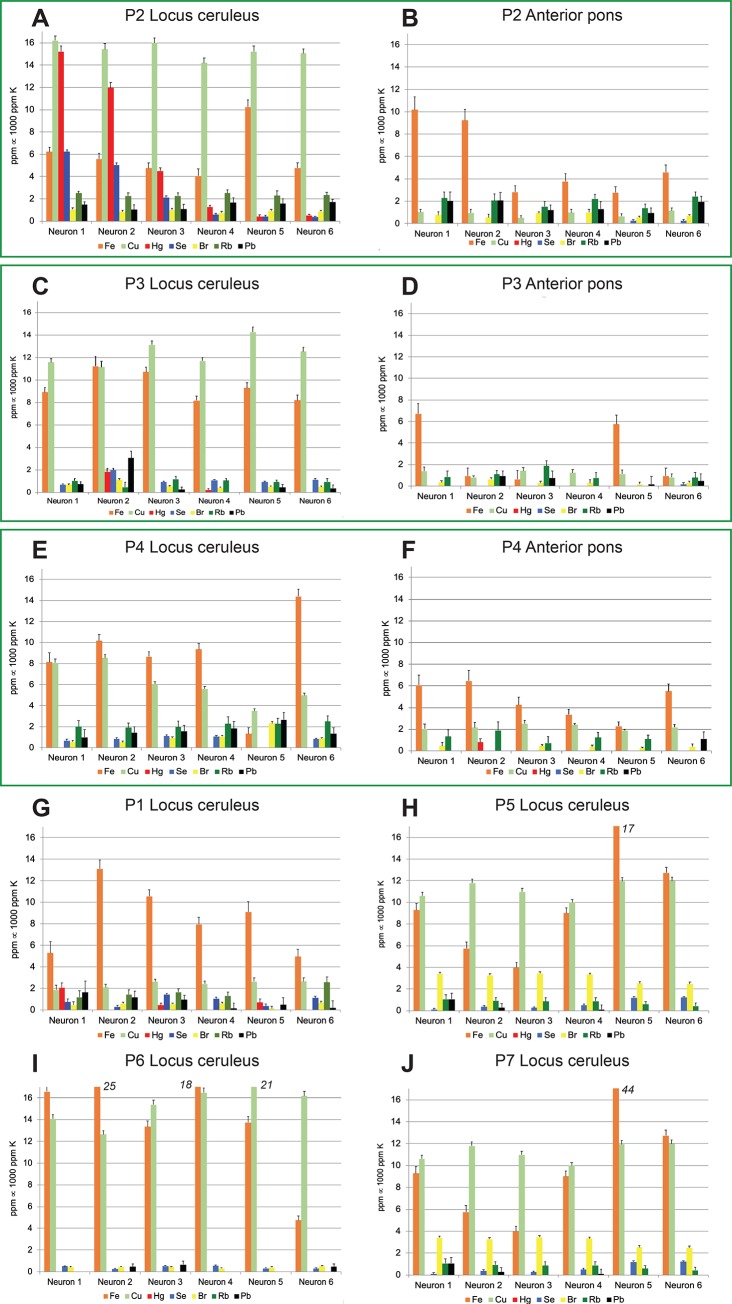
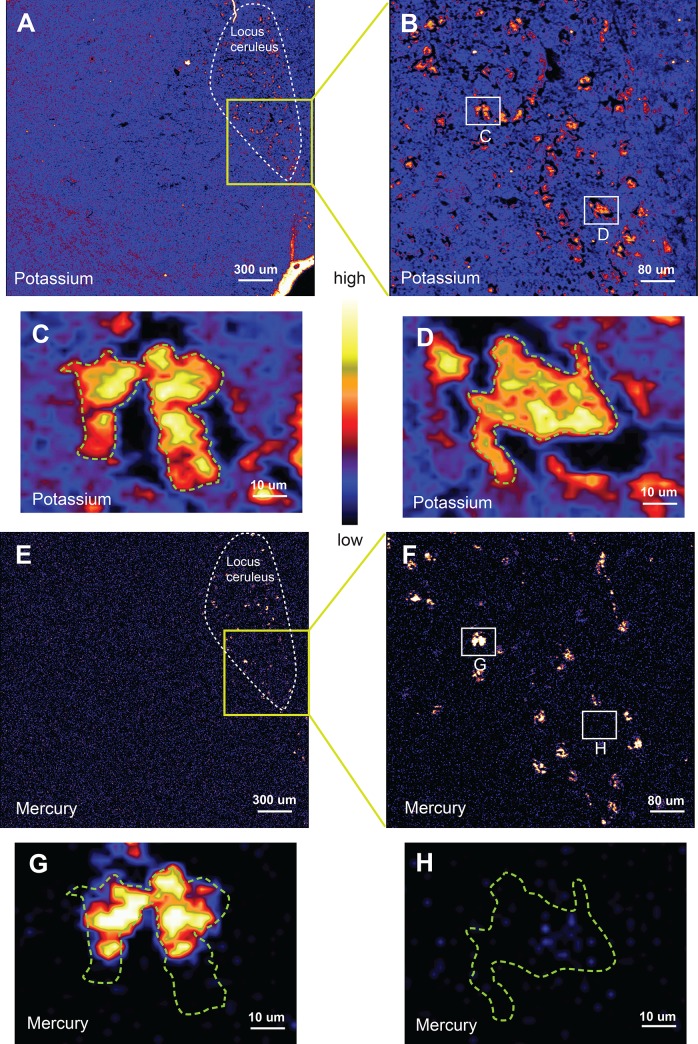
Autometallography staining was observed in scattered locus ceruleus neurons from three of the seven donors. X-ray fluorescence microscopy showed variations among individual locus ceruleus neurons in levels of mercury, selenium, iron, copper, lead, bromine, and rubidium. Variations between donors of locus ceruleus neuronal average levels of mercury, iron, copper, and bromine were also detected. Anterior pons neurons contained no mercury, had varied levels of iron, and had lower copper levels than locus ceruleus neurons.
Individual human locus ceruleus neurons contain varying levels of toxic metals and essential trace elements. In contrast, most toxic metals are absent or at low levels in nearby anterior pons neurons. The locus ceruleus plays a role in numerous central nervous system functions, including maintaining the blood-brain-barrier and limiting neuroinflammation. Toxic metals, or alterations in essential trace metals within individual locus ceruleus neurons, could be one factor determining the non-random destruction of locus ceruleus neurons in normal aging and neurodegenerative diseases, and subsequently the sites of the widespread multifocal central nervous system pathology in these disorders.
蓝斑核神经元的损伤可能在神经退行性疾病(如阿尔茨海默病、帕金森病和多发性硬化症)的发病机制中起作用,因为它会损害血脑屏障并增强神经炎症。蓝斑核与大脑和脊髓的各个部位都有联系,因此这些疾病中特征性的广泛多灶性病理可能是由于不同亚群的蓝斑核神经元受损所致。先前的研究表明,只有某些蓝斑核神经元会积累神经毒性金属汞。为了确定个体蓝斑核神经元之间是否也存在其他有毒金属或必需微量元素的浓度差异,我们使用同步加速器 X 射线荧光显微镜对多发性硬化症患者的蓝斑核神经元冷冻切片进行了研究,这些患者的蓝斑核结构完整。
对来自 7 名多发性硬化症患者的蓝斑核进行了石蜡包埋切片,并使用自动金属染色法显示汞、银和铋的积累。将这些与来自同一患者的蓝斑核神经元冷冻切片的 X 射线荧光显微镜获得的多种元素图谱进行了比较。来自这 3 位供体的前脑桥神经元被用作内部对照。
在 7 名供体中的 3 名中观察到了散在的蓝斑核神经元中的自动金属染色。X 射线荧光显微镜显示,个体蓝斑核神经元之间的汞、硒、铁、铜、铅、溴和铷水平存在差异。还检测到蓝斑核神经元供体之间的汞、铁、铜和溴的平均水平存在差异。前脑桥神经元不含汞,铁含量不一,铜含量低于蓝斑核神经元。
个体人类蓝斑核神经元含有不同水平的有毒金属和必需微量元素。相比之下,大多数有毒金属在附近的前脑桥神经元中不存在或含量很低。蓝斑核在许多中枢神经系统功能中发挥作用,包括维持血脑屏障和限制神经炎症。有毒金属或个体蓝斑核神经元内必需微量元素的改变可能是决定正常衰老和神经退行性疾病中蓝斑核神经元非随机破坏的一个因素,随后这些疾病中广泛多灶性中枢神经系统病理的部位。