Kobayashi Kazuyoshi, Ando Kei, Nakashima Hiroaki, Machino Masaaki, Morozumi Masayoshi, Kanbara Shunsuke, Ito Sadayuki, Inoue Taro, Yamaguchi Hidetoshi, Mishima Kenichi, Ishiguro Naoki, Imagama Shiro
Department of Orthopedic Surgery, Nagoya University Graduate School of Medicine, Nagoya, Japan.
Asian Spine J. 2020 Dec;14(6):801-807. doi: 10.31616/asj.2019.0374. Epub 2020 May 21.
Single-center retrospective study in pediatric patients.
The purpose of the study was to investigate the effects of the presence and severity of leg-length discrepancy (LLD) on scoliosis in children.
LLD is a common orthopedic problem that can result in standing imbalance, low back pain, and stress fractures. It may cause structural changes in the spine over time, but the exact effect of LLD on scoliosis is unknown.
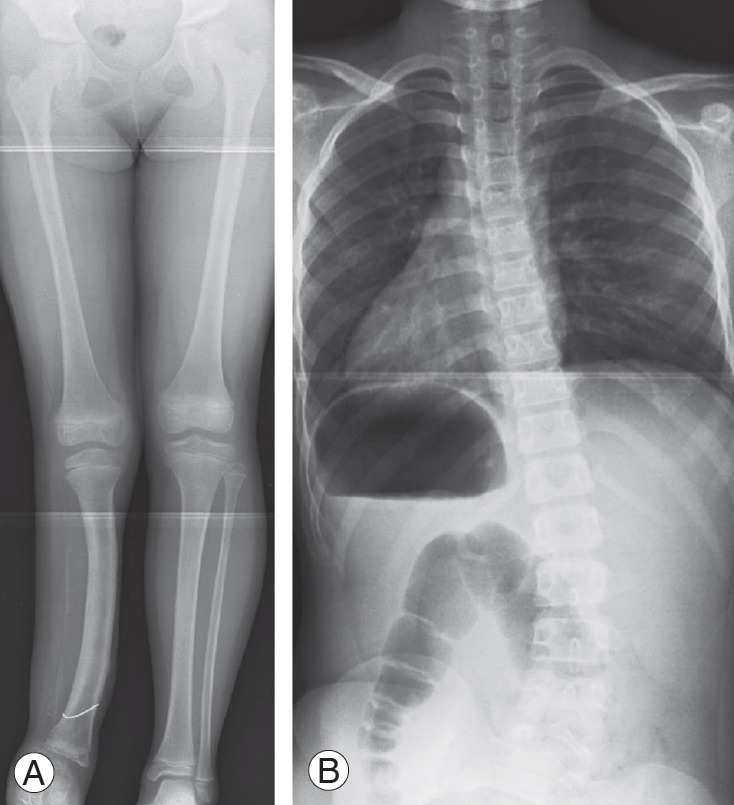
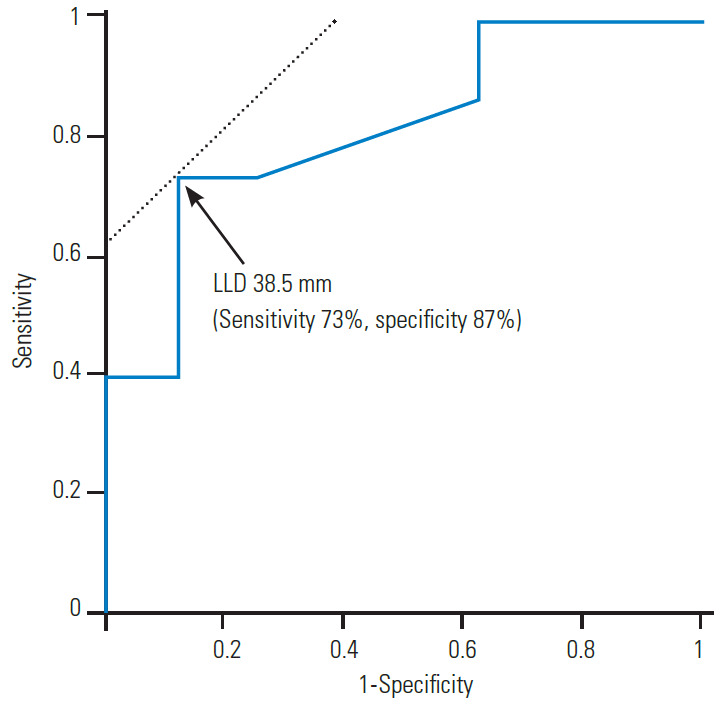
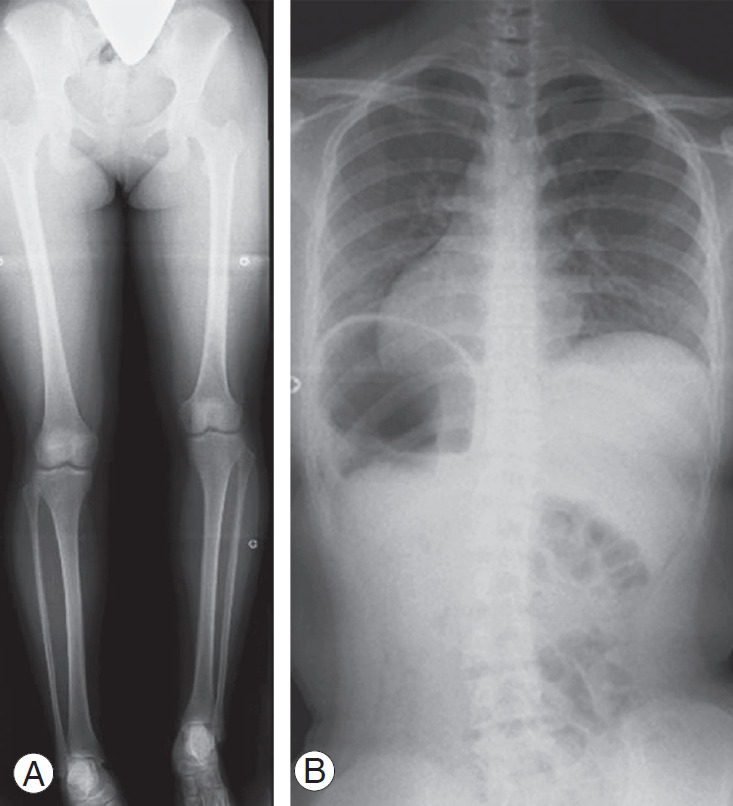
The subjects were 23 children with LLD ≥20 mm (range, 27-65 mm) treated at Nagoya University Hospital between 2007 and 2017. Whole spine posteroanterior standing radiographs and whole lower limb radiographs in a supine position were recorded. Data were collected for demographics, LLD, Cobb angle, pelvic obliquity, and Nash/Moe index. Scoliosis was defined as a Cobb angle ≥10°. Leg length was measured from the top of the femoral head to the middle of the tibial plafond, and LLD was defined as the difference between the left and right leg lengths.
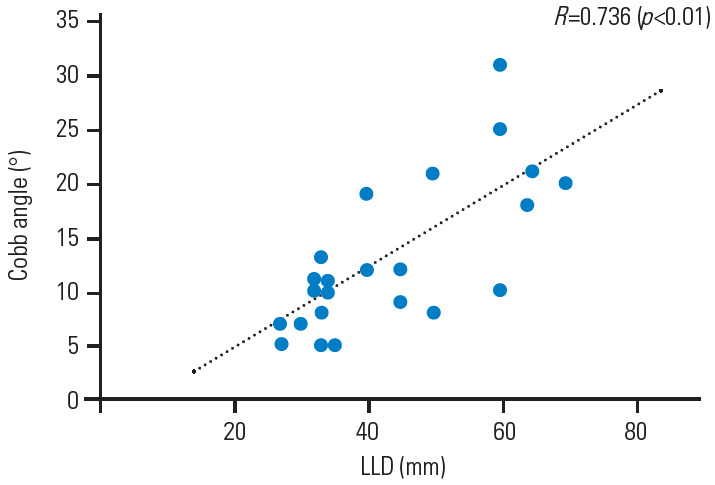
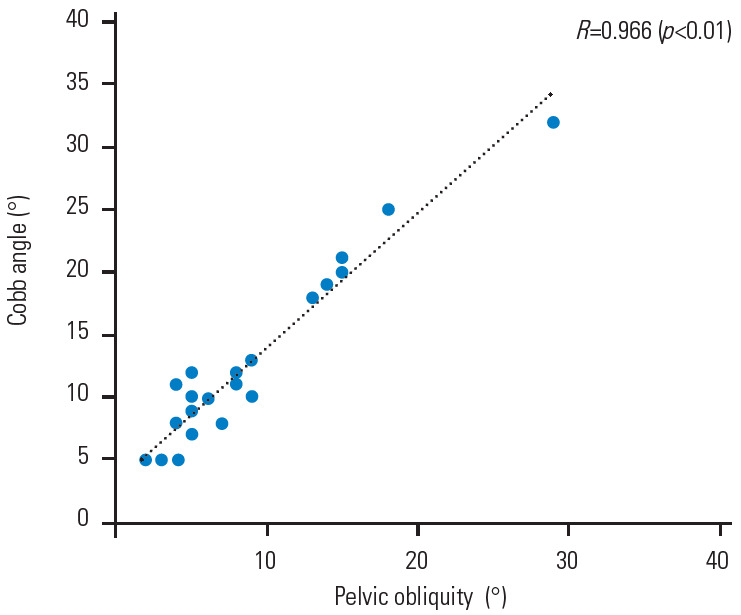
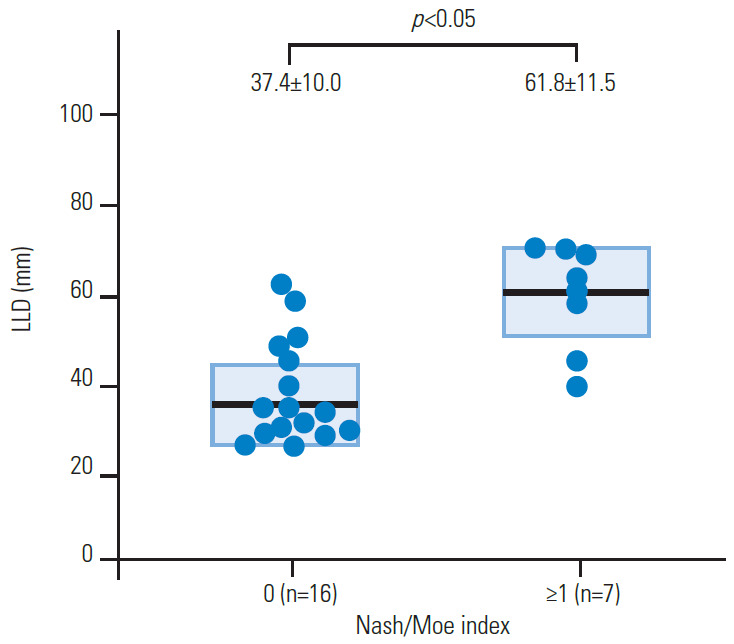
The patients (nine males and 14 females) had a mean age of 14.0 years (range, 5-18 years). The average LLD was 44.3±17.2 mm, with LLDs of 20 to 39 mm, 40 to 59 mm, and ≥60 mm in 13, five, and five subjects, respectively. The average Cobb angle was 13.0°±7.0°, and 15 subjects (65%) had scoliosis. Convexity of the scoliosis was to the short leg side in all cases. The Cobb angle was significantly related to the severity of the LLD (R=0.736, p<0.01), pelvic obliquity (R=0.966, p<0.01), and Nash/Moe index (p<0.05).
LLD is a common pediatric condition that can cause scoliosis of the spine. Severe scoliosis may develop if the LLD is ≥30 mm. Long-term studies are needed to examine the effect of LLD resolution on the elimination of scoliosis.
针对儿科患者的单中心回顾性研究。
本研究旨在调查腿长差异(LLD)的存在及其严重程度对儿童脊柱侧弯的影响。
LLD是一种常见的骨科问题,可导致站立失衡、腰痛和应力性骨折。随着时间的推移,它可能会引起脊柱结构的变化,但LLD对脊柱侧弯的确切影响尚不清楚。
研究对象为2007年至2017年期间在名古屋大学医院接受治疗的23例LLD≥20mm(范围为27 - 65mm)的儿童。记录全脊柱正位站立位X线片和全下肢仰卧位X线片。收集人口统计学、LLD、Cobb角、骨盆倾斜度和Nash/Moe指数的数据。脊柱侧弯定义为Cobb角≥10°。腿长从股骨头顶部测量至胫骨平台中部,LLD定义为左右腿长之差。
患者(9名男性和14名女性)的平均年龄为14.0岁(范围为5 - 18岁)。平均LLD为44.3±17.2mm,其中13例、5例和5例患者的LLD分别为20至39mm、40至59mm和≥60mm。平均Cobb角为13.0°±7.0°,15例患者(65%)患有脊柱侧弯。所有病例中脊柱侧弯的凸侧均朝向短腿侧。Cobb角与LLD的严重程度(R = 0.736,p < 0.01)、骨盆倾斜度(R = 0.966,p < 0.01)和Nash/Moe指数(p < 0.05)显著相关。
LLD是一种常见的儿科疾病,可导致脊柱侧弯。如果LLD≥30mm,可能会发展为严重的脊柱侧弯。需要进行长期研究以检查LLD矫正对消除脊柱侧弯的影响。