Department of Surgery, Leiden University Medical Center, 2300 RC Leiden, The Netherlands.
Einthoven Laboratory for Experimental Medicine, Leiden University Medical Center, 2300 RC Leiden, The Netherlands.
Int J Mol Sci. 2020 May 15;21(10):3508. doi: 10.3390/ijms21103508.
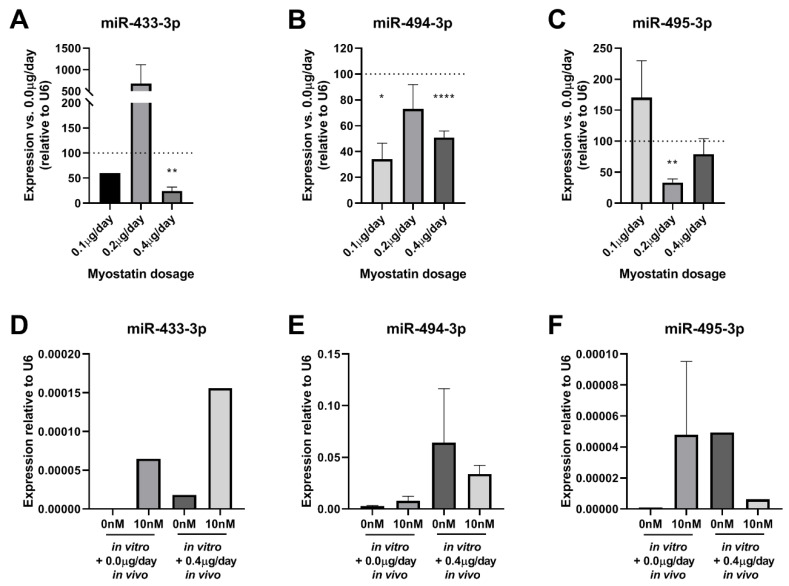
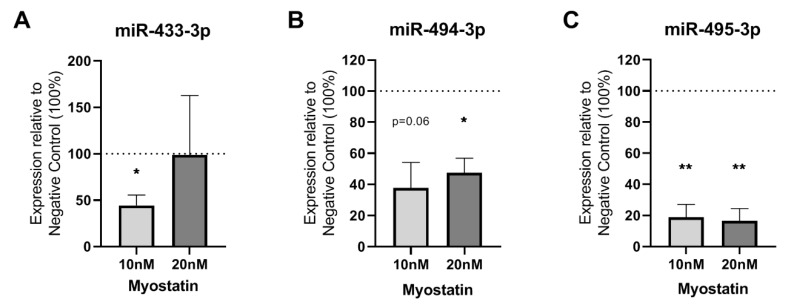
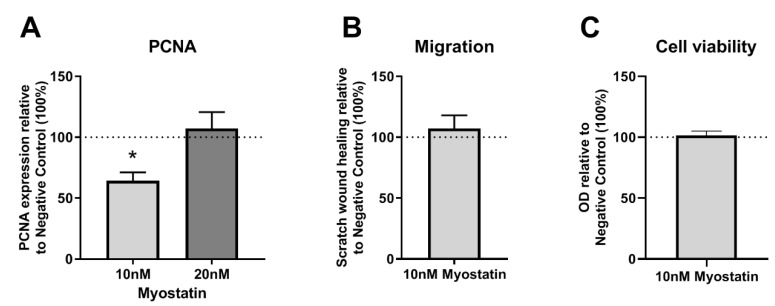
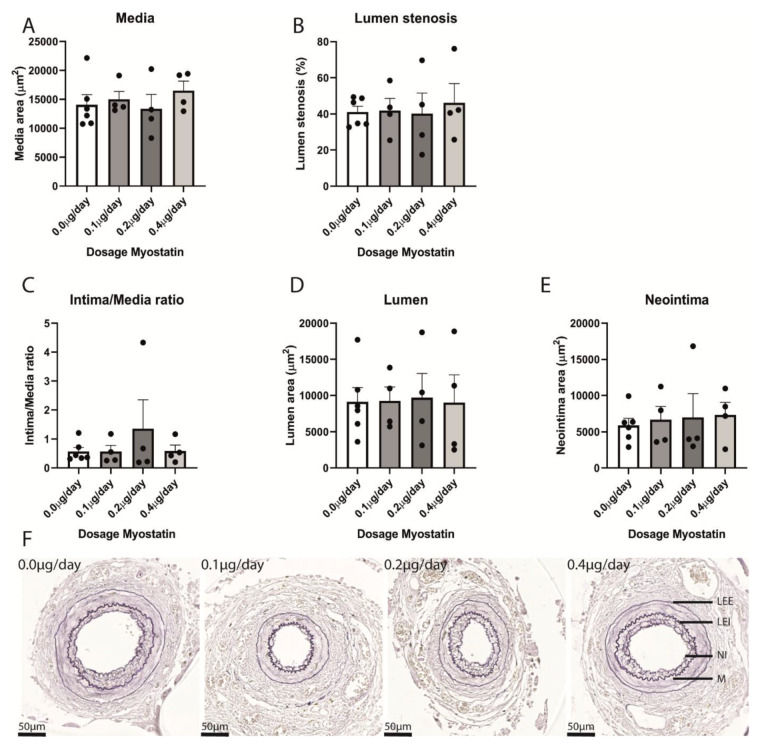
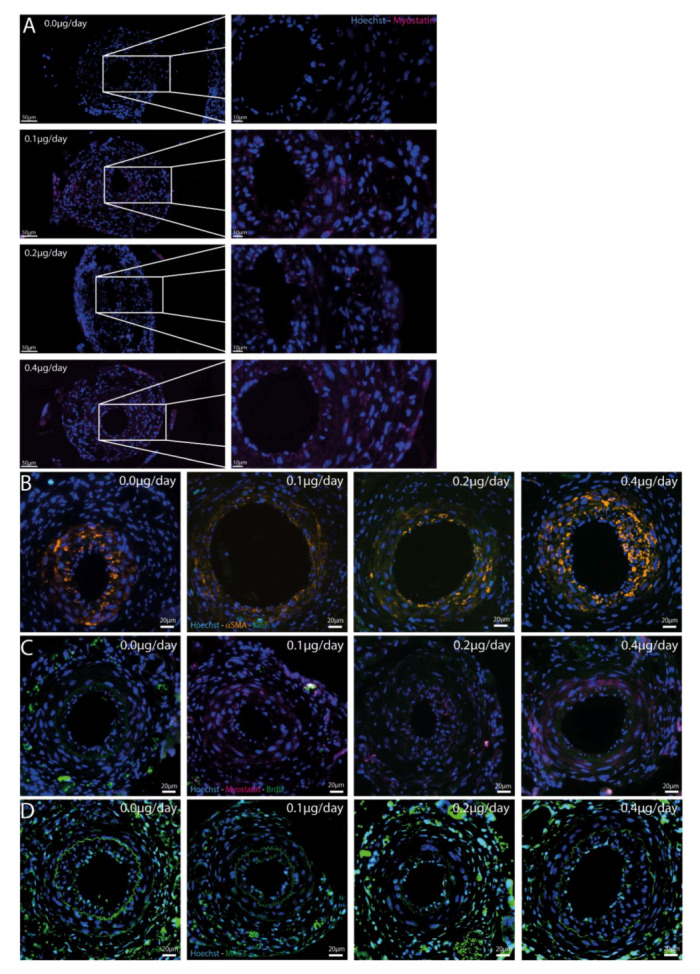
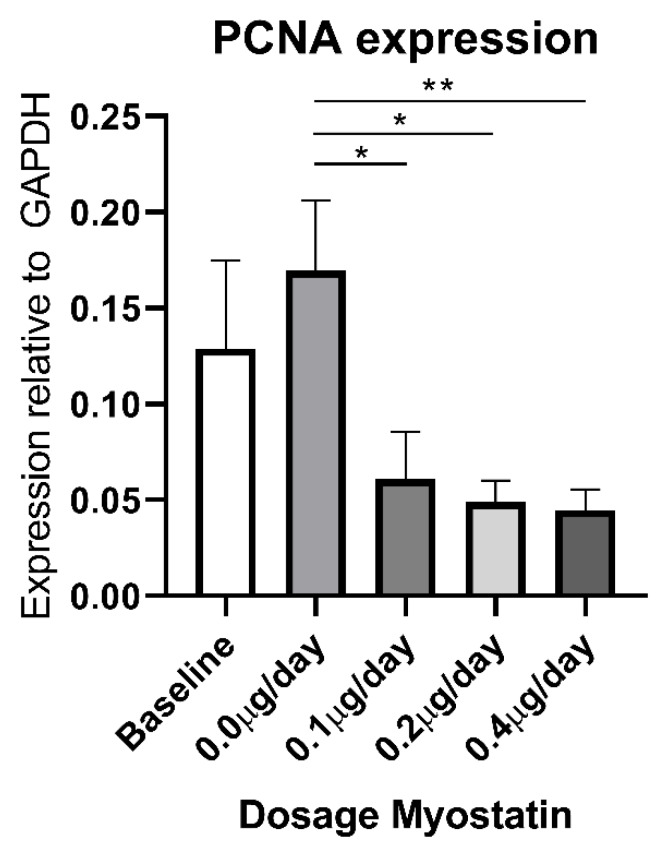
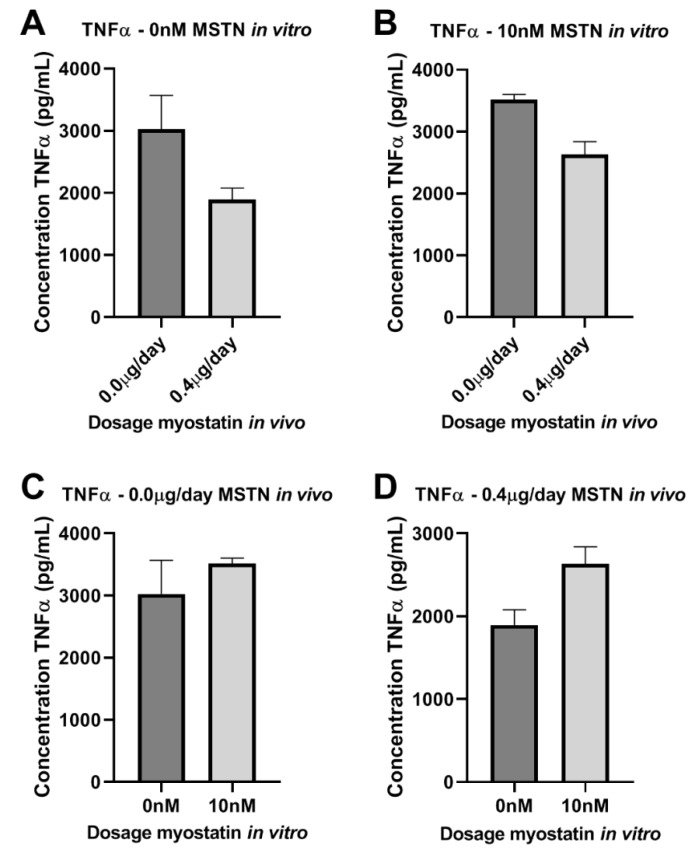
Myostatin is a negative regulator of muscle cell growth and proliferation. Furthermore, myostatin directly affects the expression of 14q32 microRNAs by binding the 14q32 locus. Direct inhibition of 14q32 microRNA miR-495-3p decreased postinterventional restenosis via inhibition of both vascular smooth muscle cell (VSMC) proliferation and local inflammation. Here, we aimed to investigate the effects of myostatin in a mouse model for postinterventional restenosis. In VSMCs in vitro, myostatin led to the dose-specific downregulation of 14q32 microRNAs miR-433-3p, miR-494-3p, and miR-495-3p. VSMC proliferation was inhibited, where cell migration and viability remained unaffected. In a murine postinterventional restenosis model, myostatin infusion did not decrease restenosis, neointimal area, or lumen stenosis. Myostatin inhibited expression of both proliferation marker PCNA and of 14q32 microRNAs miR-433-3p, miR-494-3p, and miR-495-3p dose-specifically in cuffed femoral arteries. However, 14q32 microRNA expression remained unaffected in macrophages and macrophage activation as well as macrophage influx into lesions were not decreased. In conclusion, myostatin did not affect postinterventional restenosis. Although myostatin inhibits 14q32 microRNA expression and proliferation in VSMCs, myostatin had no effect on macrophage activation and infiltration. Our findings underline that restenosis is driven by both VSMC proliferation and local inflammation. Targeting only one of these components is insufficient to prevent restenosis.
肌肉生长抑制素是肌肉细胞生长和增殖的负调控因子。此外,肌肉生长抑制素通过与 14q32 基因座结合,直接影响 14q32 微 RNA 的表达。直接抑制 14q32 微 RNA miR-495-3p 通过抑制血管平滑肌细胞(VSMC)增殖和局部炎症,减少介入后再狭窄。在这里,我们旨在研究肌肉生长抑制素在介入后再狭窄小鼠模型中的作用。在体外 VSMCs 中,肌肉生长抑制素导致 14q32 微 RNA miR-433-3p、miR-494-3p 和 miR-495-3p 的剂量特异性下调。VSMC 增殖受到抑制,而细胞迁移和活力不受影响。在小鼠介入后再狭窄模型中,肌肉生长抑制素输注并未减少再狭窄、新生内膜面积或管腔狭窄。肌肉生长抑制素抑制套扎股动脉中增殖标志物 PCNA 和 14q32 微 RNA miR-433-3p、miR-494-3p 和 miR-495-3p 的表达,呈剂量依赖性。然而,14q32 微 RNA 表达在巨噬细胞和巨噬细胞激活中不受影响,也没有减少巨噬细胞进入病变。总之,肌肉生长抑制素不影响介入后再狭窄。尽管肌肉生长抑制素抑制 VSMCs 中的 14q32 微 RNA 表达和增殖,但对巨噬细胞激活和浸润没有影响。我们的研究结果表明,再狭窄是由 VSMC 增殖和局部炎症共同驱动的。仅针对其中一个组成部分不足以预防再狭窄。