Dimitrakopoulos Foteinos-Ioannis, Nikolakopoulos Achilleas, Kottorou Anastasia, Kalofonou Fotini, Liolis Elias, Frantzi Theodora, Pyrousis Ioannis, Koutras Angelos, Makatsoris Thomas, Kalofonos Haralabos
Division of Oncology, Department of Medicine, University Hospital of Patras, Rion 26504, Greece.
Clinical and Molecular Oncology Laboratory, Medical School, University of Patras, Rion 26504, Greece.
Cancers (Basel). 2020 May 16;12(5):1257. doi: 10.3390/cancers12051257.
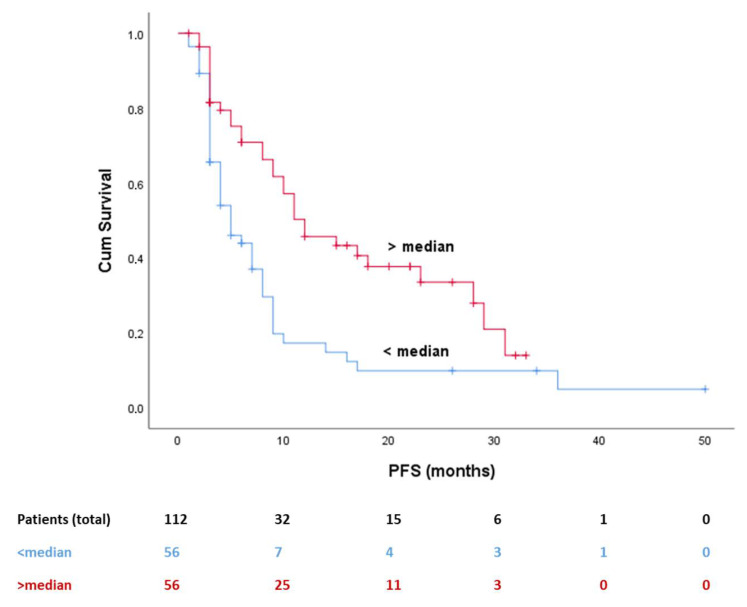
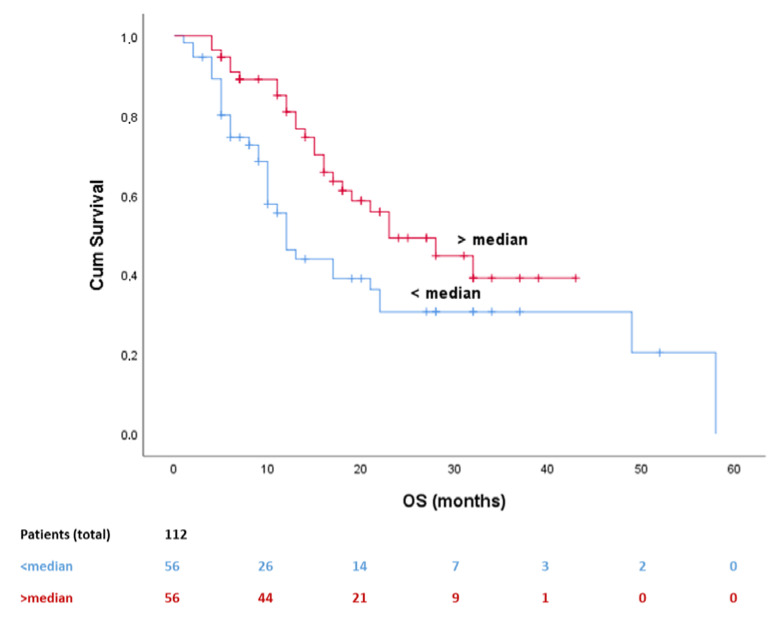
Immunotherapy with immune checkpoint inhibitors (ICIs) has changed the therapeutic management of advanced non-small cell lung cancer (aNSCLC) over the last decade. However, there is an unmet need for clinically useful biomarkers in this patient subgroup. The aim of this study was to combine baseline clinical characteristics of aNSCLC patients, in the form of a scoring system, and to investigate its predictive and prognostic value in NSCLC patients treated with ICIs. A total of 112 patients with advanced (stages IIIA to IV) NSCLC, treated with nivolumab or pembrolizumab, were enrolled in this study. Patras Immunotherapy Score (PIOS) was developed based on four of the studied parameters (performance status (PS), body mass index (BMI), age, and lines of treatment (LOT), which were incorporated into our formula (PS × BMI/ LOT × age). PIOS score was strongly associated with best overall responses (BOR), with those patients having benefit/good response (stable disease (SD) or partial (PR) or complete response (CR), achieving a higher score compared to patients who developed progressive disease (PD) ( < 0.001). Furthermore, PIOS score was associated with progression-free survival (PFS), since high-score patients had longer PFS ( < 0.001, hazard ratio (HR) = 0.469). Moreover, PIOS was associated with post-immunotherapy overall survival (OS), with high-score patients having improved OS (log-rank = 0.019). This study suggests that a combination of baseline parameters, which give rise to PIOS score, may predict the best response of NSCLC patients treated with anti-program cell death -1 (PD-1) monotherapy as well as it may have a potent prognostic value for PFS and post immunotherapy OS.
在过去十年中,免疫检查点抑制剂(ICI)免疫疗法改变了晚期非小细胞肺癌(aNSCLC)的治疗管理。然而,在这一患者亚组中,临床上仍需要有用的生物标志物。本研究的目的是将aNSCLC患者的基线临床特征以评分系统的形式结合起来,并研究其在接受ICI治疗的NSCLC患者中的预测和预后价值。本研究共纳入112例接受纳武单抗或派姆单抗治疗的晚期(IIIA至IV期)NSCLC患者。帕特雷免疫疗法评分(PIOS)基于四个研究参数(体能状态(PS)、体重指数(BMI)、年龄和治疗线数(LOT))制定,这些参数被纳入我们的公式(PS×BMI/LOT×年龄)。PIOS评分与最佳总体反应(BOR)密切相关,与出现疾病进展(PD)的患者相比,那些有获益/良好反应(疾病稳定(SD)或部分缓解(PR)或完全缓解(CR))的患者得分更高(<0.001)。此外,PIOS评分与无进展生存期(PFS)相关,因为高分患者的PFS更长(<0.001,风险比(HR)=0.469)。此外,PIOS与免疫治疗后的总生存期(OS)相关,高分患者的OS有所改善(对数秩检验=0.019)。本研究表明,产生PIOS评分的基线参数组合可能预测接受抗程序性细胞死亡蛋白-1(PD-1)单药治疗的NSCLC患者的最佳反应,并且可能对PFS和免疫治疗后的OS具有强大的预后价值。