Department of Radiotherapy and Oncology, University Hospital, Goethe University Frankfurt, Theodor-Stern-Kai 7, 60590 Frankfurt am Main, Germany.
Radiation Biology and DNA Repair, Technical University of Darmstadt, Schnittspahnstrasse 13, 64287 Darmstadt, Germany.
Cells. 2020 May 16;9(5):1235. doi: 10.3390/cells9051235.
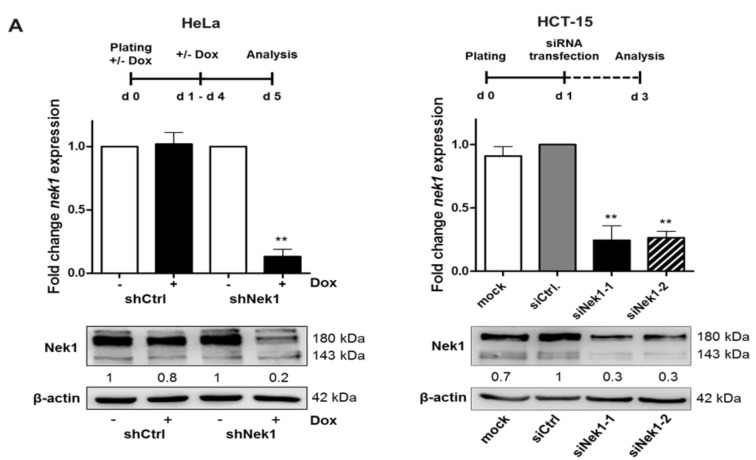
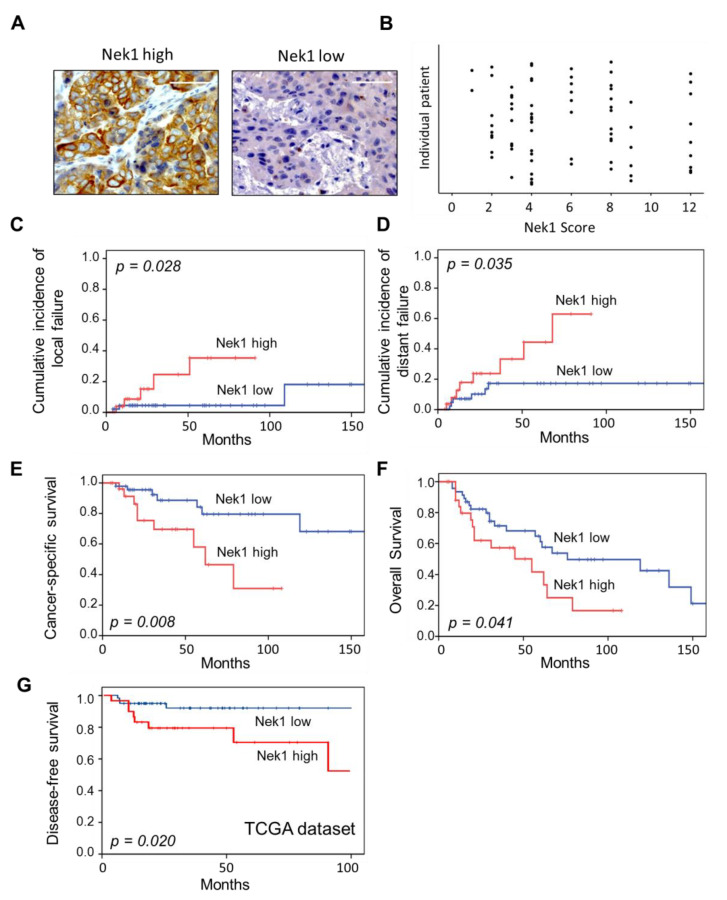
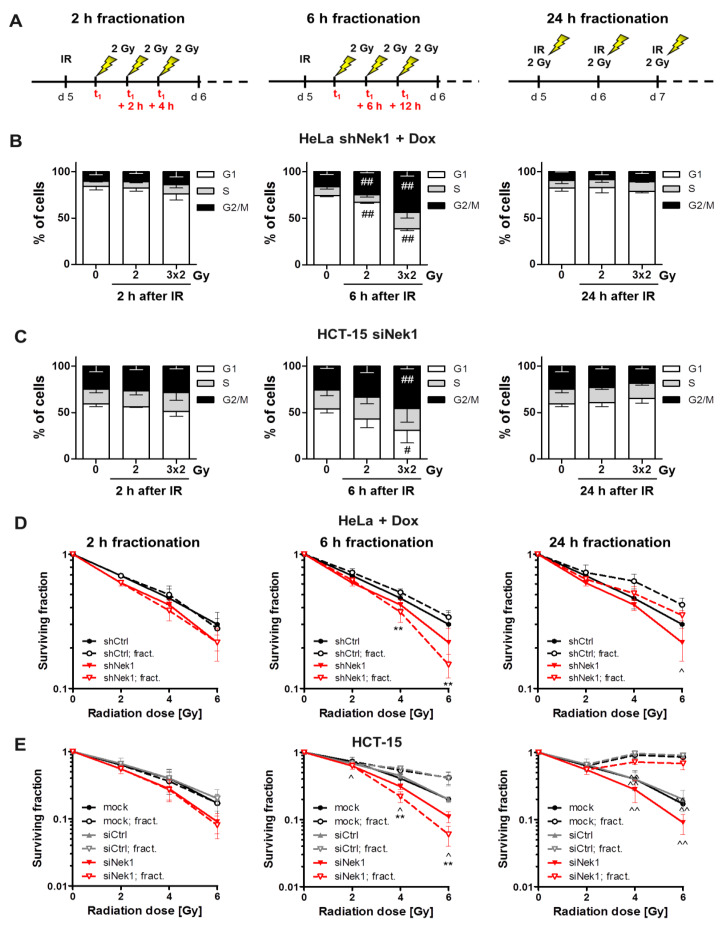
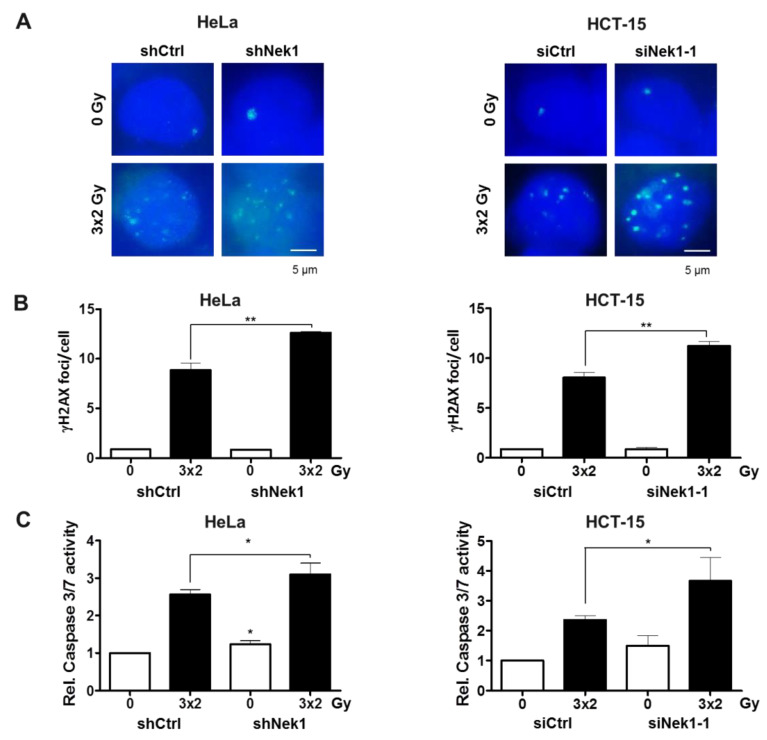
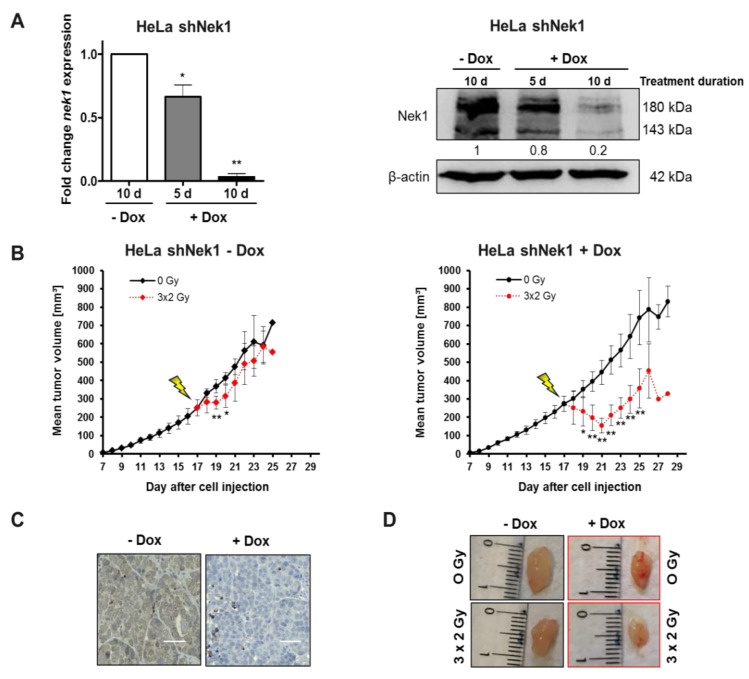
NIMA (never-in-mitosis gene A)-related kinase 1 (Nek1) is shown to impact on different cellular pathways such as DNA repair, checkpoint activation, and apoptosis. Its role as a molecular target for radiation sensitization of malignant cells, however, remains elusive. Stably transduced doxycycline (Dox)-inducible Nek1 shRNA HeLa cervix and siRNA-transfected HCT-15 colorectal carcinoma cells were irradiated in vitro and 3D clonogenic radiation survival, residual DNA damage, cell cycle distribution, and apoptosis were analyzed. Nek1 knockdown (KD) sensitized both cell lines to ionizing radiation following a single dose irradiation and more pronounced in combination with a 6 h fractionation (3 × 2 Gy) regime. For preclinical analyses we focused on cervical cancer. Nek1 shRNA HeLa cells were grafted into NOD/SCID/IL-2Rγc-/- (NSG) mice and Nek1 KD was induced by Dox-infused drinking water resulting in a significant cytostatic effect if combined with a 6 h fractionation (3 x 2 Gy) regime. In addition, we correlated Nek1 expression in biopsies of patients with cervical cancer with histopathological parameters and clinical follow-up. Our results indicate that elevated levels of Nek1 were associated with an increased rate of local or distant failure, as well as with impaired cancer-specific and overall survival in univariate analyses and for most endpoints in multivariable analyses. Finally, findings from The Cancer Genome Atlas (TCGA) validation cohort confirmed a significant association of high Nek1 expression with a reduced disease-free survival. In conclusion, we consider Nek1 to represent a novel biomarker and potential therapeutic target for drug development in the context of optimized fractionation intervals.
NIMA(有丝分裂期基因 A)相关激酶 1(Nek1)被证明会影响多种细胞途径,如 DNA 修复、检验点激活和细胞凋亡。然而,它作为恶性细胞放射增敏的分子靶点的作用仍不清楚。本研究通过稳定转染多西环素(Dox)诱导型 Nek1 shRNA 人宫颈癌细胞系 HeLa 和 siRNA 转染的结直肠癌细胞系 HCT-15,体外照射后分析 3D 克隆形成辐射存活、残留 DNA 损伤、细胞周期分布和细胞凋亡。Nek1 敲低(KD)使这两种细胞系在单次照射后对电离辐射敏感,与 6 小时分割(3×2 Gy)方案联合时更为明显。在临床前分析中,我们重点研究了宫颈癌。将 Nek1 shRNA HeLa 细胞移植到 NOD/SCID/IL-2Rγc-/-(NSG)小鼠中,通过 Dox 输注饮用水诱导 Nek1 KD,如果与 6 小时分割(3×2 Gy)方案联合,会产生明显的细胞抑制作用。此外,我们还将宫颈癌患者活检标本中的 Nek1 表达与组织病理学参数和临床随访结果进行了相关性分析。我们的研究结果表明,Nek1 水平升高与局部或远处失败率增加以及癌症特异性和总体生存率降低相关,在单因素分析和大多数终点的多因素分析中均如此。最后,来自癌症基因组图谱(TCGA)验证队列的结果证实了高 Nek1 表达与无病生存率降低之间存在显著相关性。总之,我们认为 Nek1 是优化分割间隔下药物开发的一个新的生物标志物和潜在的治疗靶点。