King Harry O, Brend Tim, Payne Helen L, Wright Alexander, Ward Thomas A, Patel Karan, Egnuni Teklu, Stead Lucy F, Patel Anjana, Wurdak Heiko, Short Susan C
Leeds Institute of Cancer and Pathology, University of Leeds, St James's University Hospital, Beckett Street, Leeds LS9 7TF, UK.
Leeds Institute of Cancer and Pathology, University of Leeds, St James's University Hospital, Beckett Street, Leeds LS9 7TF, UK.
Stem Cell Reports. 2017 Jan 10;8(1):125-139. doi: 10.1016/j.stemcr.2016.12.005.
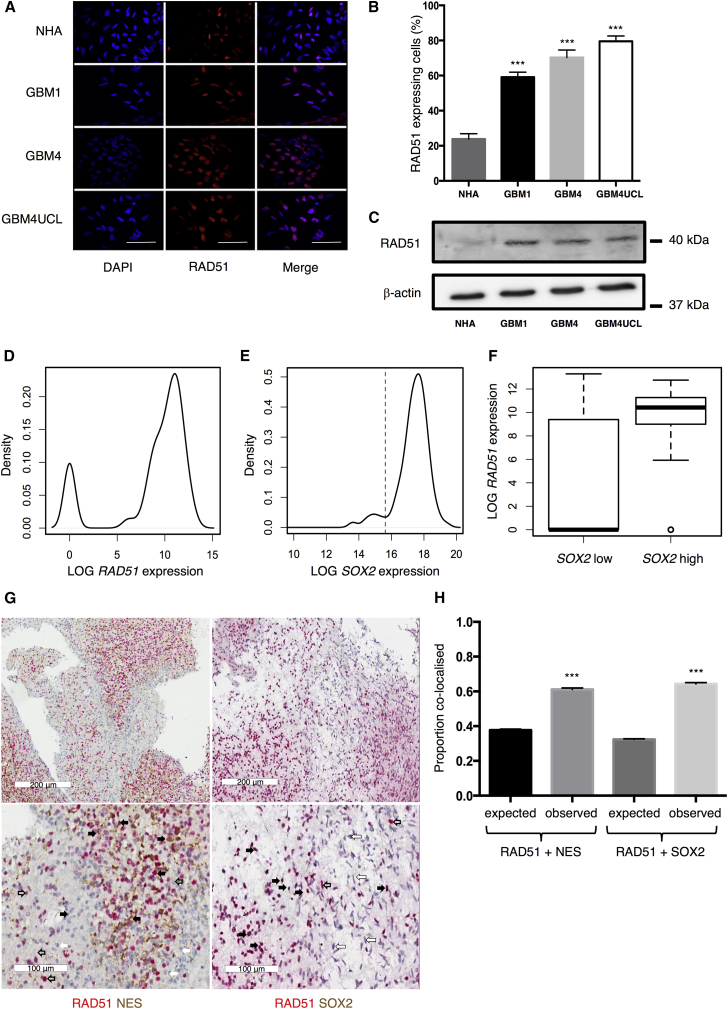
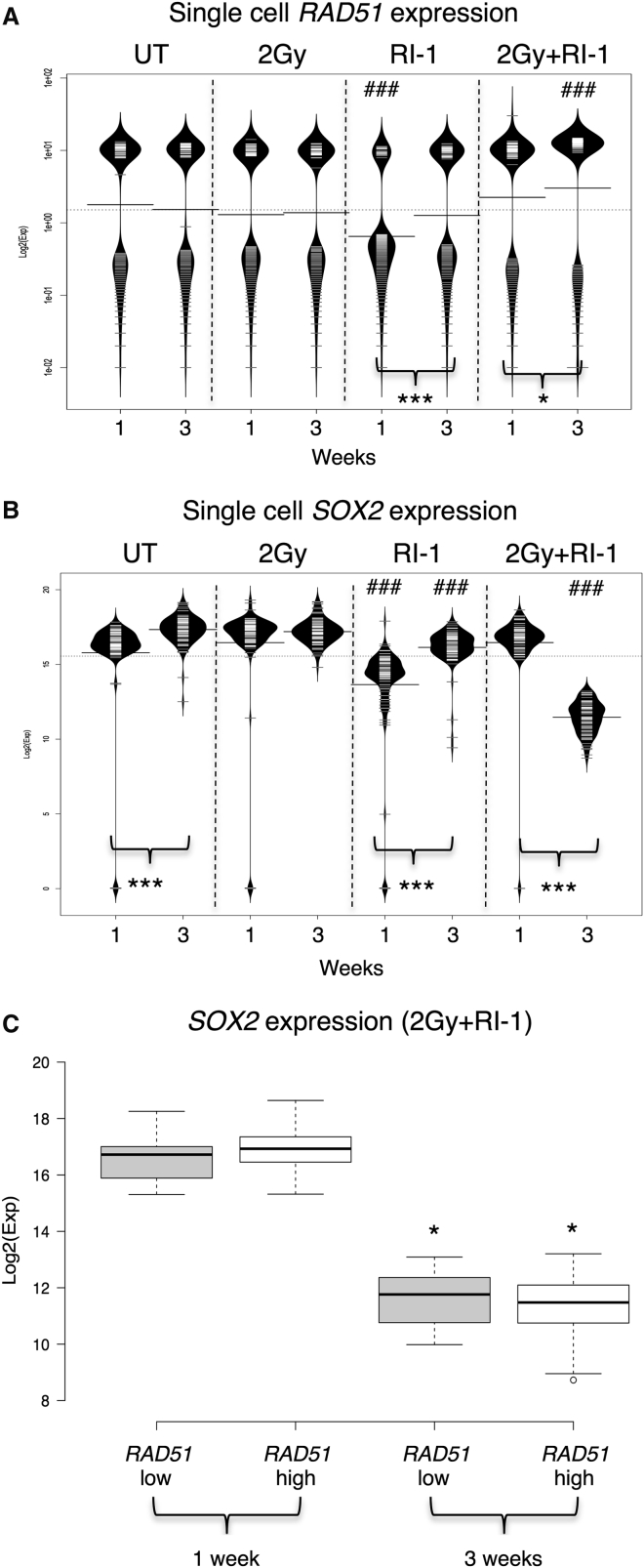
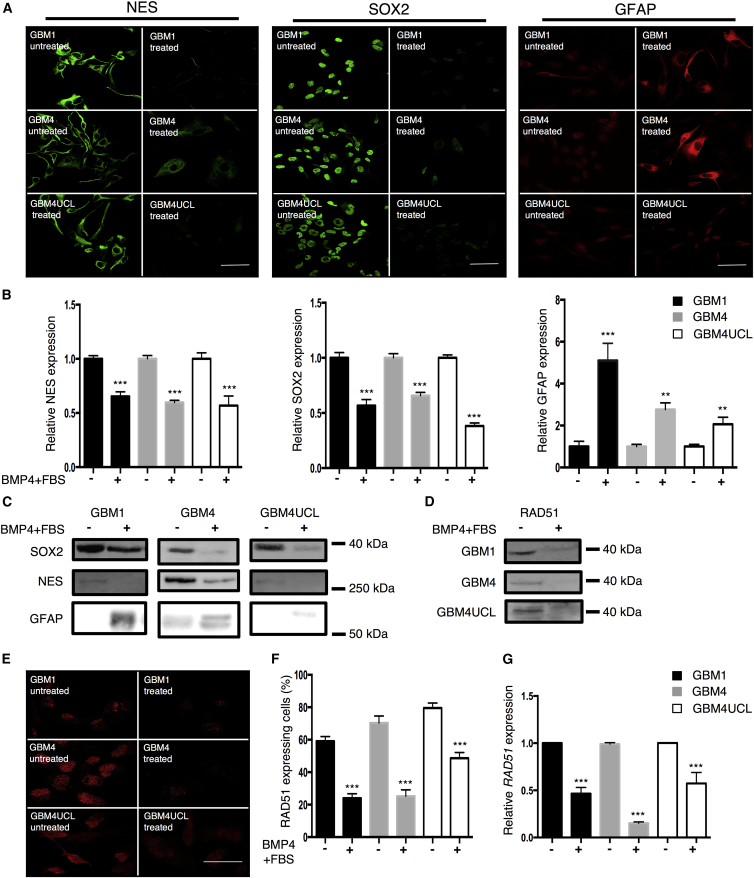
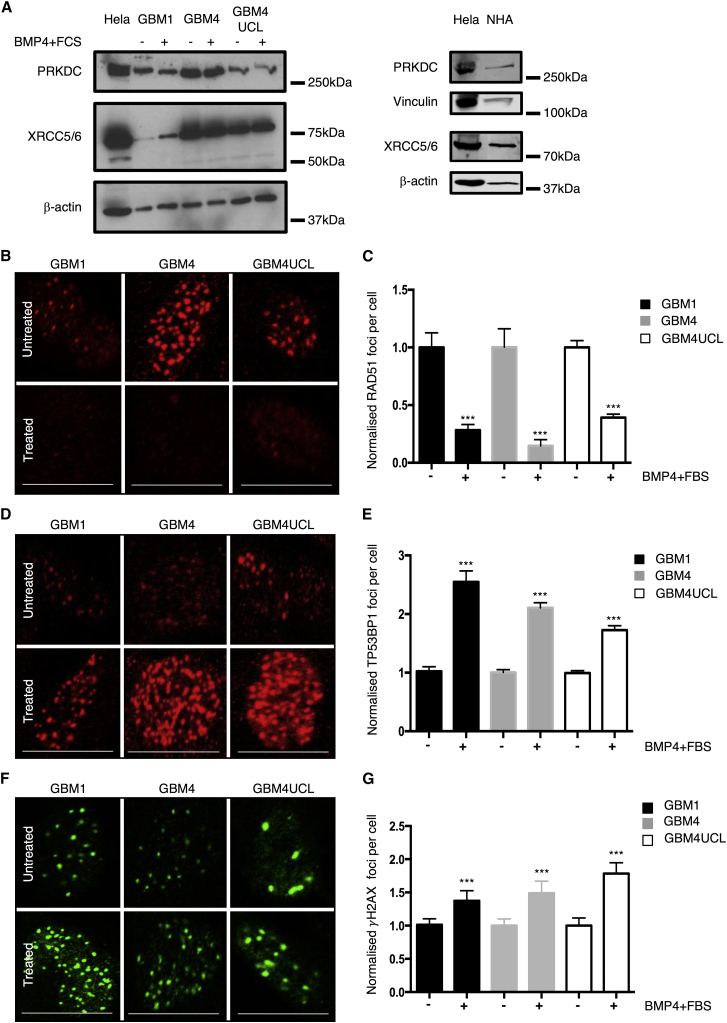
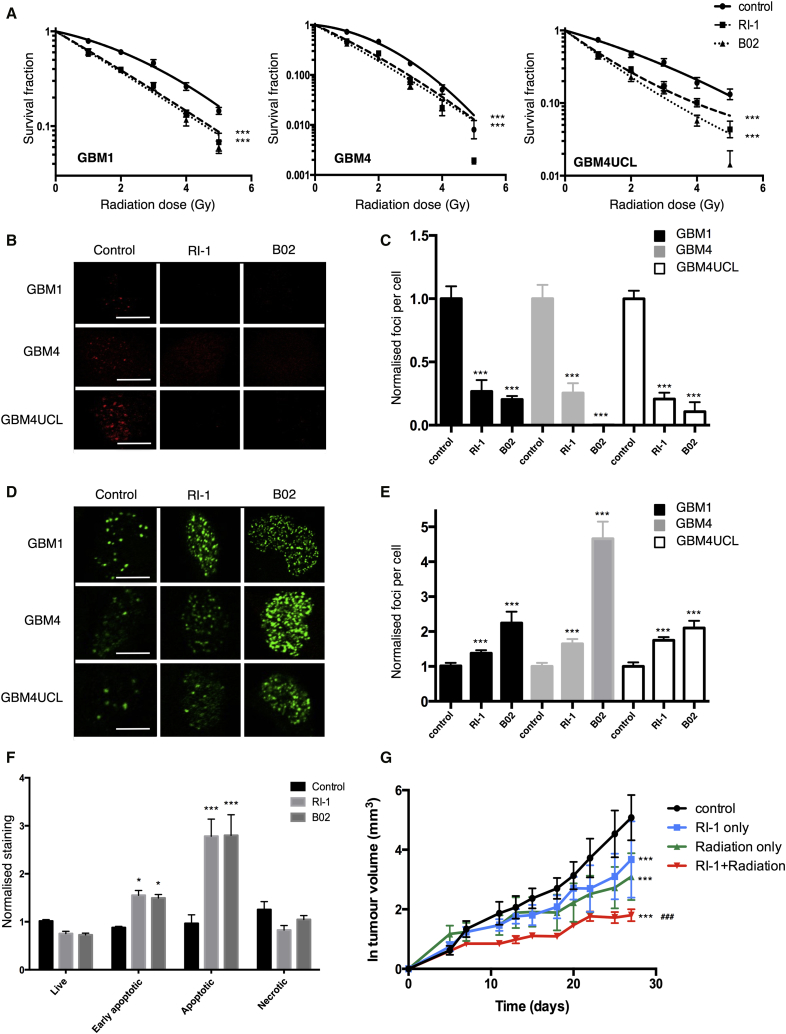
Patients with glioblastoma die from local relapse despite surgery and high-dose radiotherapy. Resistance to radiotherapy is thought to be due to efficient DNA double-strand break (DSB) repair in stem-like cells able to survive DNA damage and repopulate the tumor. We used clinical samples and patient-derived glioblastoma stem cells (GSCs) to confirm that the DSB repair protein RAD51 is highly expressed in GSCs, which are reliant on RAD51-dependent DSB repair after radiation. RAD51 expression and RAD51 foci numbers fall when these cells move toward astrocytic differentiation. In GSCs, the small-molecule RAD51 inhibitors RI-1 and B02 prevent RAD51 focus formation, reduce DNA DSB repair, and cause significant radiosensitization. We further demonstrate that treatment with these agents combined with radiation promotes loss of stem cells defined by SOX2 expression. This indicates that RAD51-dependent repair represents an effective and specific target in GSCs.
胶质母细胞瘤患者即使接受了手术和高剂量放疗,仍会因局部复发而死亡。放疗抗性被认为是由于能够在DNA损伤后存活并重新填充肿瘤的干细胞中高效的DNA双链断裂(DSB)修复。我们使用临床样本和患者来源的胶质母细胞瘤干细胞(GSCs)来证实DSB修复蛋白RAD51在GSCs中高表达,这些细胞在辐射后依赖RAD51依赖性DSB修复。当这些细胞向星形胶质细胞分化时,RAD51表达和RAD51焦点数量会下降。在GSCs中,小分子RAD51抑制剂RI-1和B02可防止RAD51焦点形成,减少DNA DSB修复,并引起显著的放射增敏作用。我们进一步证明,用这些药物联合放疗可促进由SOX2表达定义的干细胞丢失。这表明RAD51依赖性修复是GSCs中一个有效且特异的靶点。