Shindo Akihiro, Ishikawa Hidehiro, Ii Yuichiro, Niwa Atsushi, Tomimoto Hidekazu
Department of Neurology, Mie University Graduate School of Medicine, Mie University, Tsu, Japan.
Front Aging Neurosci. 2020 May 5;12:109. doi: 10.3389/fnagi.2020.00109. eCollection 2020.
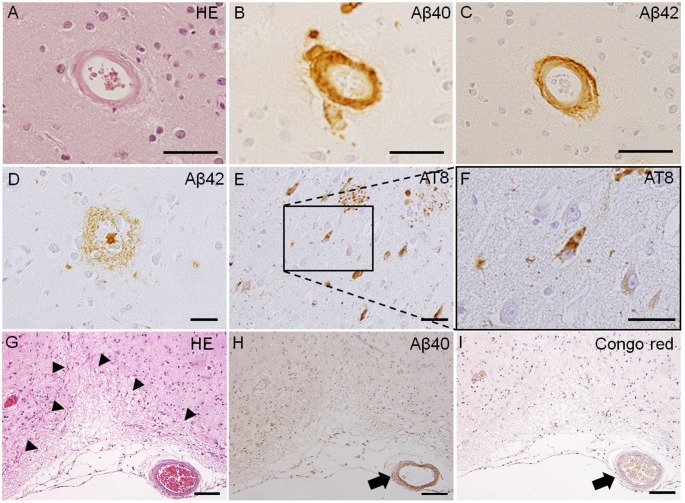
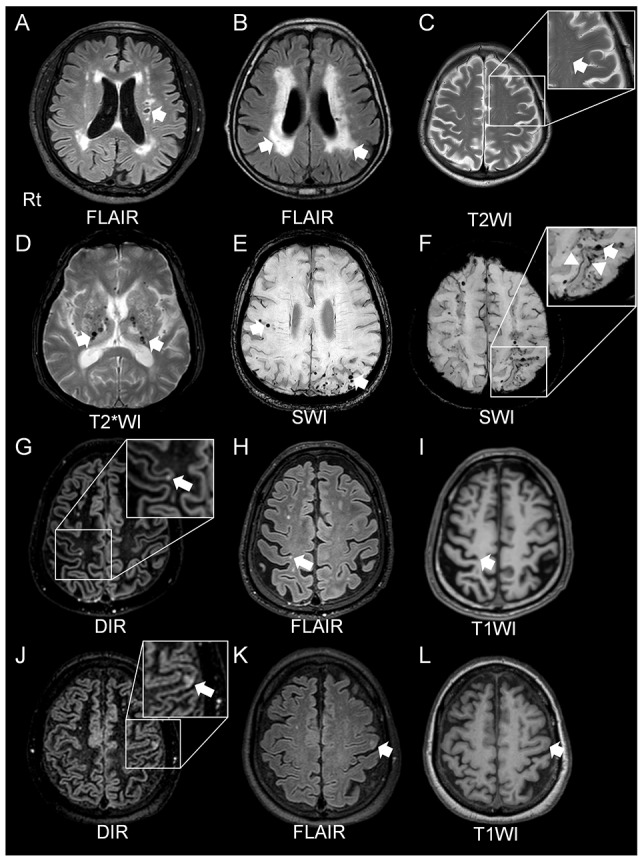
Cerebral small vessel disease (SVD) refers to a group of disease conditions affecting the cerebral small vessels, which include the small arteries, arterioles, capillaries, and postcapillary venules in the brain. SVD is the primary cause of vascular cognitive impairment and gait disturbances in aged people. There are several types of SVD, though arteriolosclerosis, which is mainly associated with hypertension, aging, and diabetes mellitus, and cerebral amyloid angiopathy (CAA) comprise most SVD cases. The pathology of arteriolosclerosis-induced SVD is characterized by fibrinoid necrosis and lipohyalinosis, while CAA-associated SVD is characterized by progressive deposition of amyloid beta (Aβ) protein in the cerebral vessels. Brain magnetic resonance imaging (MRI) has been used for examination of SVD lesions; typical lesions are characterized by white matter hyperintensity, lacunar infarcts, enlargement of perivascular spaces (EPVS), microbleeds, cortical superficial siderosis (cSS), and cortical microinfarcts. The microvascular changes that occur in the small vessels are difficult to identify clearly; however, these consequent image findings can represent the SVD. There are two main strategies for prevention and treatment of SVD, i.e., pharmacotherapy and lifestyle modification. In this review, we discuss clinical features of SVD, experimental models replicating SVD, and treatments to further understand the pathological and clinical features of SVD.
脑小血管病(SVD)是指影响脑小血管的一组疾病,这些小血管包括脑内的小动脉、小动脉、毛细血管和毛细血管后微静脉。SVD是老年人血管性认知障碍和步态障碍的主要原因。SVD有几种类型,尽管主要与高血压、衰老和糖尿病相关的小动脉硬化以及脑淀粉样血管病(CAA)构成了大多数SVD病例。小动脉硬化所致SVD的病理特征为纤维蛋白样坏死和脂质性透明变性,而CAA相关SVD的特征为淀粉样β(Aβ)蛋白在脑血管中的进行性沉积。脑磁共振成像(MRI)已用于检查SVD病变;典型病变的特征为白质高信号、腔隙性梗死、血管周围间隙扩大(EPVS)、微出血、皮质表面铁沉积(cSS)和皮质微梗死。小血管中发生的微血管变化难以清晰识别;然而,这些随之而来的影像表现可代表SVD。SVD的预防和治疗有两种主要策略,即药物治疗和生活方式改变。在本综述中,我们讨论SVD的临床特征、复制SVD的实验模型以及治疗方法,以进一步了解SVD的病理和临床特征。