Department Viral Zoonoses - One Health, Heinrich Pette Institute, Leibniz Institute for Experimental Virology, Hamburg, Germany.
Research Group Molecular Infection Immunology, Bernhard Nocht Institute for Tropical Medicine, Hamburg, Germany.
Front Immunol. 2020 Apr 22;11:697. doi: 10.3389/fimmu.2020.00697. eCollection 2020.
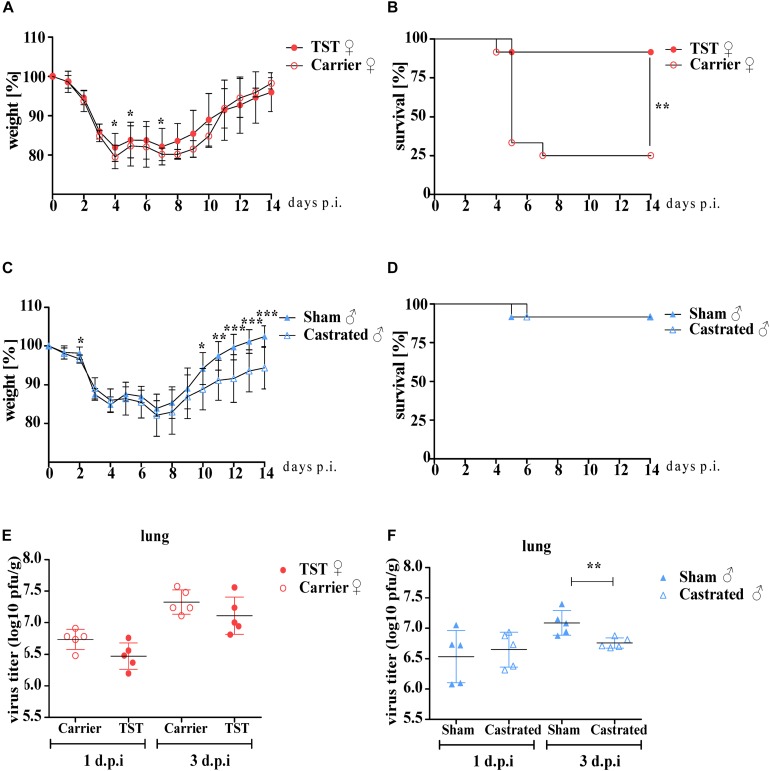
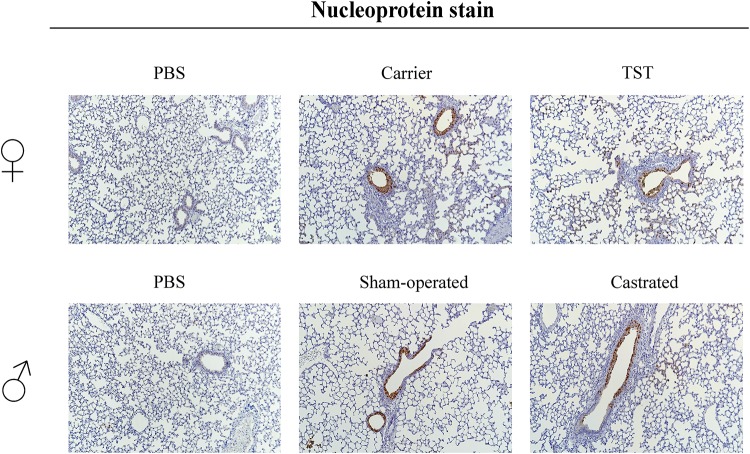
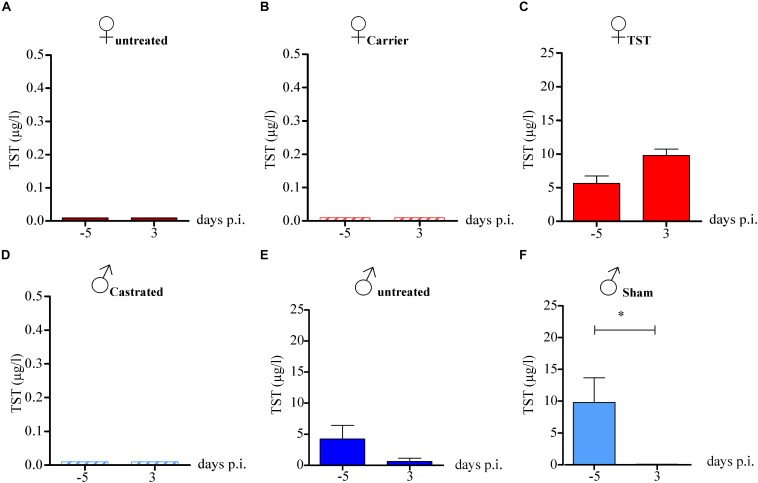
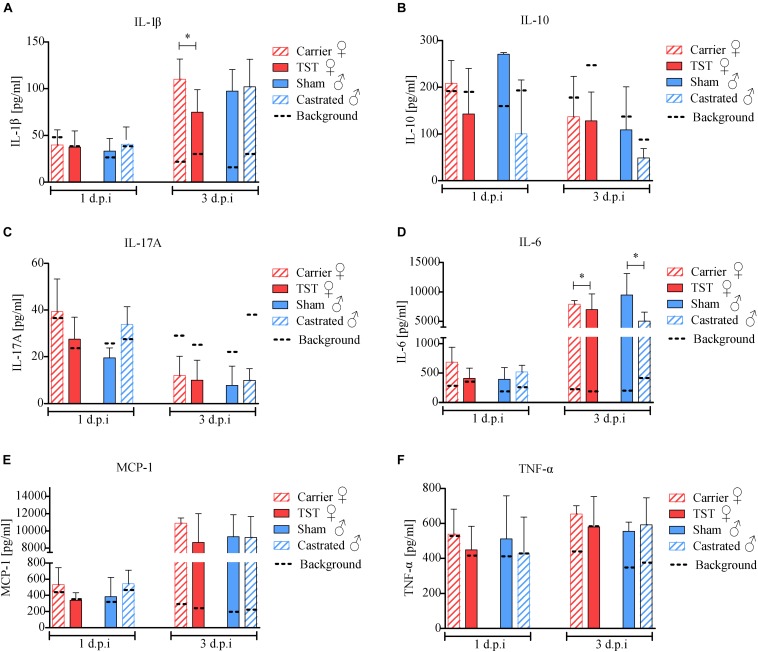
Influenza A virus pathogenesis may differ between men and women. The 2009 H1N1 influenza pandemic resulted in more documented hospitalizations in women compared to men. In this study, we analyzed the impact of male sex hormones on pandemic 2009 H1N1 influenza A virus disease outcome. In a murine infection model, we could mimic the clinical findings with female mice undergoing severe and even fatal 2009 H1N1 influenza compared to male mice. Treatment of female mice with testosterone could rescue the majority of mice from lethal influenza. Improved disease outcome in testosterone treated female mice upon 2009 H1N1 influenza A virus infection did not affect virus titers in the lung compared to carrier-treated females. However, reduction in IL-1β cytokine expression levels strongly correlated with reduced lung damage and improved influenza disease outcome in female mice upon testosterone treatment. In contrast, influenza disease outcome was not affected between castrated male mice and non-castrated controls. Here, influenza infection resulted in reduction of testosterone expression in male mice. These findings show that testosterone has protective functions on the influenza infection course. However, 2009 H1N1 influenza viruses seem to have evolved yet unknown mechanisms to reduce testosterone expression in males. These data will support future antiviral strategies to treat influenza taking sex-dependent immunopathologies into consideration.
甲型流感病毒的发病机制在男性和女性之间可能存在差异。2009 年 H1N1 流感大流行导致女性住院人数比男性多。在这项研究中,我们分析了男性性激素对 2009 年 H1N1 甲型流感病毒疾病结果的影响。在小鼠感染模型中,我们可以模拟女性小鼠比男性小鼠发生严重甚至致命的 2009 年 H1N1 流感的临床发现。用睾酮治疗雌性小鼠可以使大多数小鼠免受致命性流感的侵害。与载体治疗的雌性小鼠相比,在感染 2009 年 H1N1 流感病毒后,用睾酮治疗的雌性小鼠的疾病预后改善并未影响肺部的病毒滴度。然而,白细胞介素-1β(IL-1β)细胞因子表达水平的降低与雌性小鼠肺部损伤的减少和流感疾病预后的改善密切相关。相比之下,去势雄性小鼠和未去势对照组之间的流感疾病预后没有差异。在这里,流感感染导致雄性小鼠的睾酮表达减少。这些发现表明,睾酮对流感感染过程具有保护作用。然而,2009 年 H1N1 流感病毒似乎已经进化出了未知的机制,以降低男性的睾酮表达。这些数据将支持未来的抗病毒策略,以考虑性别依赖性免疫病理学来治疗流感。