Department of Cardiovascular Medicine, Osaka University Graduate School of Medicine.
Rinku Innovation Center for Wellness Care and Activities (RICWA), Rinku General Medical Center.
J Atheroscler Thromb. 2020 Nov 1;27(11):1183-1207. doi: 10.5551/jat.54353. Epub 2020 May 20.
Profiling of lipoproteins can predict risk of cardiovascular disease; gel permeation high-performance liquid chromatography (HPLC) improves prediction accuracy by providing detailed data for specific lipoprotein subclasses. This study applied HPLC to examine the effects of evolocumab, which effectively treats hyperlipidemia and mixed dyslipidemia, on lipoprotein subclasses, specifically the number and size of lipoprotein particles.
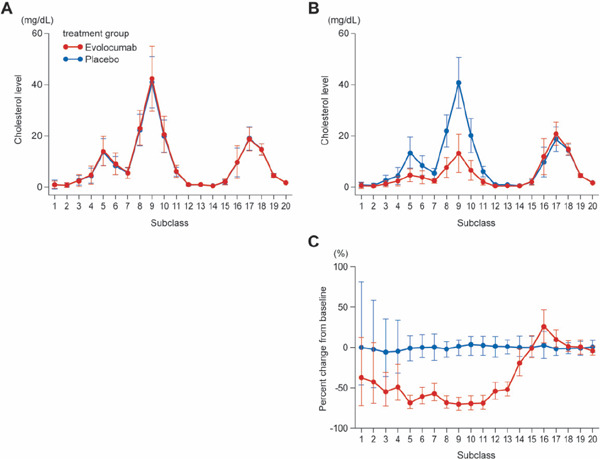
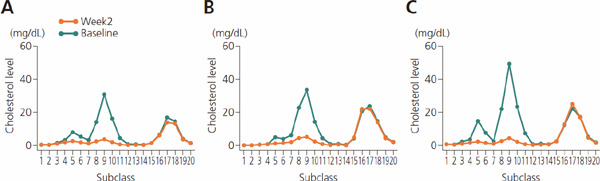
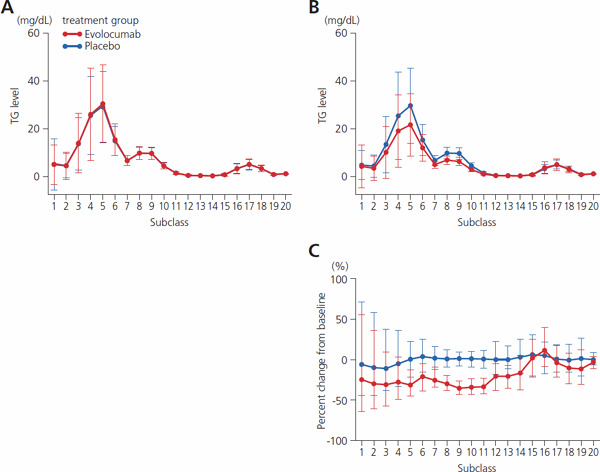
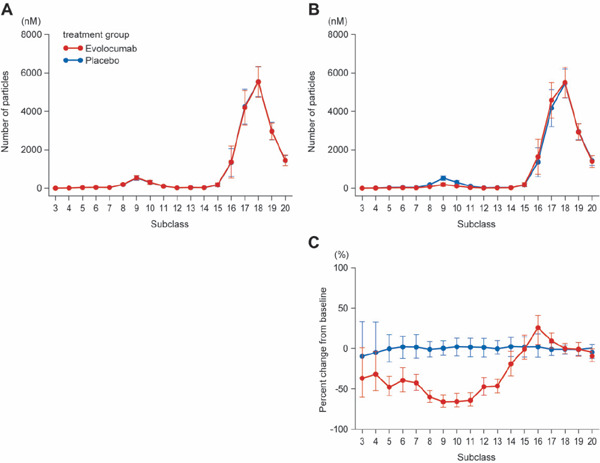
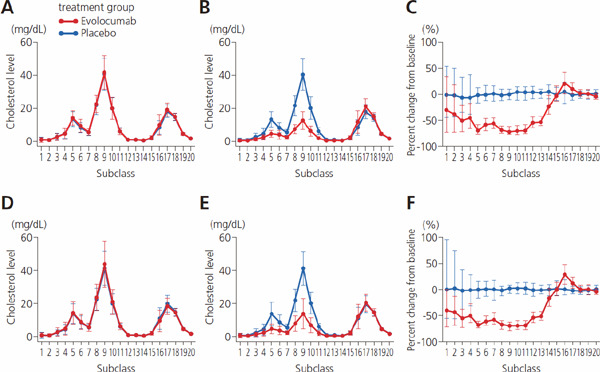
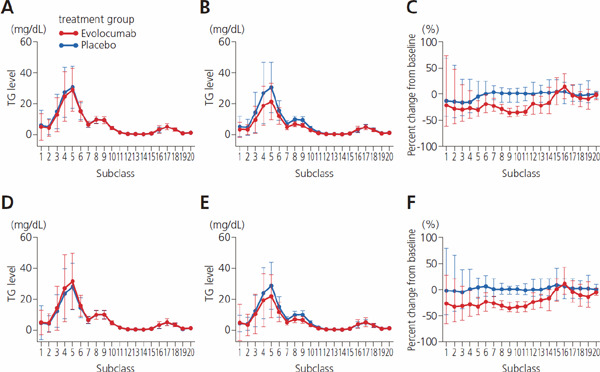
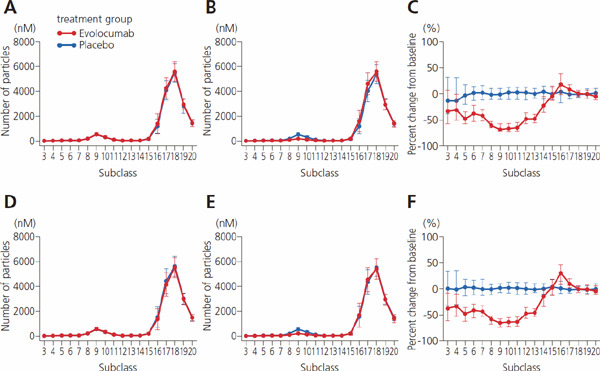
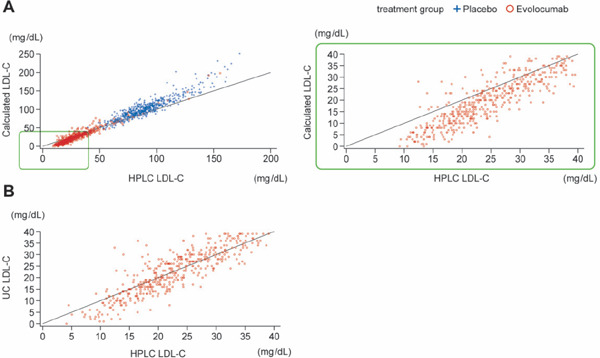
This post-hoc analysis used patient blood samples from YUKAWA-2, a phase 3 trial evaluating the efficacy of evolocumab in Japanese adult patients with hyperlipidemia or mixed dyslipidemia and at high risk for cardiovascular disease. We used HPLC to assess observed values and percent change from baseline in cholesterol and triglyceride (TG) concentrations, number of particles in lipoprotein subclasses to week 12, and mean observed values and mean percent change from baseline in variables to weeks 10 and 12. HPLC was also compared with conventional methods in assessing low-density lipoprotein (LDL) cholesterol (LDL-C) values.
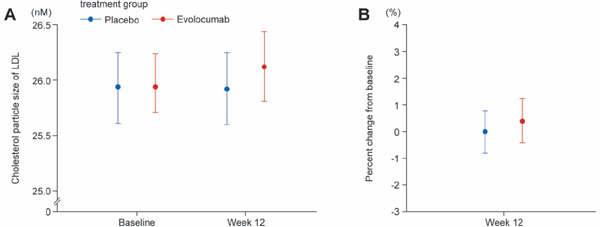
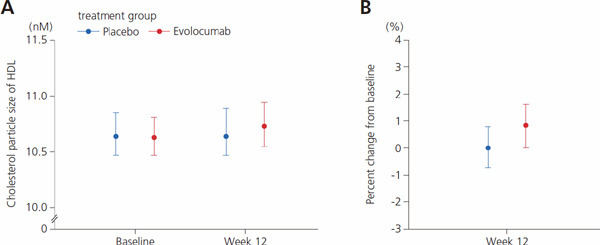
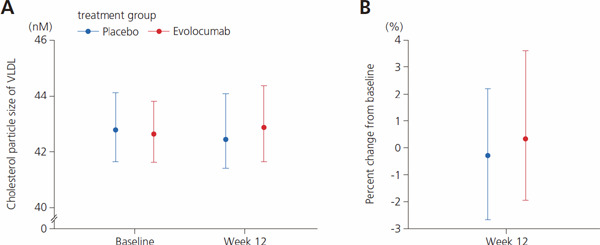
Data for all 404 patients were analyzed. Evolocumab significantly decreased cholesterol and TG concentrations, and total particle count, in very low-density lipoprotein (VLDL) and LDL subclasses. Particle size increased slightly in LDL, high-density lipoprotein (HDL), and VLDL, but data varied widely. At very low LDL-C, HPLC measurements were higher than those from conventional methods.
This research used HPLC to assess the effects of evolocumab in 20 lipid subclasses. By lowering lipid content and improving the lipid profile, evolocumab may reduce atherogenicity. This reduction is better quantified by HPLC than by conventional methods in the very low LDL-C range.
脂蛋白谱分析可预测心血管疾病风险;凝胶渗透高效液相色谱(HPLC)通过提供特定脂蛋白亚类的详细数据,提高预测准确性。本研究应用 HPLC 检查依洛尤单抗对脂蛋白亚类的影响,特别是脂蛋白颗粒的数量和大小。
这是一项 YUKAWA-2 研究的事后分析,该研究评估了依洛尤单抗在日本患有高脂血症或混合性血脂异常及心血管疾病高危患者中的疗效。我们使用 HPLC 评估胆固醇和甘油三酯(TG)浓度的观察值和从基线的百分比变化、脂蛋白亚类的颗粒数在第 12 周的变化、第 10 周和第 12 周的观察值和从基线的平均百分比变化。还将 HPLC 与评估 LDL 胆固醇(LDL-C)值的常规方法进行了比较。
对所有 404 例患者的数据进行了分析。依洛尤单抗显著降低了极低密度脂蛋白(VLDL)和 LDL 亚类中的胆固醇和 TG 浓度以及总颗粒计数。LDL、高密度脂蛋白(HDL)和 VLDL 中的颗粒大小略有增加,但数据差异很大。在非常低的 LDL-C 时,HPLC 测量值高于常规方法。
本研究使用 HPLC 评估了依洛尤单抗对 20 个脂质亚类的影响。通过降低脂质含量和改善脂质谱,依洛尤单抗可能降低动脉粥样硬化性。在非常低的 LDL-C 范围内,与常规方法相比,HPLC 更能定量地评估这种降低。