Institute of Pharmacology and Toxicology, University of Würzburg, Versbacher Str. 9, D-97078, Wuerzburg, Germany.
Rudolf-Virchow-Centre, Josef-Schneider-Str. 2, 97080, Würzburg, Germany.
ESC Heart Fail. 2020 Aug;7(4):1830-1841. doi: 10.1002/ehf2.12747. Epub 2020 May 21.
Chronic heart failure (CHF) can be caused by autoantibodies stimulating the heart via binding to first and/or second extracellular loops of cardiac β -adrenoceptors. Allosteric receptor activation depends on conformational features of the autoantibody binding site. Elucidating these features will pave the way for the development of specific diagnostics and therapeutics. Our aim was (i) to fine-map the conformational epitope within the second extracellular loop of the human β -adrenoceptor (β EC ) that is targeted by stimulating β -receptor (auto)antibodies and (ii) to generate competitive cyclopeptide inhibitors of allosteric receptor activation, which faithfully conserve the conformational auto-epitope.
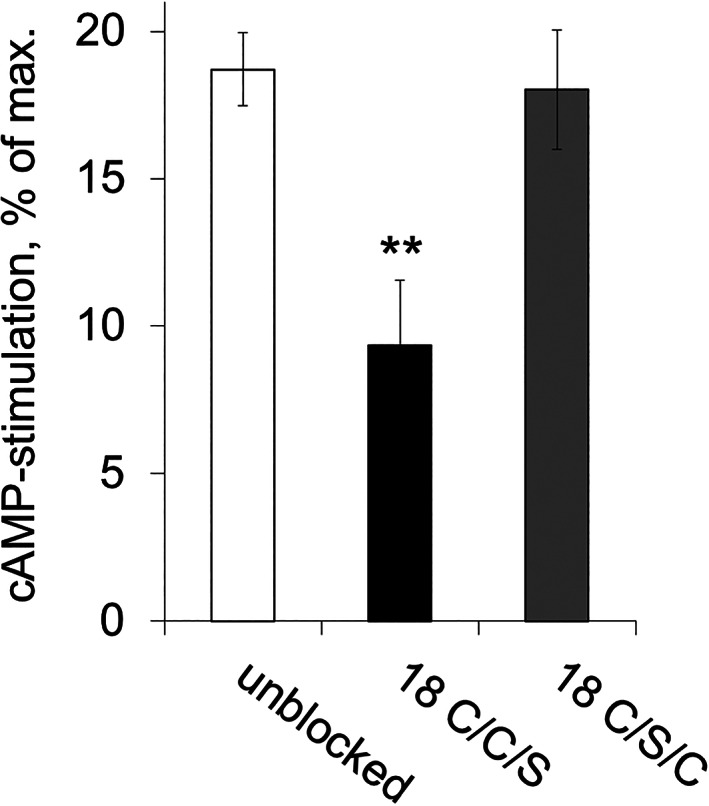
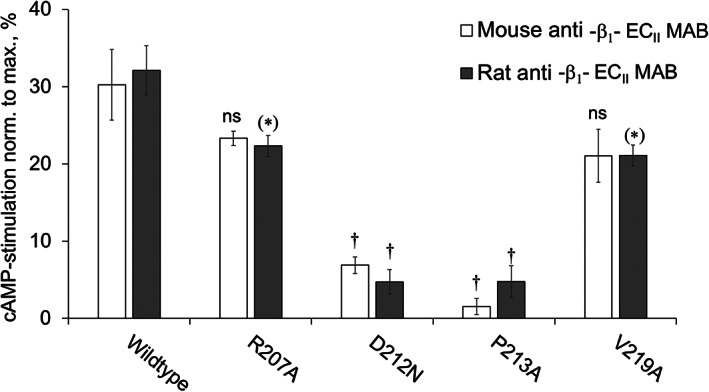
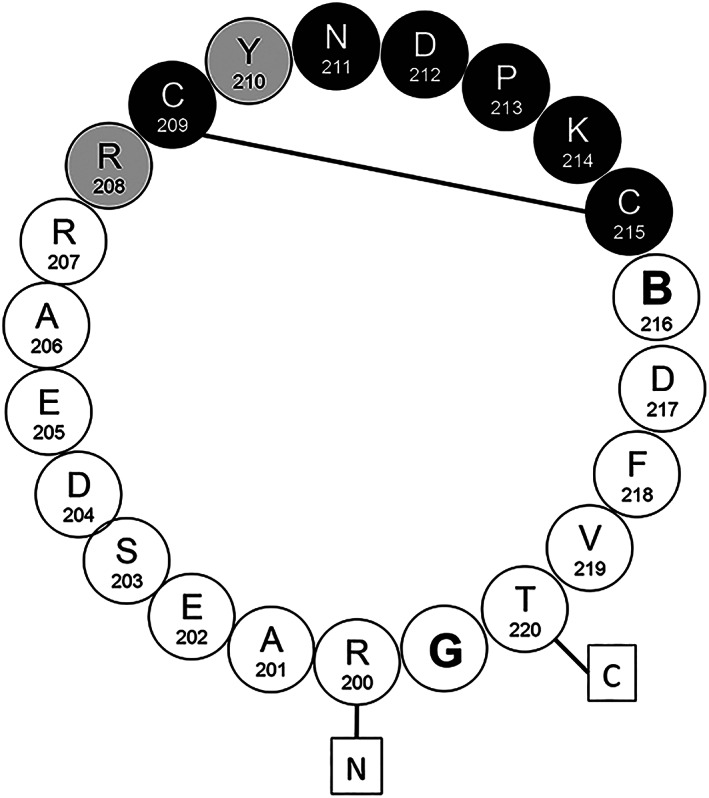
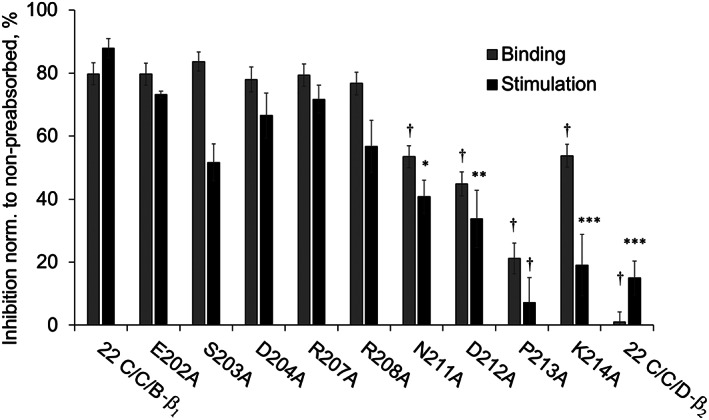
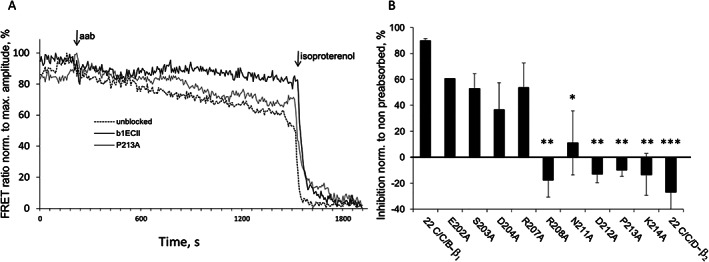
Non-conserved amino acids within the β EC loop (compared with the amino acids constituting the EC loop of the β -adrenoceptor) were one by one replaced with alanine; potential intra-loop disulfide bridges were probed by cysteine-serine exchanges. Effects on antibody binding and allosteric receptor activation were assessed (i) by (auto)antibody neutralization using cyclopeptides mimicking β EC ± the above replacements, and (ii) by (auto)antibody stimulation of human β -adrenoceptors bearing corresponding point mutations. With the use of stimulating β -receptor (auto)antibodies raised in mice, rats, or rabbits and isolated from exemplary dilated cardiomyopathy patients, our series of experiments unmasked two features of the β EC loop essential for (auto)antibody binding and allosteric receptor activation: (i) the NDPK motif and (ii) the intra-loop disulfide bond C ↔C . Of note, aberrant intra-loop disulfide bond C ↔C almost fully disrupted the functional auto-epitope in cyclopeptides.
The conformational auto-epitope targeted by cardio-pathogenic β -receptor autoantibodies is faithfully conserved in cyclopeptide homologues of the β EC loop bearing the NDPK motif and the C ↔C bridge while lacking cysteine C . Such molecules provide promising tools for novel diagnostic and therapeutic approaches in β -autoantibody-positive CHF.
慢性心力衰竭(CHF)可由自身抗体通过与心脏β-肾上腺素能受体的第一和/或第二细胞外环结合而刺激心脏引起。变构受体激活取决于自身抗体结合位点的构象特征。阐明这些特征将为开发特异性诊断和治疗方法铺平道路。我们的目的是(i)精细绘制人β-肾上腺素能受体(β-EC)第二细胞外环内的构象表位,该表位被刺激β-受体(自身)抗体靶向,(ii)生成变构受体激活的竞争性环肽抑制剂,这些抑制剂忠实地保留构象自身表位。
β-EC 环中的非保守氨基酸(与构成β-肾上腺素能受体 EC 环的氨基酸相比)逐个被丙氨酸取代;用半胱氨酸-丝氨酸交换探测潜在的环内二硫键。通过使用模拟β-EC ±上述取代的环肽来评估(i)(自身)抗体中和作用以及(ii)(自身)抗体对携带相应点突变的人β-肾上腺素受体的刺激作用,评估对抗体结合和变构受体激活的影响。使用从小鼠、大鼠或兔子中产生的刺激β-受体(自身)抗体,或从典型扩张型心肌病患者中分离的刺激β-受体(自身)抗体,我们的一系列实验揭示了β-EC 环的两个特征对于(自身)抗体结合和变构受体激活至关重要:(i)NDPK 基序和(ii)环内二硫键 C↔C。值得注意的是,异常的环内二硫键 C↔C 几乎完全破坏了环肽中功能性自身表位。
携带 NDPK 基序和 C↔C 桥的β-EC 环的环肽同系物中,心血管病原体β-受体自身抗体靶向的构象自身表位得到忠实保留,而缺乏半胱氨酸 C。这些分子为β-自身抗体阳性 CHF 的新型诊断和治疗方法提供了有前途的工具。