Department of Psychology, University of Wisconsin-Madison.
Department of Psychiatry, University of Wisconsin-Madison.
J Abnorm Psychol. 2020 Jul;129(5):457-468. doi: 10.1037/abn0000528. Epub 2020 May 21.
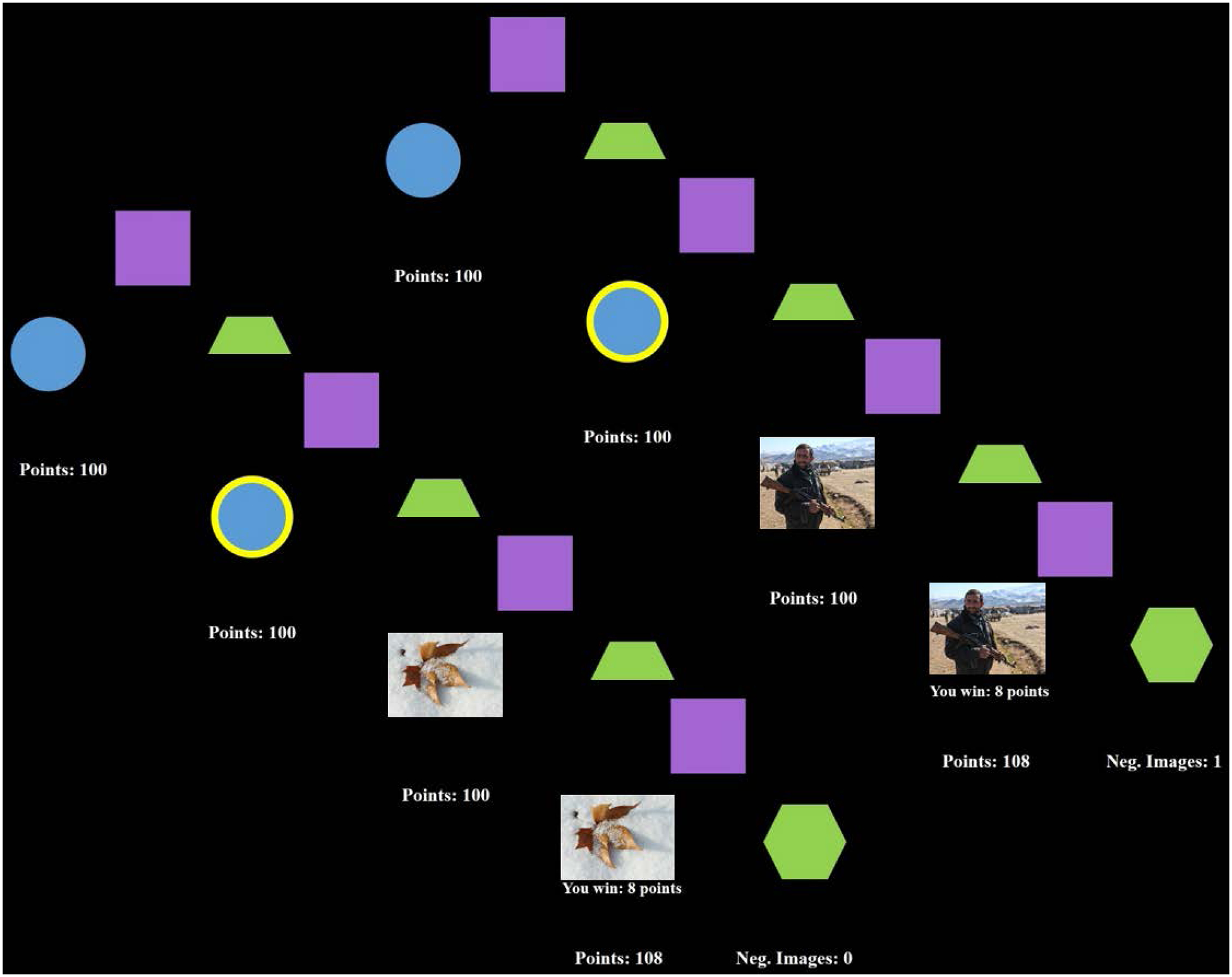
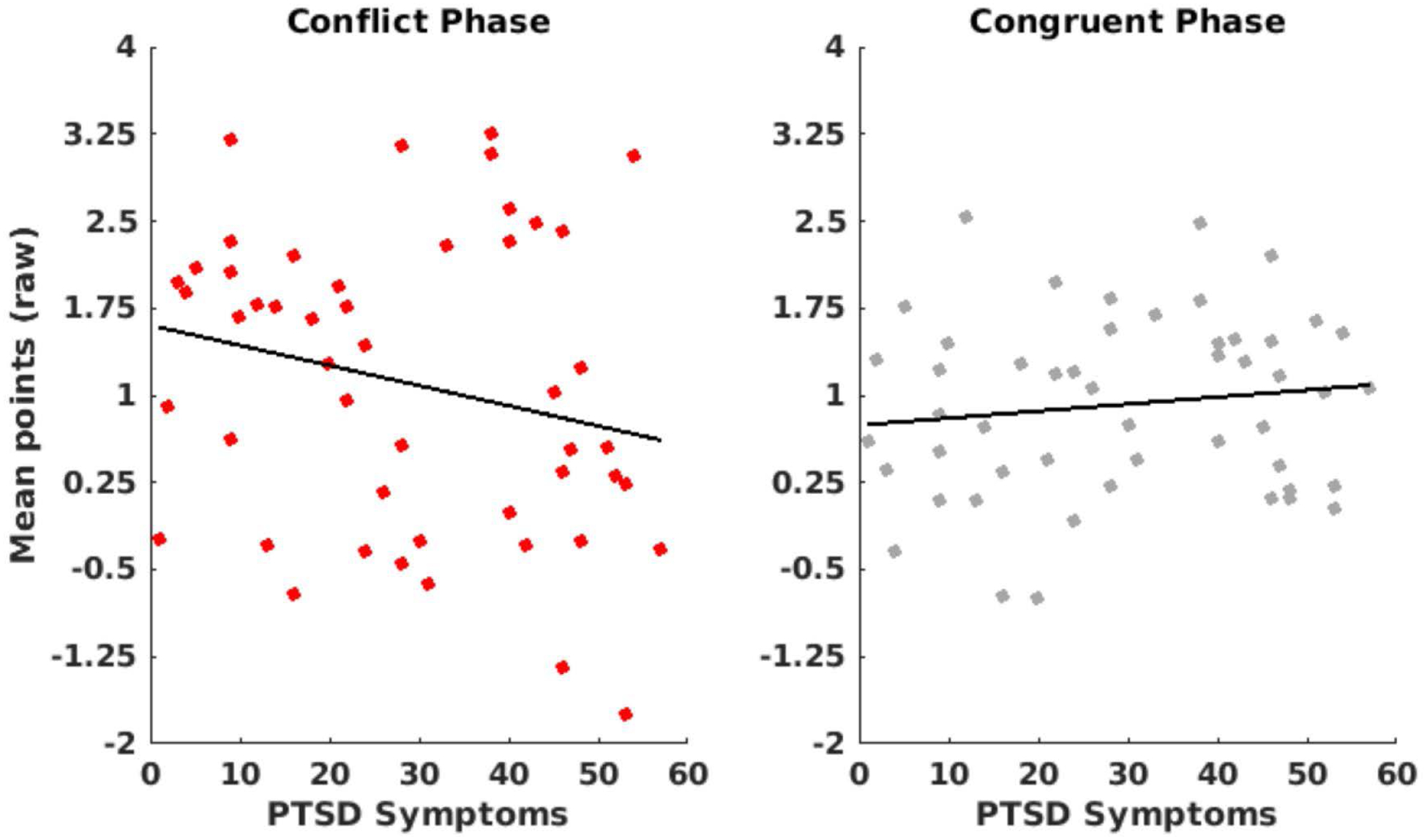
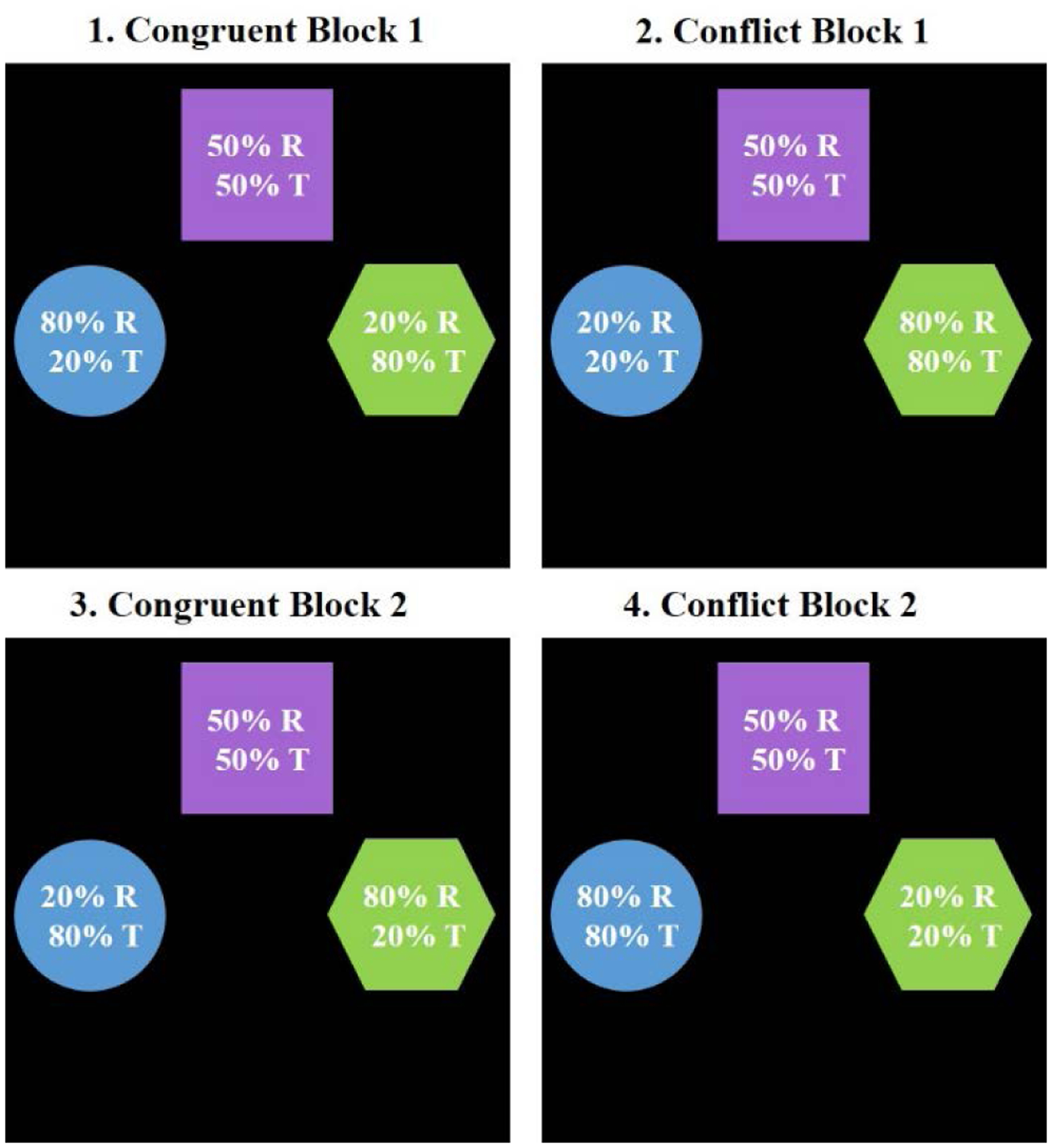
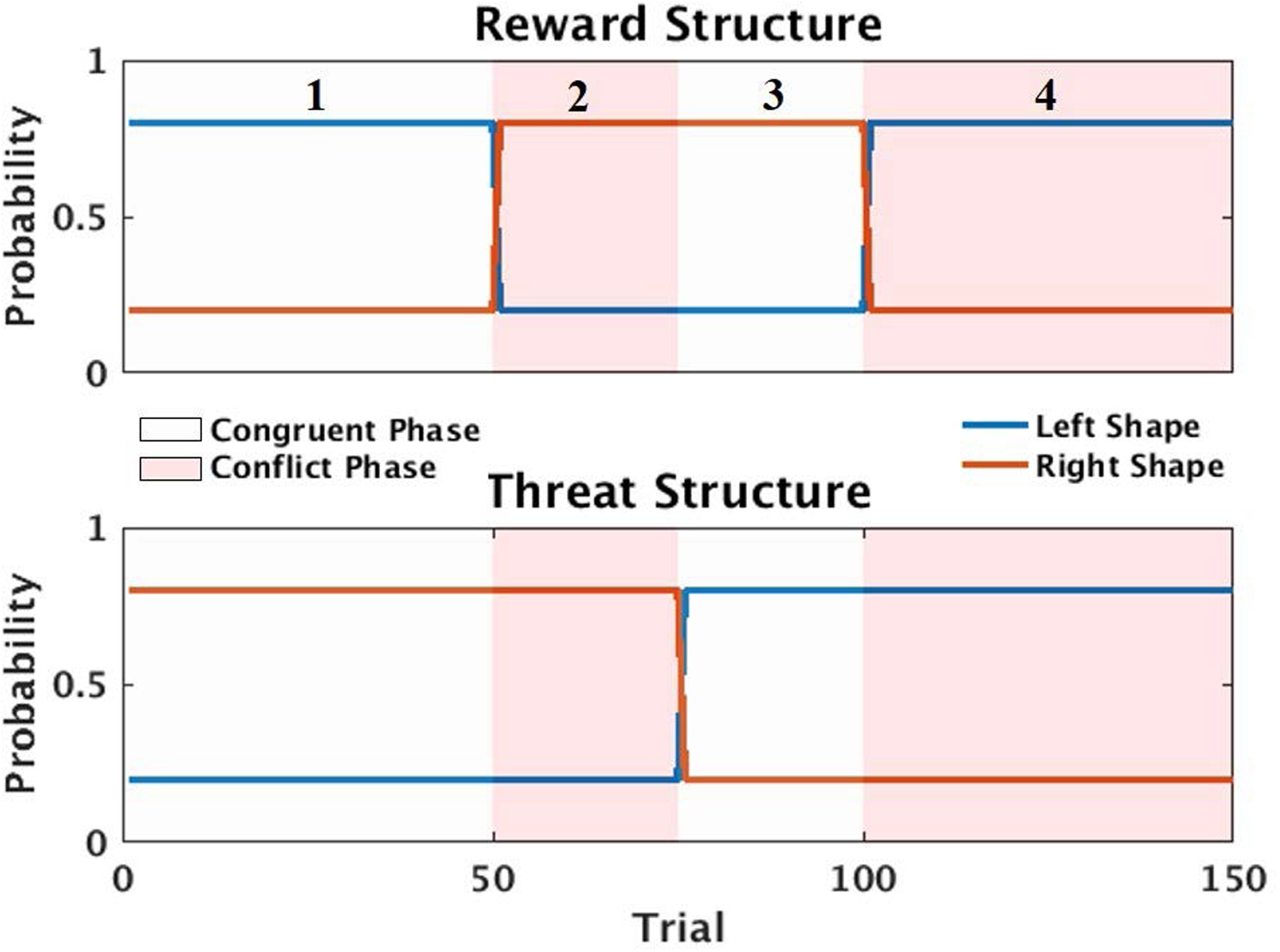
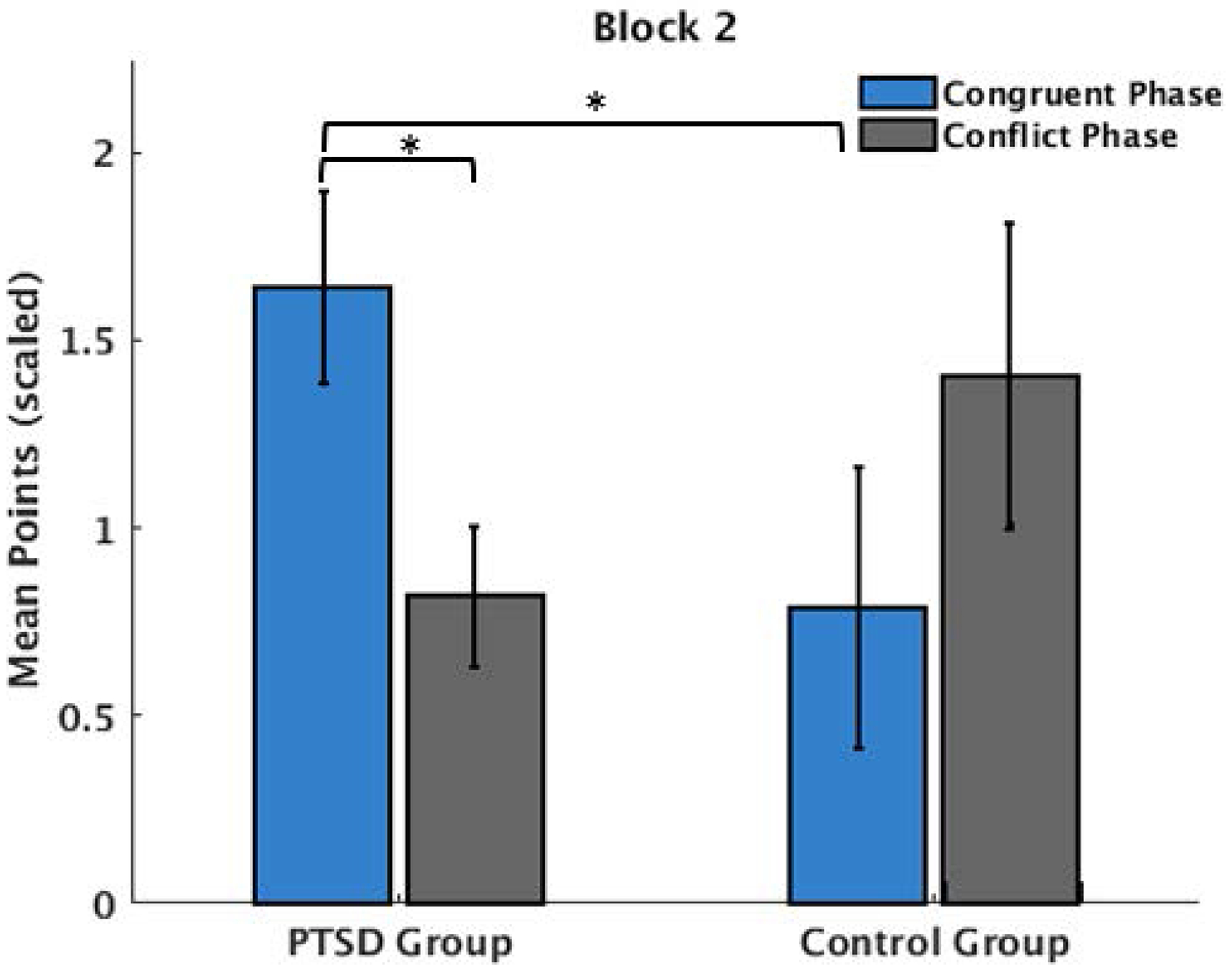
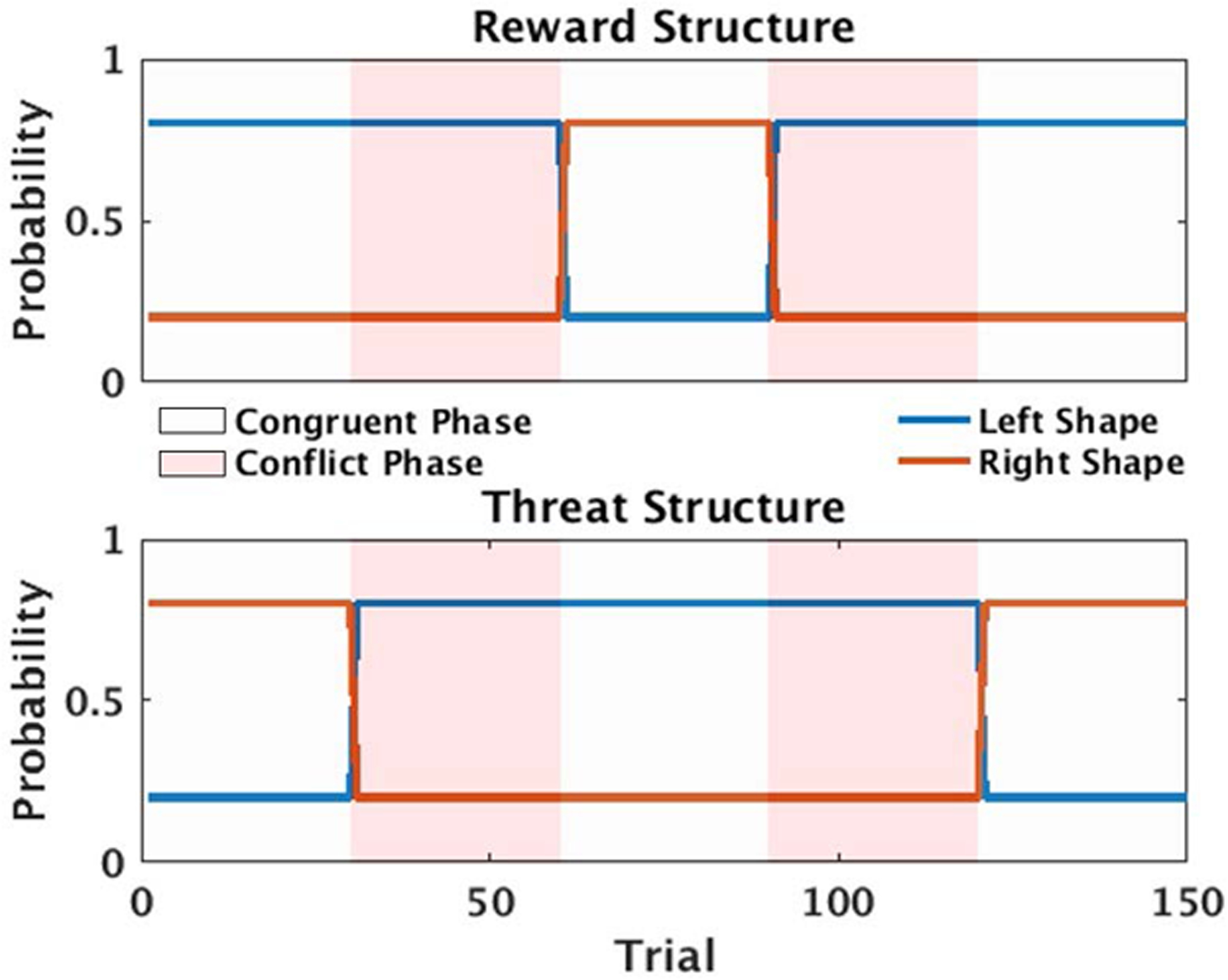
Posttraumatic stress disorder (PTSD) is characterized by heightened avoidance, cognitive inflexibility, and impaired reward processing. Maladaptive behavior in PTSD may reflect an imbalance between approach and avoidance, but no research has investigated approach-avoidance conflict (AAC) in PTSD. The current study investigated approach-avoidance behavior in PTSD using a trauma-related AAC (trAAC) task in two independent samples. In Study 1, 43 women with a current diagnosis of PTSD and 18 healthy comparison subjects were recruited from the community. In Study 2, 53 women with trauma exposure and a range of PTSD symptoms were recruited from a correctional institution. Trials were separated into two phases: conflict (the option most likely to win points was most likely to show a trauma-related image) and congruent (the option most likely to win points was least likely to show a trauma-related image). In Study 1, reward obtainment varied with the task manipulation (i.e., fewer points earned during conflict compared to congruent Phase) in PTSD but not healthy subjects. These results indicate that when avoidance is advantageous (congruent phase), individuals with PTSD show increased task performance, whereas when avoidance is maladaptive (conflict phase), individuals with PTSD show increased sacrifice of reward. In Study 2, higher PTSD symptoms predicted decreased reward earning during the conflict phase, again indicating a sacrifice of reward when avoidance is maladaptive. Across both studies, PTSD associated with increased AAC and sacrifice of reward in the presence of trauma-related stimuli. These studies shed light on AAC in PTSD and could inform more targeted therapy approaches. (PsycInfo Database Record (c) 2020 APA, all rights reserved).
创伤后应激障碍(PTSD)的特征是高度回避、认知灵活性差和奖赏加工受损。PTSD 中的适应不良行为可能反映了趋近和回避之间的不平衡,但没有研究调查过 PTSD 中的趋近-回避冲突(AAC)。本研究使用与创伤相关的 AAC(trAAC)任务在两个独立样本中调查了 PTSD 中的趋近-回避行为。在研究 1 中,从社区招募了 43 名当前患有 PTSD 的女性和 18 名健康对照组。在研究 2 中,从惩教机构招募了 53 名有创伤暴露和一系列 PTSD 症状的女性。试验分为两个阶段:冲突(最有可能赢得分数的选项最有可能显示与创伤相关的图像)和一致(最有可能赢得分数的选项最不可能显示与创伤相关的图像)。在研究 1 中,奖赏的获得随任务操作而变化(即冲突阶段比一致阶段获得的分数少),但在健康受试者中则不然。这些结果表明,当回避有利(一致阶段)时,PTSD 患者表现出增加的任务表现,而当回避适应不良(冲突阶段)时,PTSD 患者表现出增加的奖赏牺牲。在研究 2 中,较高的 PTSD 症状预测冲突阶段的奖赏减少,这再次表明回避适应不良时奖赏的牺牲。在两项研究中,PTSD 与创伤相关刺激存在时 AAC 增加和奖赏牺牲有关。这些研究为 PTSD 中的 AAC 提供了启示,并为更有针对性的治疗方法提供了信息。(PsycInfo 数据库记录(c)2020 APA,保留所有权利)。