Department of Biomolecular Engineering, University of California Santa Cruz.
Genome Biol Evol. 2020 Aug 1;12(8):1378-1391. doi: 10.1093/gbe/evaa103.
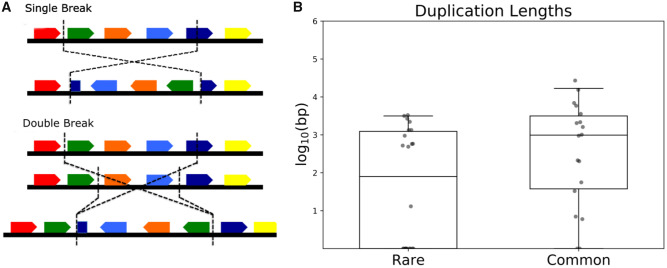
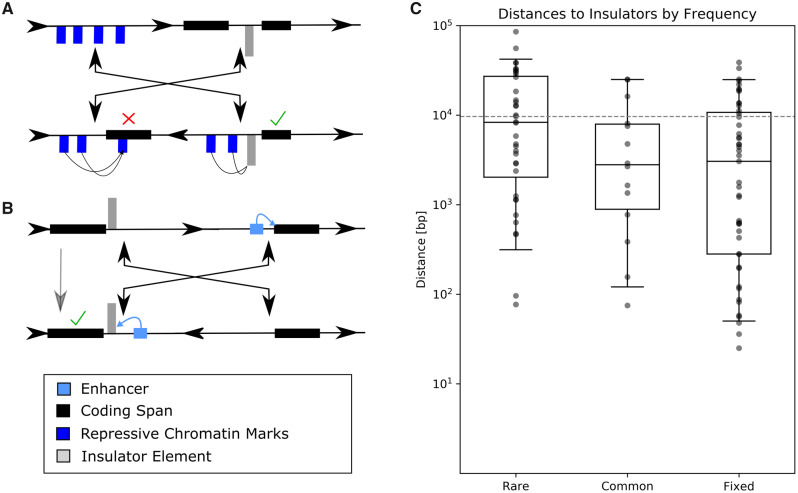
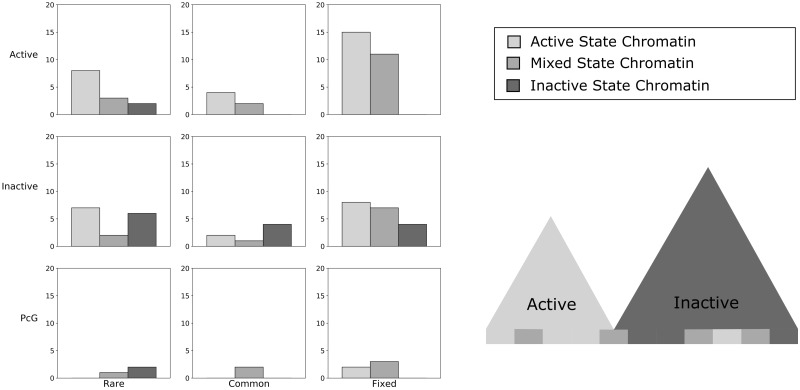
Chromosomal inversions are among the primary drivers of genome structure evolution in a wide range of natural populations. Although there is an impressive array of theory and empirical analyses that have identified conditions under which inversions can be positively selected, comparatively little data are available on the fitness impacts of these genome structural rearrangements themselves. Because inversion breakpoints can disrupt functional elements and alter chromatin domains, the precise positioning of an inversion's breakpoints can strongly affect its fitness. Here, we compared the fine-scale distribution of low-frequency inversion breakpoints with those of high-frequency inversions and inversions that have gone to fixation between Drosophila species. We identified a number of differences among frequency classes that may influence inversion fitness. In particular, breakpoints that are proximal to insulator elements, generate large tandem duplications, and minimize impacts on gene coding spans which are more prevalent in high-frequency and fixed inversions than in rare inversions. The data suggest that natural selection acts to preserve both genes and larger cis-regulatory networks in the occurrence and spread of rearrangements. These factors may act to limit the availability of high-fitness arrangements when suppressed recombination is favorable.
染色体倒位是广泛的自然种群中基因组结构进化的主要驱动力之一。尽管有大量的理论和实证分析已经确定了倒位可以被正向选择的条件,但关于这些基因组结构重排本身对适应性的影响的数据相对较少。由于倒位断点可能破坏功能元件并改变染色质域,因此倒位的精确位置可以强烈影响其适应性。在这里,我们比较了低频倒位断点与高频倒位和在果蝇种间已固定的倒位的精细分布。我们确定了一些可能影响倒位适应性的频率类之间的差异。特别是,那些靠近绝缘子元件的断点,产生大的串联重复,并且最小化对基因编码跨度的影响,在高频和固定倒位中比在罕见倒位中更为普遍。这些数据表明,自然选择作用于保存基因和更大的顺式调控网络,以促进重排的发生和扩散。当抑制重组有利时,这些因素可能会限制高适应性排列的可用性。