CNC-Center for Neuroscience and Cell Biology, University of Coimbra, 3004-504 Coimbra, Portugal.
Microscopy Unit Center for Neuroscience and Cell Biology, University of Coimbra, 3004-504 Coimbra, Portugal.
Int J Mol Sci. 2020 May 19;21(10):3578. doi: 10.3390/ijms21103578.
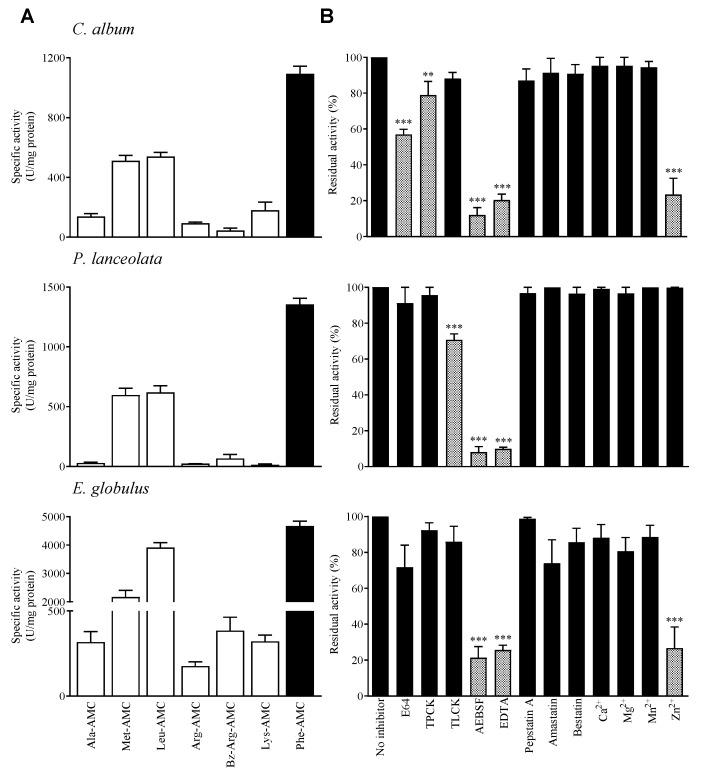
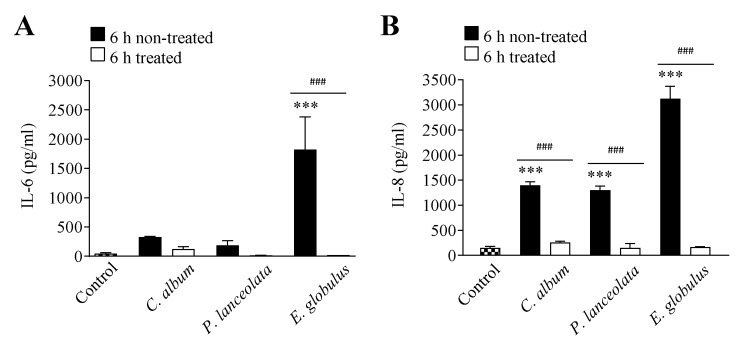
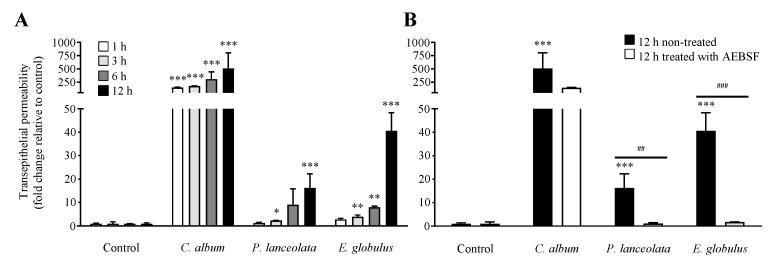
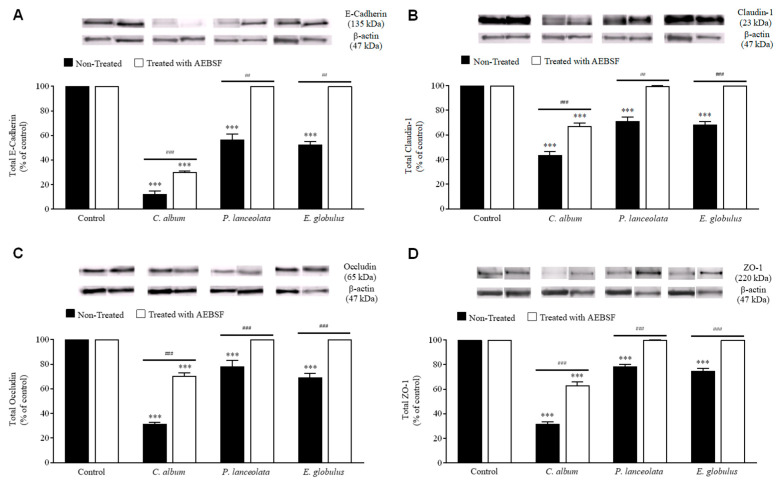
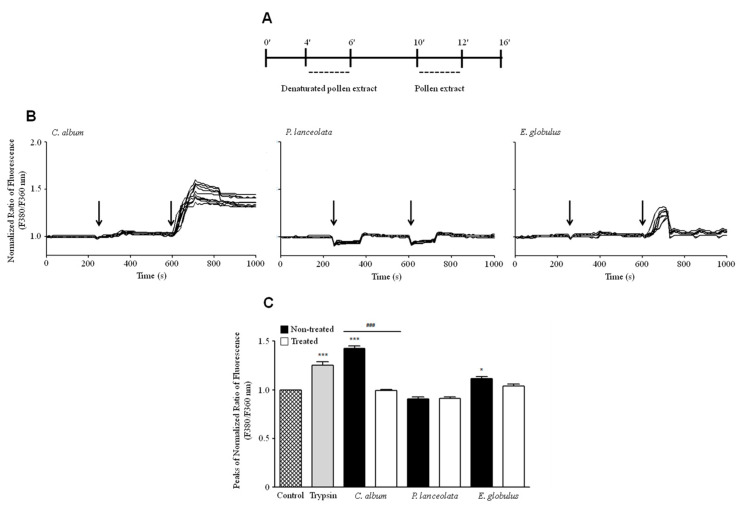
Allergic diseases are a major health concern worldwide. Pollens are important triggers for allergic rhinitis, conjunctivitis and asthma. Proteases released upon pollen grain hydration appear to play a major role in the typical immunological and inflammatory responses that occur in patients with allergic disorders. In this study, we aimed to identify specific proteolytic activity in a set of pollens with diverse allergenic potential. Diffusates from , and were added to a confluent monolayer of Calu-3 cells grown in an air-liquid interface system. We identified serine proteases and metalloproteinases in all pollen diffusates investigated. Proteases found in these pollen diffusates were shown to compromise the integrity of the lung epithelial barrier by disrupting transmembrane adhesion proteins E-cadherin, claudin-1 and Occludin, as well as, the cytosolic complex zonula occludens-1 (ZO-1) resulting in a time-dependent increase in transepithelial permeability. Tight junction disruption and increased transepithelial permeability facilitates allergen exposure to epithelial sub-layers contributing to the sensitization to a wide range of allergens. These pollen extracts also induced an increase in the release of interleukin 6 (IL-6) and interleukin 8 (IL-8) cytokines measured by flow cytometry possibly as a result of the activation of protease-activated receptors 2 (PAR-2).
过敏性疾病是全球范围内的一个主要健康问题。花粉是过敏性鼻炎、结膜炎和哮喘的重要诱因。花粉粒水合时释放的蛋白酶似乎在发生于过敏性疾病患者的典型免疫和炎症反应中发挥主要作用。在这项研究中,我们旨在鉴定一组具有不同致敏潜力的花粉中的特定蛋白水解活性。将来自 、 和 的浸出液添加到在气液界面系统中生长的单层 Calu-3 细胞中。我们在所有研究的花粉浸出液中鉴定到丝氨酸蛋白酶和金属蛋白酶。这些花粉浸出液中的蛋白酶被证明通过破坏跨膜粘附蛋白 E-钙粘蛋白、闭合蛋白-1 和紧密连接蛋白-1(Occludin),以及细胞溶质紧密连接蛋白-1(ZO-1)复合物,破坏肺上皮屏障的完整性,导致跨上皮通透性的时间依赖性增加。紧密连接的破坏和跨上皮通透性的增加使过敏原更容易暴露于上皮亚层,从而导致对广泛过敏原的致敏。这些花粉提取物还通过流式细胞术测量诱导白细胞介素 6(IL-6)和白细胞介素 8(IL-8)细胞因子的释放增加,可能是由于蛋白酶激活受体 2(PAR-2)的激活。