Clink Dena J, Tasirin Johny S, Klinck Holger
Bioacoustics Research Program, Cornell Lab of Ornithology, Cornell University, Ithaca, NY, 14850, USA.
Faculty of Agriculture, Sam Ratulangi University, Manado, Indonesia.
Curr Zool. 2020 Apr;66(2):173-186. doi: 10.1093/cz/zoz035. Epub 2019 Jun 20.
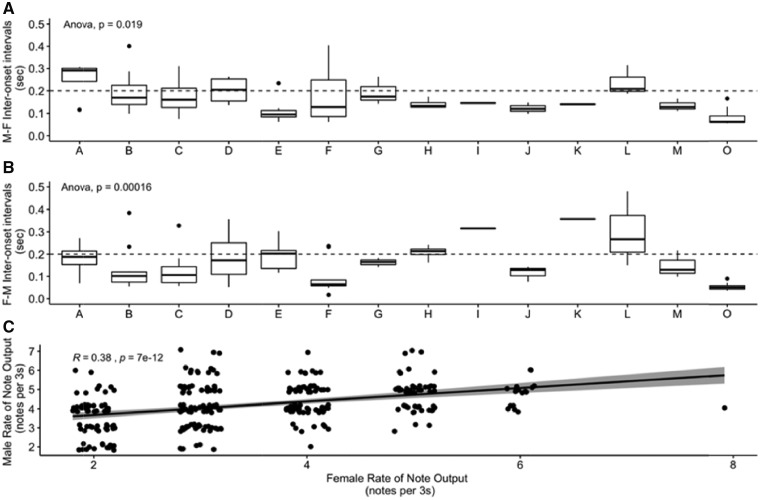
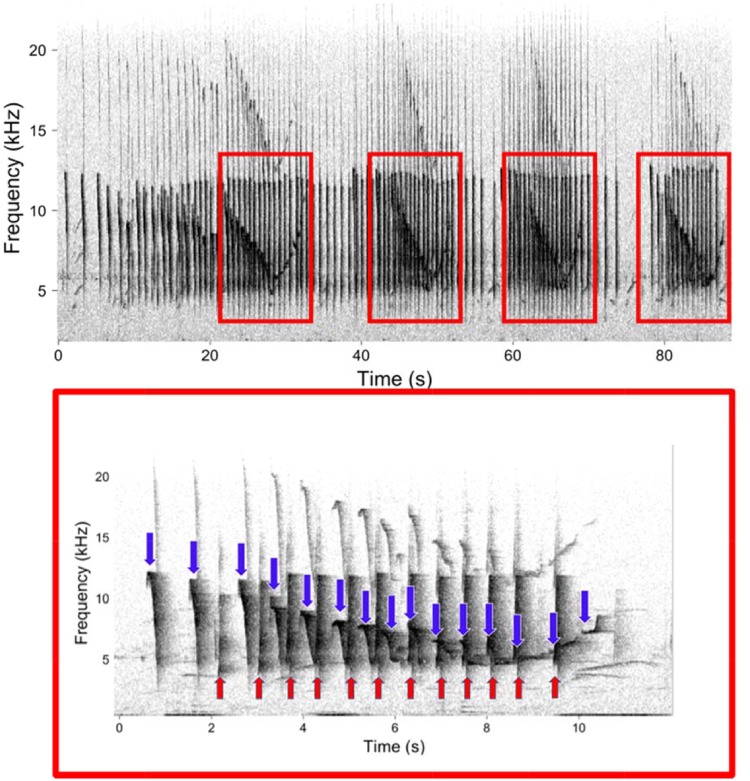
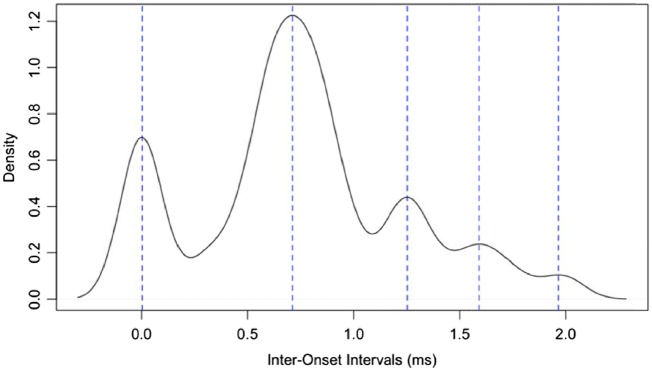
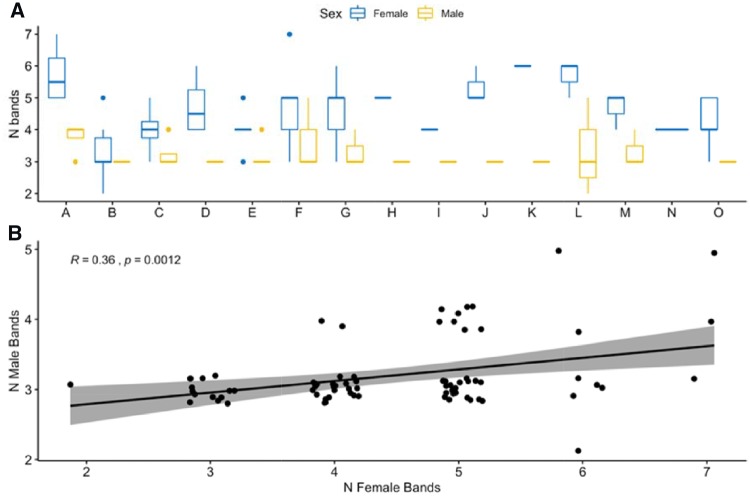
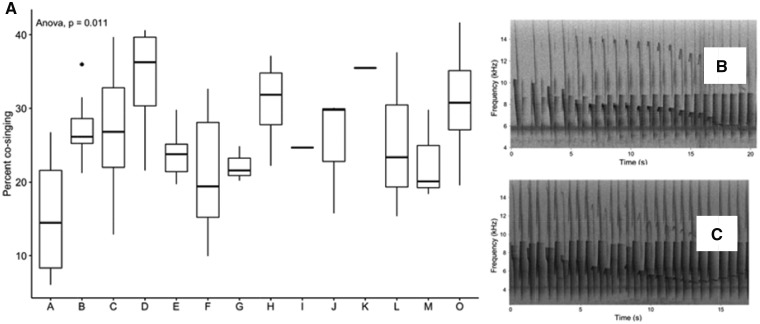
Duetting, or the stereotypical, repeated and often coordinated vocalizations between 2 individuals arose independently multiple times in the Order Primates. Across primate species, there exists substantial variation in terms of timing, degree of overlap, and sex-specificity of duet contributions. There is increasing evidence that primates can modify the timing of their duet contributions relative to their partner, and this vocal flexibility may have been an important precursor to the evolution of human language. Here, we present the results of a fine-scale analysis of Gursky's spectral tarsier duet phrases recorded in North Sulawesi, Indonesia. Specifically, we aimed to investigate individual-level variation in the female and male contributions to the duet, quantify individual- and pair-level differences in duet timing, and measure temporal precision of duetting individuals relative to their partner. We were able to classify female duet phrases to the correct individual with an 80% accuracy using support vector machines, whereas our classification accuracy for males was lower at 64%. Females were more variable than males in terms of timing between notes. All tarsier phrases exhibited some degree of overlap between callers, and tarsiers exhibited high temporal precision in their note output relative to their partners. We provide evidence that duetting tarsier individuals can modify their note output relative to their duetting partner, and these results support the idea that flexibility in vocal exchanges-a precursor to human language-evolved early in the primate lineage and long before the emergence of modern humans.
二重唱,即两个个体之间典型的、重复且常常协调的发声,在灵长目动物中多次独立出现。在不同的灵长类物种中,二重唱在时间安排、重叠程度以及二重唱贡献的性别特异性方面存在很大差异。越来越多的证据表明,灵长类动物能够相对于其伴侣改变二重唱贡献的时间,这种发声灵活性可能是人类语言进化的重要先驱。在这里,我们展示了对在印度尼西亚北苏拉威西岛记录的古氏幽灵眼镜猴二重唱短语进行精细分析的结果。具体来说,我们旨在研究雌性和雄性在二重唱中贡献的个体水平差异,量化二重唱时间上的个体和配对水平差异,并测量二重唱个体相对于其伴侣的时间精度。我们能够使用支持向量机以80%的准确率将雌性二重唱短语正确分类到个体,而我们对雄性的分类准确率较低,为64%。在音符之间的时间安排方面,雌性比雄性更具变化性。所有眼镜猴短语在发声者之间都表现出一定程度的重叠,并且眼镜猴相对于其伴侣在音符输出上表现出较高的时间精度。我们提供的证据表明,二重唱的眼镜猴个体能够相对于其二重唱伴侣改变其音符输出,这些结果支持了这样一种观点,即发声交流的灵活性——人类语言的先驱——在灵长类谱系中很早就进化了,远在现代人类出现之前。