Department of Medical Biology and Genetics, Faculty of Biology, University of Gdańsk, Wita Stwosza 59, 80-308 Gdańsk, Poland.
Laboratory of Molecular Biology, Institute of Biochemistry and Biophysics, Polish Academy of Sciences, Kładki 24, 80-822 Gdańsk, Poland.
Int J Mol Sci. 2020 May 20;21(10):3618. doi: 10.3390/ijms21103618.
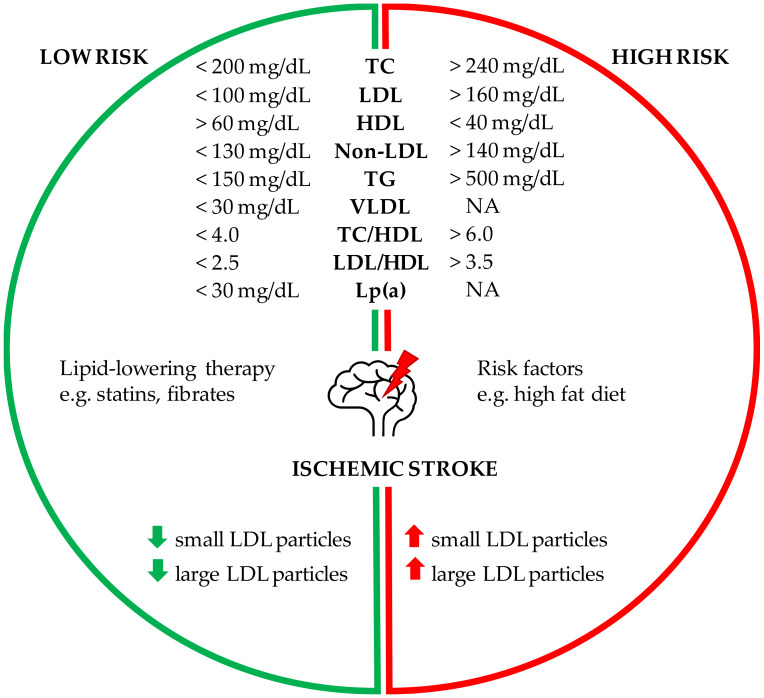
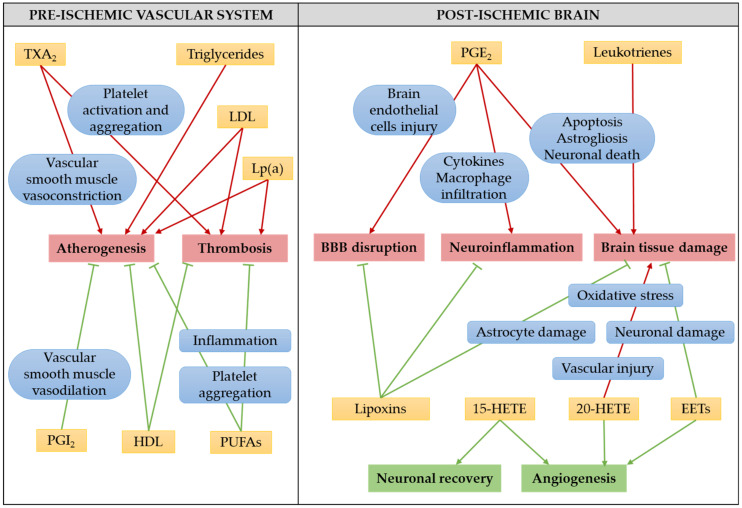
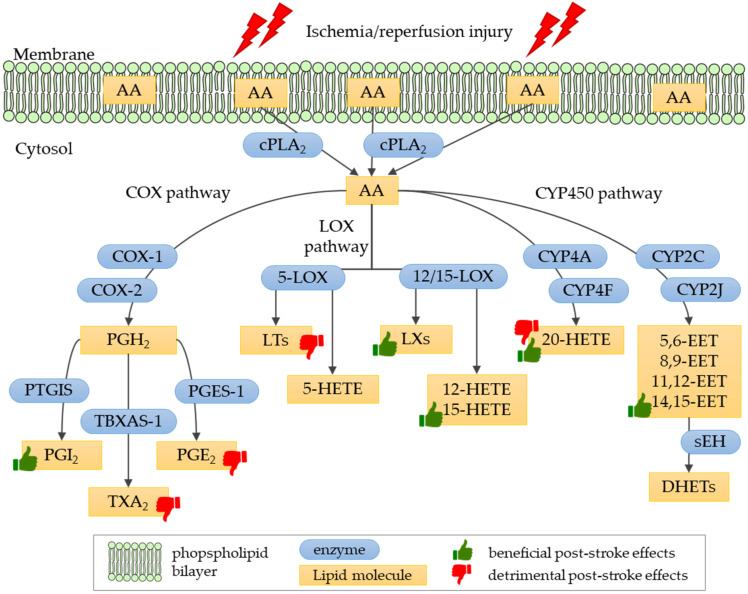
Stroke is a severe neurological disorder in humans that results from an interruption of the blood supply to the brain. Worldwide, stoke affects over 100 million people each year and is the second largest contributor to disability. Dyslipidemia is a modifiable risk factor for stroke that is associated with an increased risk of the disease. Traditional and non-traditional lipid measures are proposed as biomarkers for the better detection of subclinical disease. In the central nervous system, lipids and lipid mediators are essential to sustain the normal brain tissue structure and function. Pathways leading to post-stroke brain deterioration include the metabolism of polyunsaturated fatty acids. A variety of lipid mediators are generated from fatty acids and these molecules may have either neuroprotective or neurodegenerative effects on the post-stroke brain tissue; therefore, they largely contribute to the outcome and recovery from stroke. In this review, we provide an overview of serum lipids associated with the risk of ischemic stroke. We also discuss the role of lipid mediators, with particular emphasis on eicosanoids, in the pathology of ischemic stroke. Finally, we summarize the latest research on potential targets in lipid metabolic pathways for ischemic stroke treatment and on the development of new stroke risk biomarkers for use in clinical practice.
中风是一种严重的人类神经系统疾病,由大脑供血中断引起。全球范围内,每年有超过 1 亿人受到中风的影响,是导致残疾的第二大原因。血脂异常是中风的一个可改变的危险因素,与疾病风险增加有关。传统和非传统的脂质指标被提出作为更好地检测亚临床疾病的生物标志物。在中枢神经系统中,脂质和脂质介质对于维持正常的脑组织结构和功能至关重要。导致中风后大脑恶化的途径包括多不饱和脂肪酸的代谢。各种脂质介质是由脂肪酸生成的,这些分子可能对中风后脑组织有神经保护或神经退行性作用;因此,它们在很大程度上影响中风的结果和恢复。在这篇综述中,我们提供了与缺血性中风风险相关的血清脂质概述。我们还讨论了脂质介质的作用,特别强调了类二十烷酸在缺血性中风病理中的作用。最后,我们总结了脂质代谢途径中缺血性中风治疗的潜在靶点以及用于临床实践的新中风风险生物标志物的最新研究。