Department of Medicine, West Virginia University, Morgantown, WV, USA.
Division of Cardiovascular Medicine, Heart & Vascular Institute, West Virginia University, Morgantown, WV, USA.
Cardiovasc Revasc Med. 2020 Dec;21(12):1474-1481. doi: 10.1016/j.carrev.2020.05.004. Epub 2020 May 11.
Cardiovascular disease is the major cause of mortality in end stage renal disease (ESRD) patients on dialysis and myocardial infarction constitutes almost 20% of such deaths. We assessed the trends, characteristics and in-hospital outcomes in patients with ESRD.
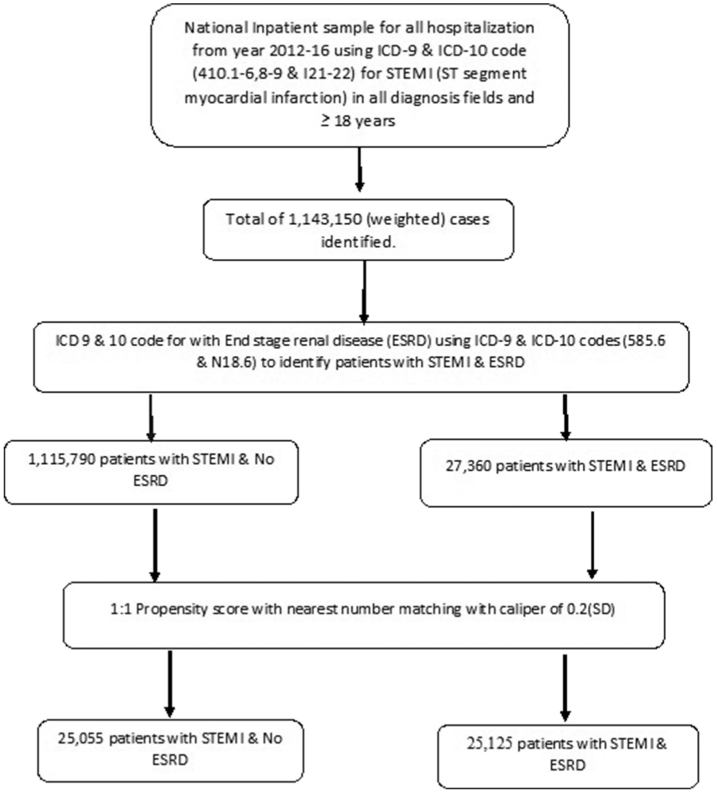
We used national inpatient sample (NIS) to identify patients with ESRD presenting with ST-segment elevation myocardial infarction (STEMI) for calendar years 2012-2016. Multiple logistic regression analysis and propensity matched data was used to compare outcomes for the purpose of our study.
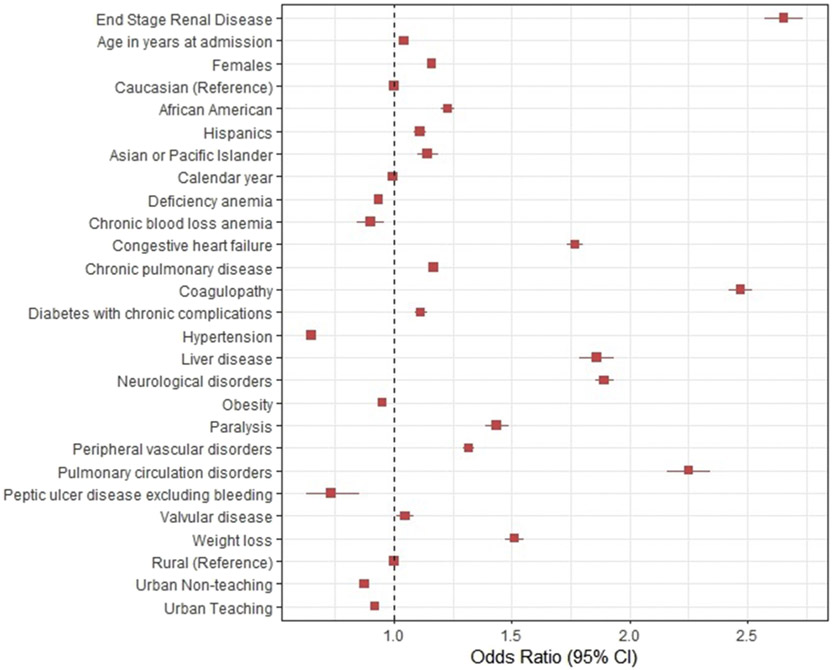
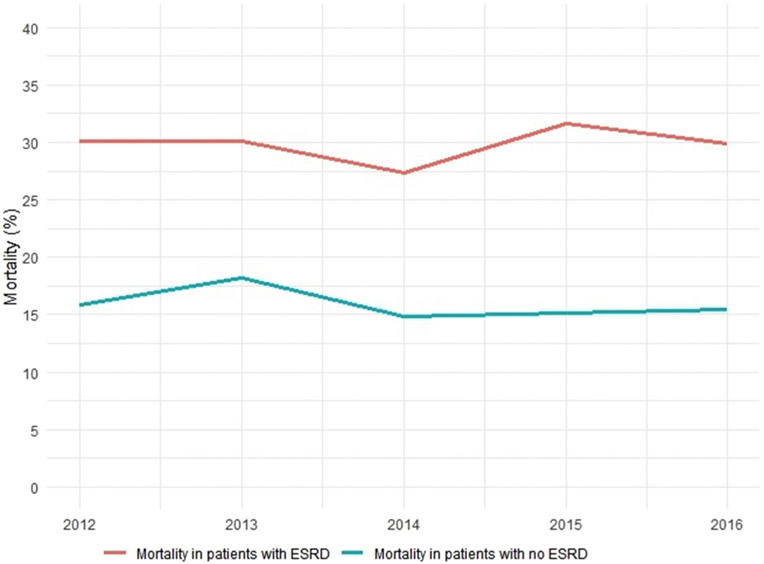
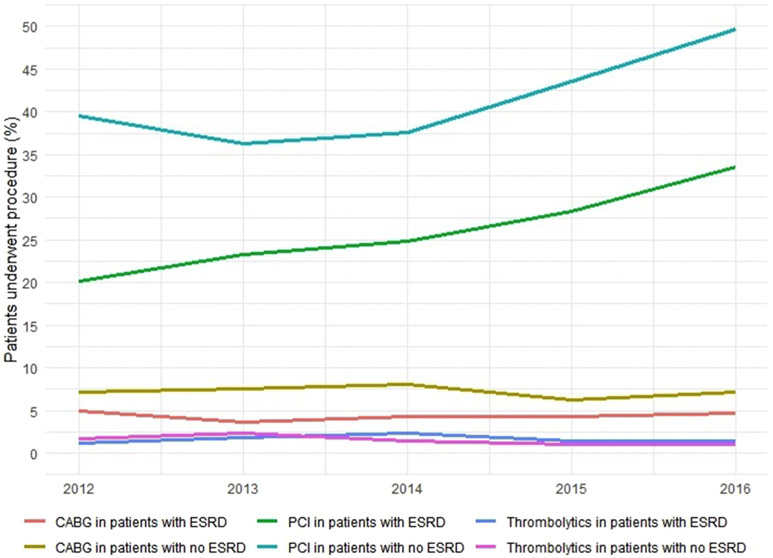
Patients on dialysis who presented with STEMI were less likely to be treated with emergent reperfusion therapies including percutaneous coronary intervention, bypass graft surgery and thrombolytics with in first 24 h. In propensity-matched cohort, the mortality was nearly double in patients who have ESRD compared to patients without ESRD (29.7% vs. 15.9%, p < 0.01). In-patient morbidity such as utilization of tracheostomy, mechanical ventilation and feeding tubes was also more prevalent in propensity matched ESRD cohort. In multivariate regression analysis, ESRD remains a strong predictor of increased mortality in STEMI patients (OR 2.65, 95% CI, 2.57-2.75, p < 0.01).
Our study showed low utilization of evidence-based prompt reperfusion therapies in ESRD patients with STEMI along with concomitant increased poor outcomes and resource utilization. Future research specifically targeting this extremely high-risk patient population is needed to identify the role of prompt reperfusion therapies in improving outcomes in these patients.
心血管疾病是透析终末期肾病(ESRD)患者死亡的主要原因,心肌梗死约占此类死亡的 20%。我们评估了 ESRD 患者的趋势、特征和住院结局。
我们使用国家住院患者样本(NIS)来确定 2012-2016 年患有 ST 段抬高型心肌梗死(STEMI)的 ESRD 患者。我们使用多因素逻辑回归分析和倾向匹配数据来比较结果。
接受透析治疗的 STEMI 患者在 24 小时内接受紧急再灌注治疗(包括经皮冠状动脉介入治疗、旁路移植手术和溶栓)的可能性较小。在倾向匹配队列中,与没有 ESRD 的患者相比,患有 ESRD 的患者死亡率几乎翻了一番(29.7%对 15.9%,p<0.01)。在住院期间,患有 ESRD 的患者更常出现诸如使用气管切开术、机械通气和喂养管等并发症。在多变量回归分析中,ESRD 仍然是 STEMI 患者死亡的强烈预测因素(OR 2.65,95%CI,2.57-2.75,p<0.01)。
我们的研究表明,在患有 STEMI 的 ESRD 患者中,证据为基础的及时再灌注治疗的利用率较低,同时不良结局和资源利用率增加。需要专门针对这一极高风险患者群体的未来研究来确定及时再灌注治疗在改善这些患者结局方面的作用。