Starck Christoph T, Gonzalez Elkin, Al-Razzo Omar, Mazzone Patrizio, Delnoy Peter-Paul, Breitenstein Alexander, Steffel Jan, Eulert-Grehn Jürgen, Lanmüller Pia, Melillo Francesco, Marzi Alessandra, Sohal Manav, Domenichini Giulia, Gallagher Mark M
Department of Cardiothoracic and Vascular Surgery, German Heart Center Berlin, Augustenburger Platz 1, 13353 Berlin, Germany.
German Center of Cardiovascular Research (DZHK), Partner Site Berlin, Berlin, Germany.
Europace. 2020 Jul 1;22(7):1103-1110. doi: 10.1093/europace/euaa103.
Several large studies have documented the outcome of transvenous lead extraction (TLE), focusing on laser and mechanical methods. To date there has been no large series addressing the results obtained with rotational lead extraction tools. This retrospective multicentre study was designed to investigate the outcomes of mechanical and rotational techniques.
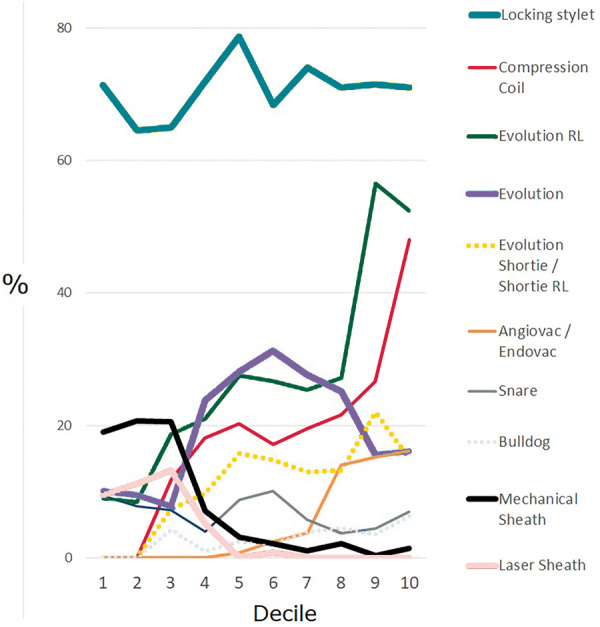
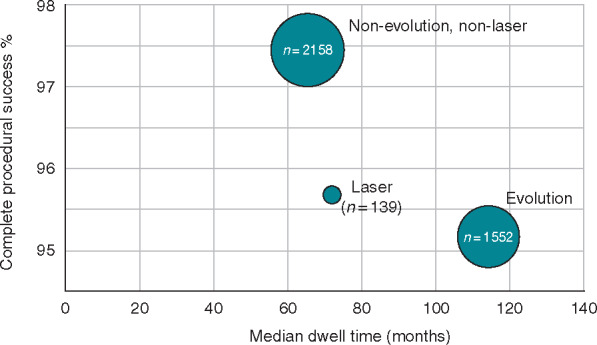
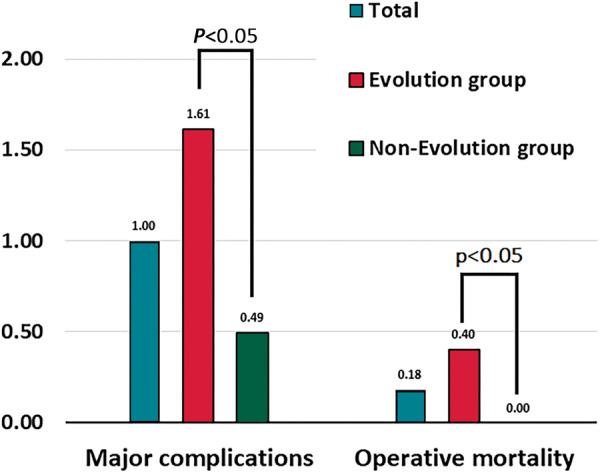
Data were collected on a total of 2205 patients (age 66.0 ± 15.7 years) with 3849 leads targeted for extraction in six European lead extraction centres. The commonest indication was infection (46%). The targeted leads included 2879 pacemaker leads (74.8%), 949 implantable cardioverter-defibrillator leads (24.6%), and 21 leads for which details were unknown; 46.6% of leads were passive fixation leads. The median lead dwell time was 74 months [interquartile range (IQR) 41-112]. Clinical success was obtained in 97.0% of procedures, and complete extraction was achieved for 96.5% of leads. Major complications occurred in 22/2205 procedures (1%), with a peri-operative or procedure-related mortality rate of 4/2205 (0.18%). Minor complications occurred in 3.1% of procedures. A total of 1552 leads (in 992 patients) with a median dwell time of 106 months (IQR 66-145) were extracted using the Evolution rotational TLE tool. In this subgroup, complete success was obtained for 95.2% of leads with a procedural mortality rate of 0.4%.
Patient outcomes in the PROMET study compare favourably with other large TLE trials, underlining the capability of rotational TLE tools and techniques to match laser methods in efficacy and surpass them in safety.
多项大型研究记录了经静脉导线拔除术(TLE)的结果,重点关注激光和机械方法。迄今为止,尚无大型系列研究探讨使用旋转导线拔除工具获得的结果。这项回顾性多中心研究旨在调查机械和旋转技术的结果。
在六个欧洲导线拔除中心收集了总共2205例患者(年龄66.0±15.7岁)的数据,这些患者有3849根导线需要拔除。最常见的指征是感染(46%)。目标导线包括2879根起搏器导线(74.8%)、949根植入式心律转复除颤器导线(24.6%)以及21根细节不明的导线;46.6%的导线为被动固定导线。导线的中位留置时间为74个月[四分位间距(IQR)41 - 112]。97.0%的手术取得了临床成功,96.5%的导线实现了完全拔除。2205例手术中有22例(1%)发生了主要并发症,围手术期或与手术相关的死亡率为4/2205(0.18%)。3.1%的手术发生了轻微并发症。使用Evolution旋转TLE工具拔除了总共1552根导线(992例患者),中位留置时间为106个月(IQR 66 - 145)。在这个亚组中,95.2%的导线取得了完全成功,手术死亡率为0.4%。
PROMET研究中的患者结果与其他大型TLE试验相比具有优势,突出了旋转TLE工具和技术在疗效上与激光方法相当且在安全性上超过激光方法的能力。