School of Life Science, Beijing University of Chinese Medicine, Beijing, 100029, China.
School of Traditional Chinese Medicine, Beijing University of Chinese Medicine, Beijing, 100029, China.
J Exp Clin Cancer Res. 2020 May 24;39(1):93. doi: 10.1186/s13046-020-01595-x.
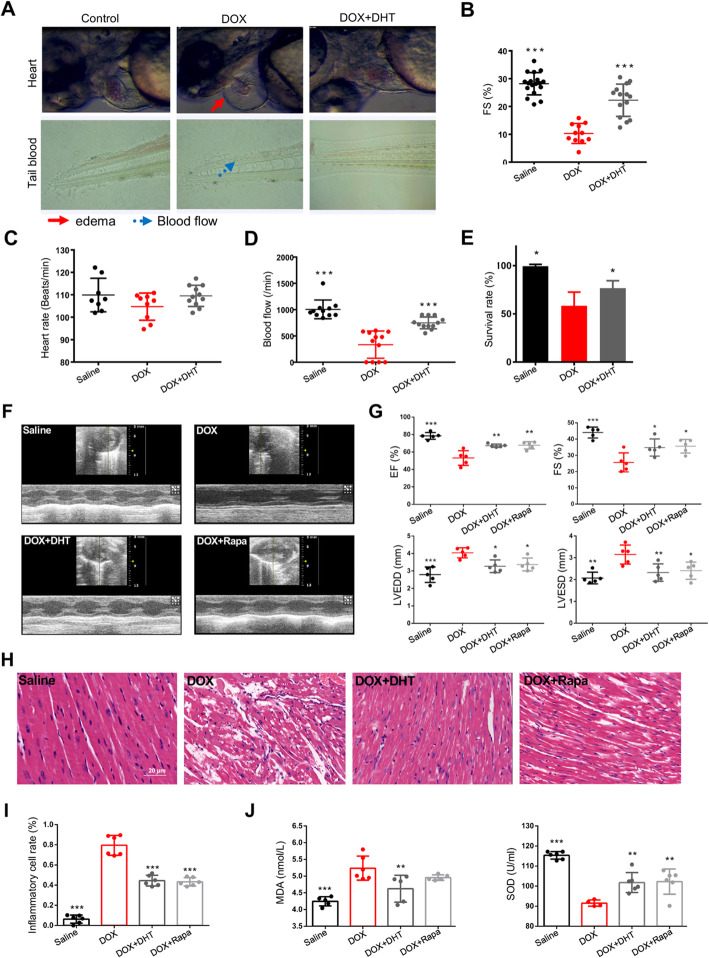
Doxorubicin is effective in a variety of solid and hematological malignancies. Unfortunately, clinical application of doxorubicin is limited due to a cumulative dose-dependent cardiotoxicity. Dihydrotanshinone I (DHT) is a natural product from Salvia miltiorrhiza Bunge with multiple anti-tumor activity and anti-inflammation effects. However, its anti-doxorubicin-induced cardiotoxicity (DIC) effect, either in vivo or in vitro, has not been elucidated yet. This study aims to explore the anti-inflammation effects of DHT against DIC, and to elucidate the potential regulatory mechanism.
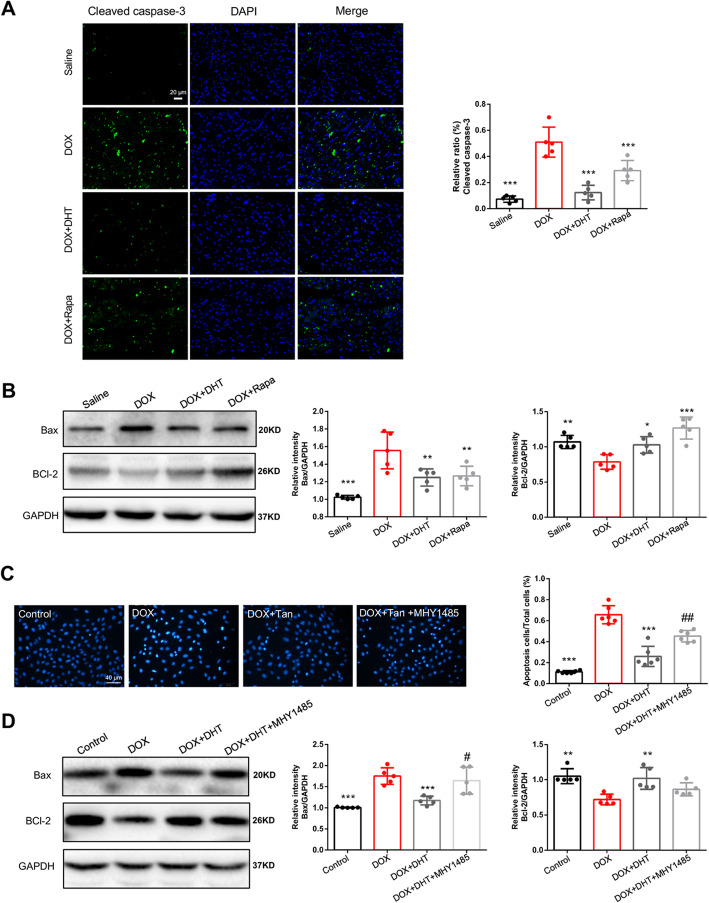
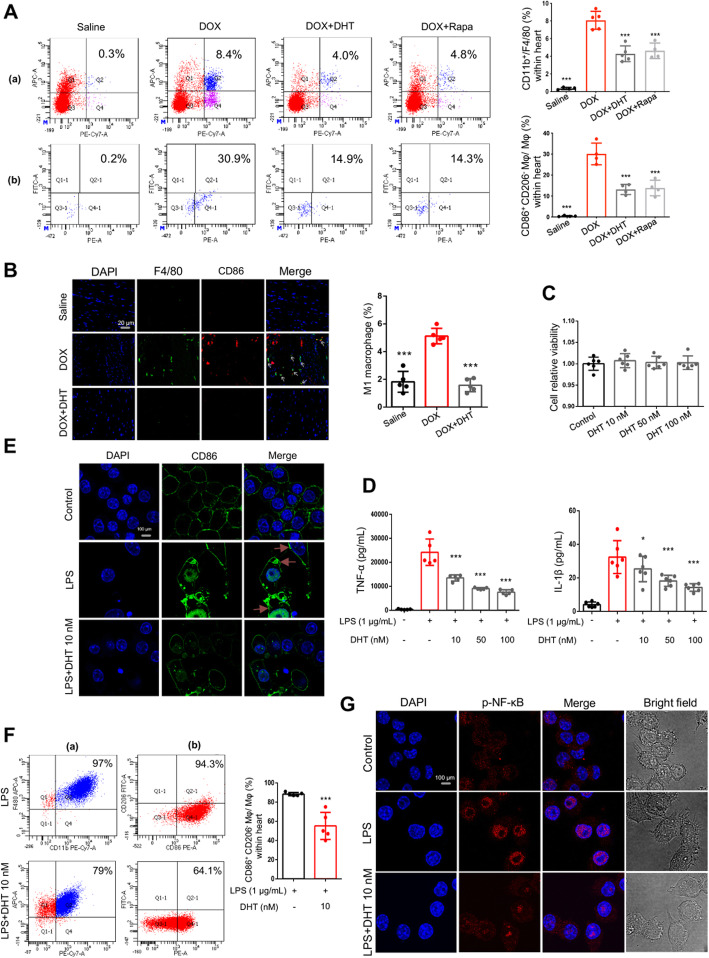
Effects of DHT on DIC were assessed in zebrafish, C57BL/6 mice and H9C2 cardiomyocytes. Echocardiography, histological examination, flow cytometry, immunochemistry and immunofluorescence were utilized to evaluate cardio-protective effects and anti-inflammation effects. mTOR agonist and lentivirus vector carrying GFP-TFEB were applied to explore the regulatory signaling pathway.
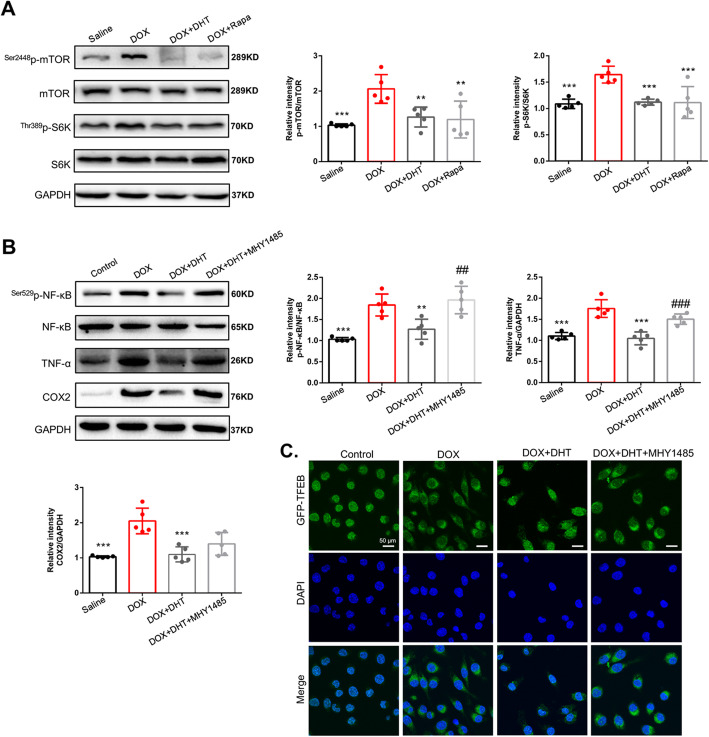
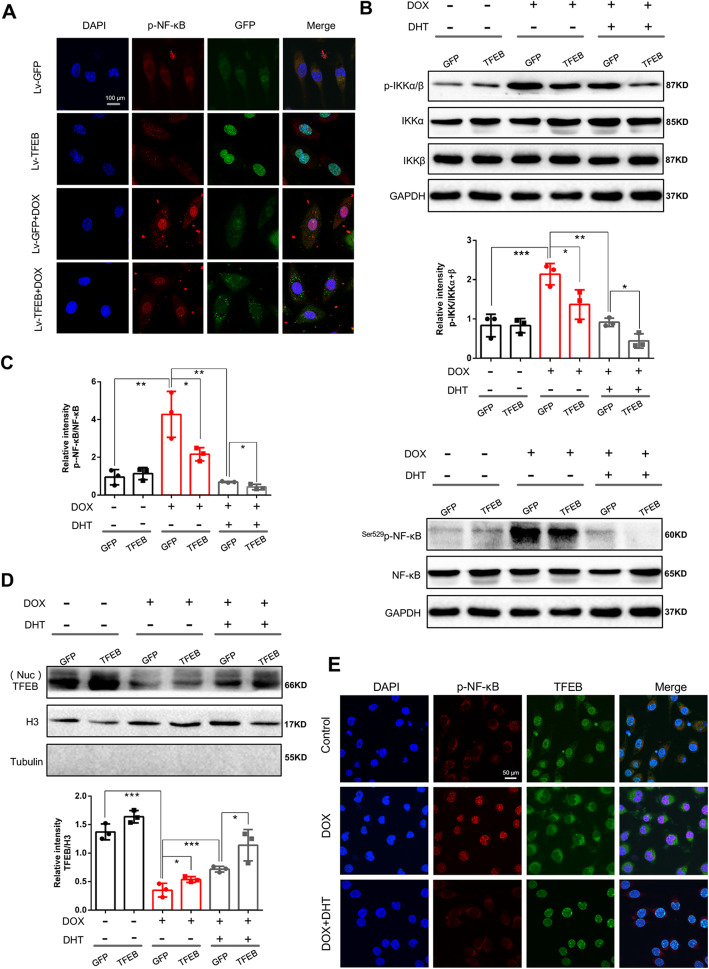
DHT improved cardiac function via inhibiting the activation of M1 macrophages and the excessive release of pro-inflammatory cytokines both in vivo and in vitro. The activation and nuclear localization of NF-κB were suppressed by DHT, and the effect was abolished by mTOR agonist with concomitant reduced expression of nuclear TFEB. Furthermore, reduced expression of nuclear TFEB is accompanied by up-regulated phosphorylation of IKKα/β and NF-κB, while TFEB overexpression reversed these changes. Intriguingly, DHT could upregulate nuclear expression of TFEB and reduce expressions of p-IKKα/β and p-NF-κB.
Our results demonstrated that DHT can be applied as a novel cardioprotective compound in the anti-inflammation management of DIC via mTOR-TFEB-NF-κB signaling pathway. The current study implicates TFEB-IKK-NF-κB signaling axis as a previously undescribed, druggable pathway for DIC.
多柔比星在多种实体瘤和血液系统恶性肿瘤中有效。不幸的是,由于累积剂量依赖性的心脏毒性,多柔比星的临床应用受到限制。二氢丹参酮 I(DHT)是丹参中的一种天然产物,具有多种抗肿瘤活性和抗炎作用。然而,其在体内或体外对多柔比星诱导的心脏毒性(DIC)的作用尚未阐明。本研究旨在探讨 DHT 对 DIC 的抗炎作用,并阐明其潜在的调控机制。
在斑马鱼、C57BL/6 小鼠和 H9C2 心肌细胞中评估 DHT 对 DIC 的影响。应用超声心动图、组织学检查、流式细胞术、免疫化学和免疫荧光技术评估心脏保护作用和抗炎作用。应用 mTOR 激动剂和携带 GFP-TFEB 的慢病毒载体探讨调控信号通路。
DHT 通过抑制 M1 巨噬细胞的激活和过度释放促炎细胞因子,在体内和体外均改善了心脏功能。DHT 抑制 NF-κB 的激活和核定位,该作用被 mTOR 激动剂所废除,同时伴有核 TFEB 表达减少。此外,核 TFEB 表达减少伴随着 IKKα/β 和 NF-κB 的磷酸化增加,而 TFEB 过表达则逆转了这些变化。有趣的是,DHT 可以上调 TFEB 的核表达,并降低 p-IKKα/β 和 p-NF-κB 的表达。
我们的研究结果表明,DHT 可以通过 mTOR-TFEB-NF-κB 信号通路作为一种新型的心脏保护化合物,应用于 DIC 的抗炎管理。本研究提示 TFEB-IKK-NF-κB 信号轴是一种以前未被描述的、可成药的 DIC 途径。