CAS Key Laboratory of Tissue Microenvironment and Tumor, Laboratory of Molecular Cardiology, Shanghai Institute of Nutrition and Health, University of Chinese Academy of Sciences (CAS), CAS, 320 Yue Yang Rd, Biological Research Building A, Shanghai, 200031, People's Republic of China.
Stem Cell Res Ther. 2020 May 24;11(1):196. doi: 10.1186/s13287-020-01711-w.
Mesendodermal formation during early gastrulation requires the expression of lineage-specific genes, while the regulatory mechanisms during this process have not yet been fully illustrated. TATA box-binding protein (TBP) and TBP-like factors are general transcription factors responsible for the transcription initiation by recruiting the preinitiation complex to promoter regions. However, the role of TBP family members in the regulation of mesendodermal specification remains largely unknown.
We used an in vitro mesendodermal differentiation system of human embryonic stem cells (hESCs), combining with the microarray and quantitative polymerase chain reaction (qRT-PCR) analysis, loss of function and gain of function to determine the function of the TBP family member TBP-related factor 3 (TRF3) during mesendodermal differentiation of hESCs. The chromatin immunoprecipitation (ChIP) and biochemistry analysis were used to determine the binding of TRF3 to the promoter region of key mesendodermal genes.
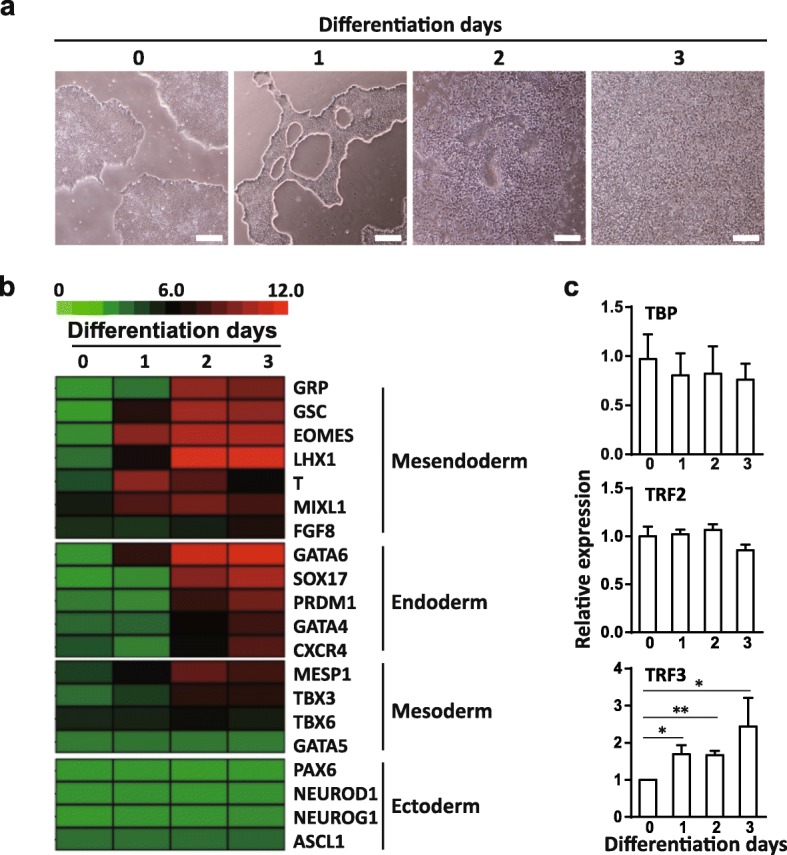
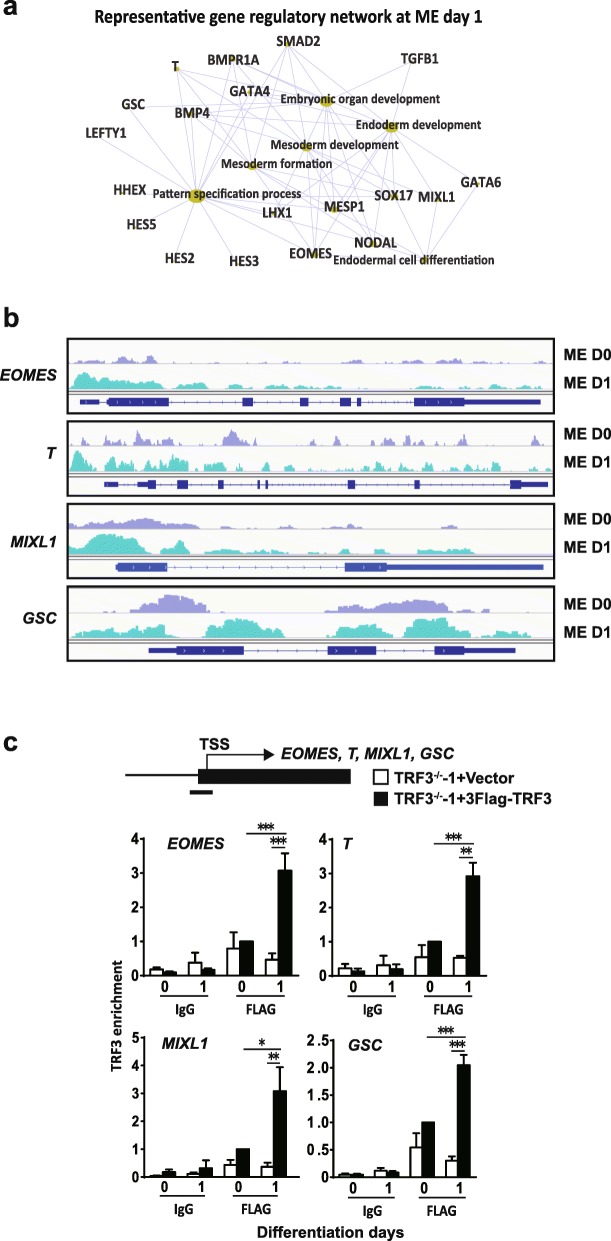
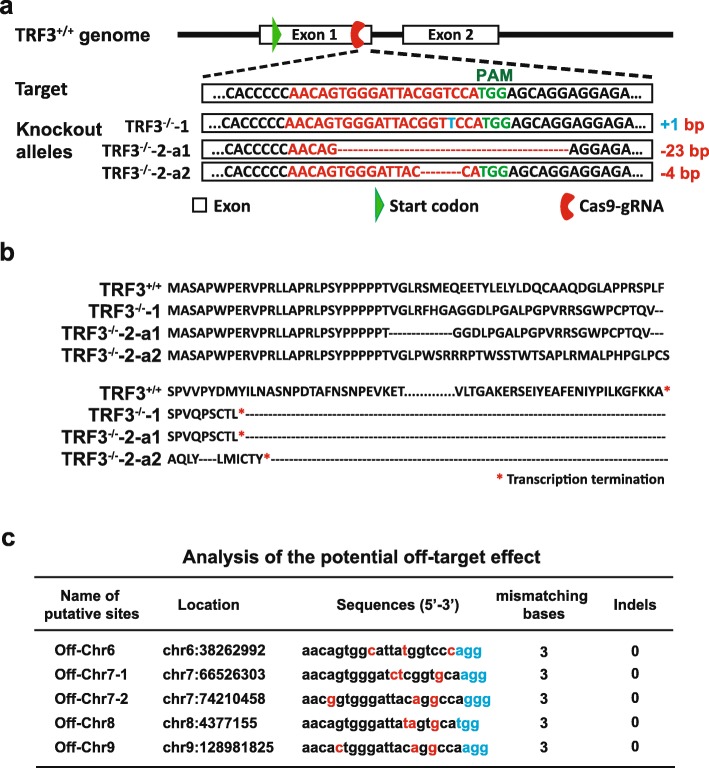
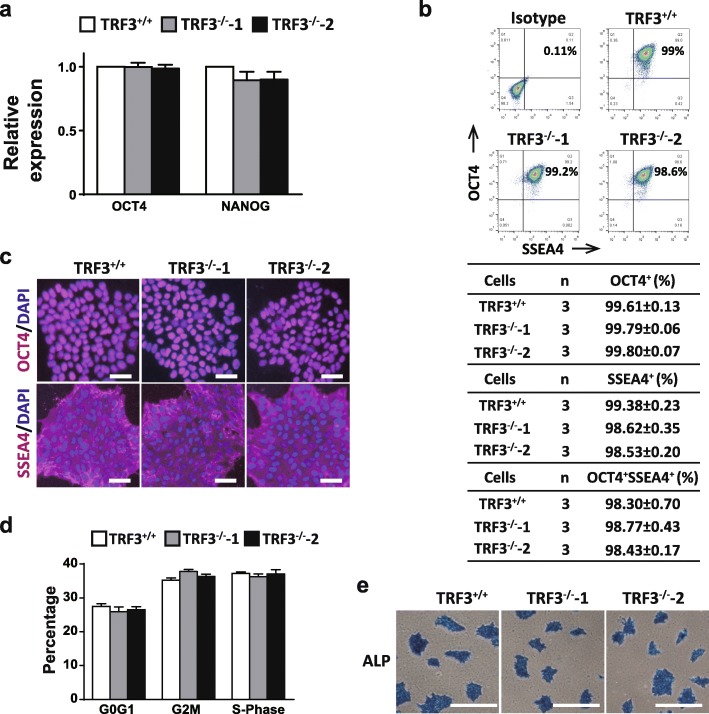
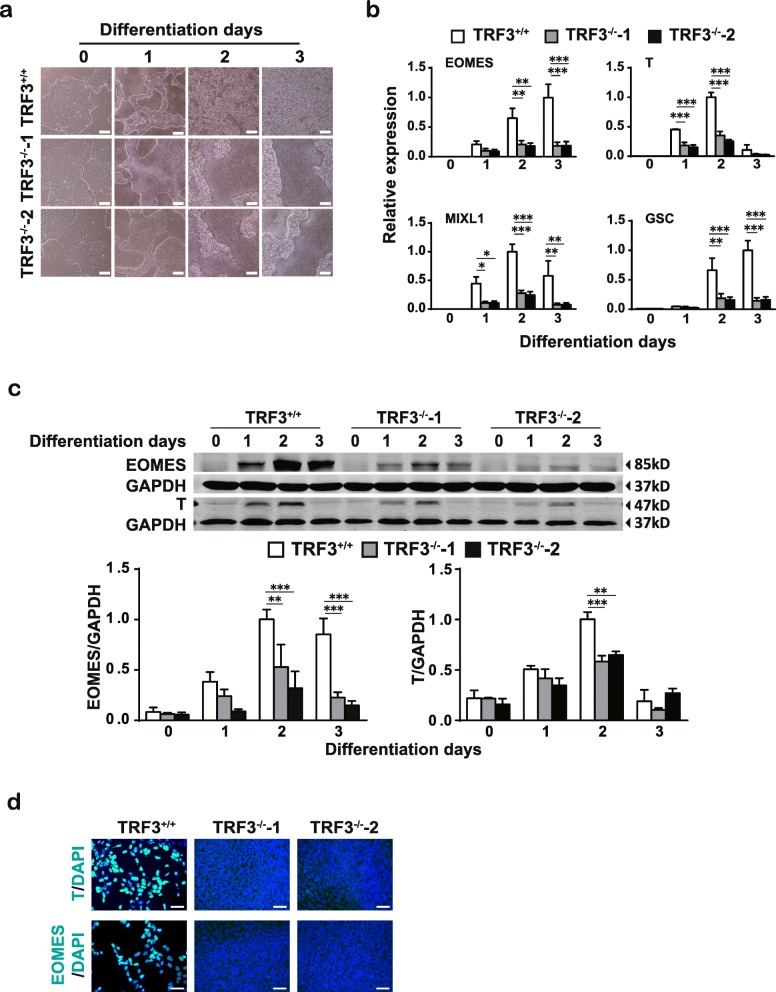
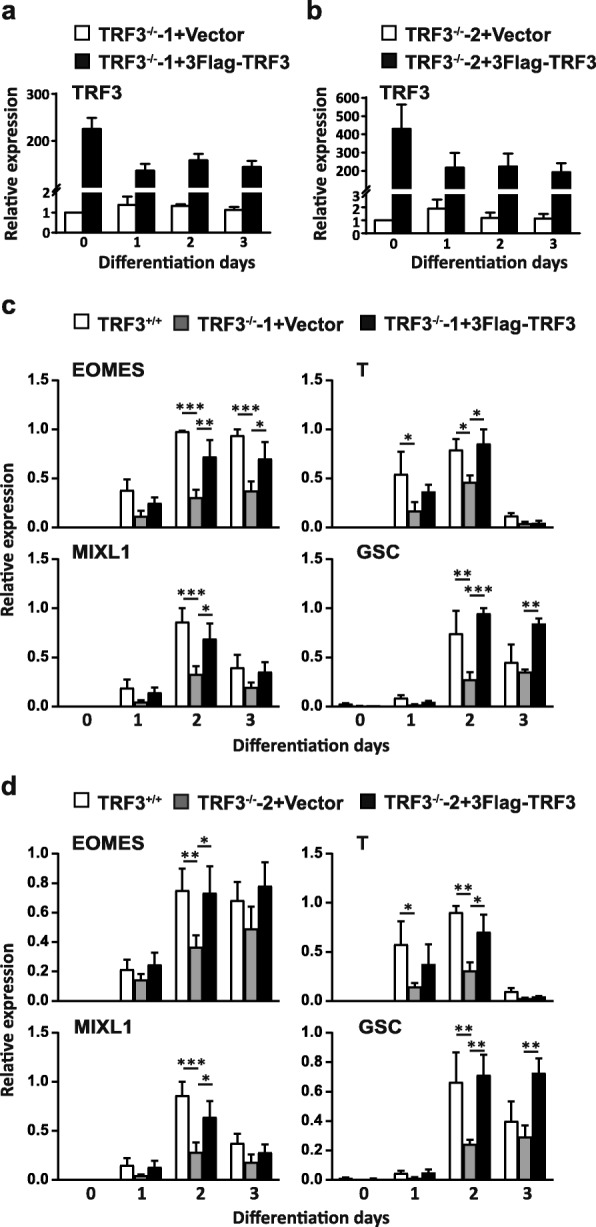
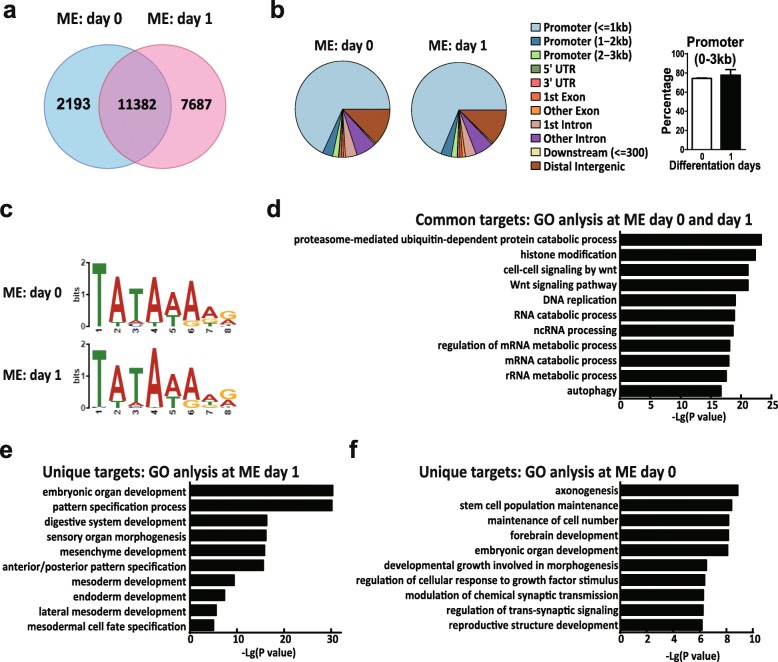
The mesendodermal differentiation of hESCs was confirmed by the microarray gene expression profile, qRT-PCR, and immunocytochemical staining. The expression of TRF3 mRNA was enhanced during mesendodermal differentiation of hESCs. The TRF3 deficiency did not affect the pluripotent marker expression, alkaline phosphatase activity, and cell cycle distribution of undifferentiated hESCs or the expression of early neuroectodermal genes during neuroectodermal differentiation. During the mesendodermal differentiation, the expression of pluripotency markers decreased in both wild-type and TRF3 knockout (TRF3) cells, while the TRF3 deficiency crippled the expression of the mesendodermal markers. The reintroduction of TRF3 into the TRF3 hESCs rescued inhibited mesendodermal differentiation. Mechanistically, the TRF3 binding profile was significantly shifted to the mesendodermal specification during mesendodermal differentiation of hESCs based on the ChIP-seq data. Moreover, ChIP and ChIP-qPCR analysis showed that TRF3 was enriched at core promoter regions of mesendodermal developmental genes, EOMESODERMIN, BRACHYURY, mix paired-like homeobox, and GOOSECOID homeobox, during mesendodermal differentiation of hESCs.
These results reveal that the TBP family member TRF3 is dispensable in the undifferentiated hESCs and the early neuroectodermal differentiation. However, it directs mesendodermal lineage commitment of hESCs via specifically promoting the transcription of key mesendodermal transcription factors. These findings provide new insights into the function and mechanisms of the TBP family member in hESC early lineage specification.
早期原肠胚形成过程中需要谱系特异性基因的表达,而这一过程中的调控机制尚未完全阐明。TATA 结合蛋白(TBP)和 TBP 样因子是负责通过招募起始前复合物到启动子区域来启动转录的一般转录因子。然而,TBP 家族成员在中胚层特异性调节中的作用在很大程度上仍然未知。
我们使用了人类胚胎干细胞(hESC)的体外中胚层分化系统,结合微阵列和定量聚合酶链反应(qRT-PCR)分析、功能丧失和功能获得,以确定 TBP 家族成员 TBP 相关因子 3(TRF3)在 hESC 中胚层分化过程中的作用。染色质免疫沉淀(ChIP)和生物化学分析用于确定 TRF3 与关键中胚层基因启动子区域的结合。
通过微阵列基因表达谱、qRT-PCR 和免疫细胞化学染色证实了 hESC 的中胚层分化。TRF3mRNA 的表达在 hESC 的中胚层分化过程中增强。TRF3 缺失不影响未分化 hESC 的多能标记物表达、碱性磷酸酶活性和细胞周期分布,也不影响神经外胚层分化过程中早期神经外胚层基因的表达。在中胚层分化过程中,多能标记物的表达在野生型和 TRF3 敲除(TRF3)细胞中均降低,而 TRF3 缺失则抑制了中胚层标记物的表达。将 TRF3 重新引入 TRF3 hESC 中挽救了抑制的中胚层分化。基于 ChIP-seq 数据,机制研究表明,TRF3 的结合谱在 hESC 的中胚层分化过程中显著转移到中胚层特异性。此外,ChIP 和 ChIP-qPCR 分析表明,在 hESC 的中胚层分化过程中,TRF3 富集在中胚层发育基因核心启动子区域,如 EOMESODERMIN、BRACHYURY、mix paired-like homeobox 和 GOOSECOID homeobox。
这些结果表明,TBP 家族成员 TRF3 在未分化的 hESC 和早期神经外胚层分化中是可有可无的。然而,它通过特异性促进关键中胚层转录因子的转录,指导 hESC 的中胚层谱系决定。这些发现为 TBP 家族成员在 hESC 早期谱系特化中的功能和机制提供了新的见解。