Department of Ophthalmology, University Medical Center Mainz, Langenbeckstr 1, 55131, Mainz, Germany.
Johannes Gutenberg University Mainz, Mainz, Germany.
Orphanet J Rare Dis. 2020 May 25;15(1):124. doi: 10.1186/s13023-020-01407-7.
Phenylketonuria (PKU) is an inherited metabolic disorder characterized by reduced activity of phenylalanine hydroxylase resulting in elevated blood phenylalanine (Phe) concentration. Despite some obvious ocular changes, the disorder has been poorly recognized by ophthalmologists. Neurophysiologic tests imply prolonged reaction time correlating with increased phenylalanine blood concentrations. We aimed to test saccadic reaction time in PKU patients in dependency of blood phenylalanine concentrations.
Nineteen biochemically diagnosed PKU patients and 100 controls completed comprehensive ophthalmologic and orthoptic examinations including saccadometry by infrared based video-oculography. Peak velocity, gain, and particularly latency of reflexive saccades were compared to controls, and regression analysis was performed.
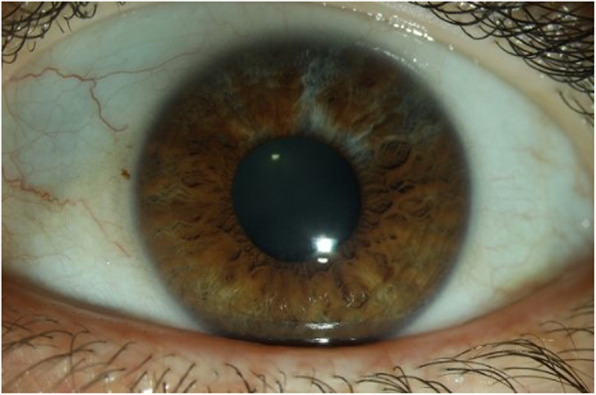
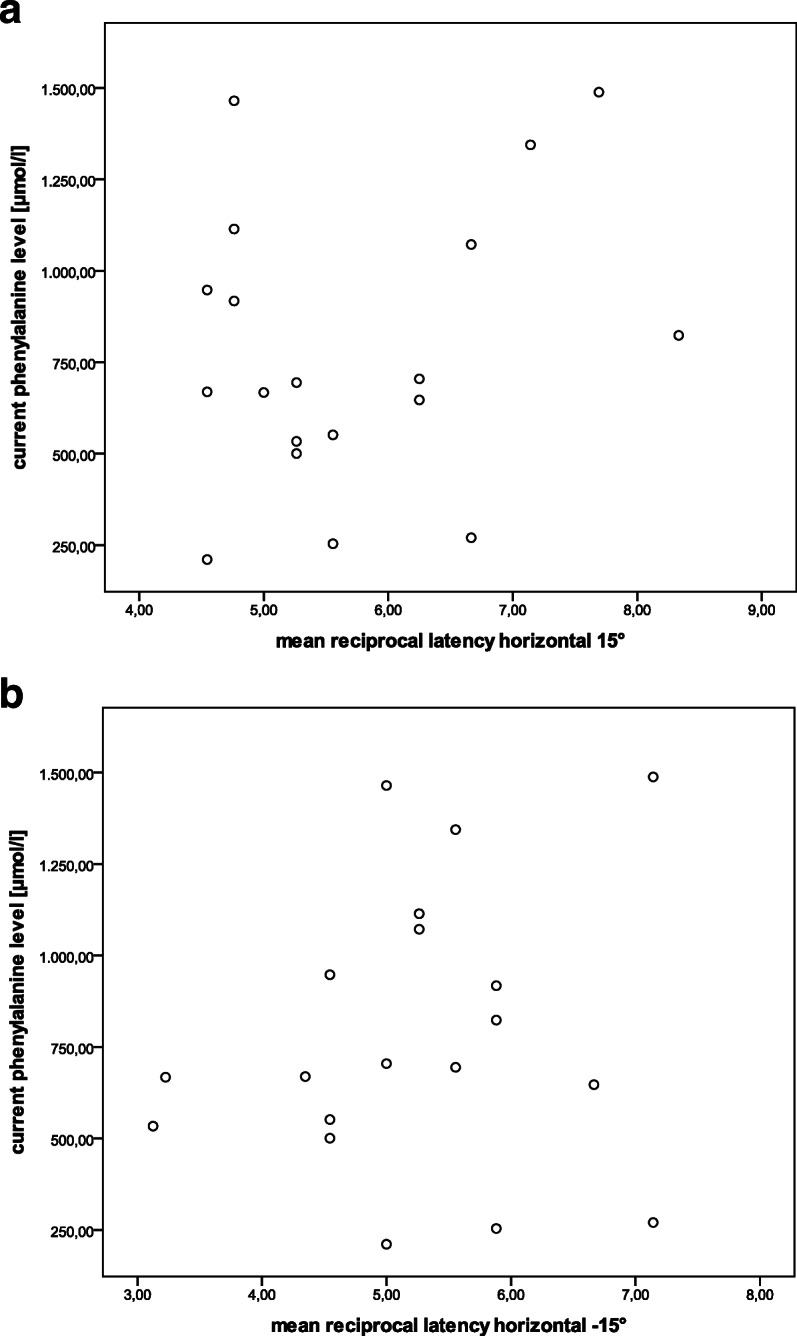
Latency of reflexive saccades was not associated with the current phenylalanine concentration. Although in 10 out of 19 patients phenylalanine concentrations were outside the age-related therapeutic range, latency differed little between PKU patients and the controls, as well as peak velocity and gain. Ocular findings occurred as partial hypopigmentation of the iris in one late diagnosed patient aged 36 years, and as bilateral cataracts (possibly due to steroid intake) with refractive amblyopia, strabismus, high myopia, and glaucoma in another late diagnosed patient aged 46 years. Visual acuity was reduced in eight PKU patients.
Saccadometry, particularly saccadic reaction time, is not useful in the monitoring of phenylketonuria. Ophthalmic examination is recommended in PKU patients, as the occurrence of ocular pathologies was relatively high.
苯丙酮尿症(PKU)是一种遗传性代谢疾病,其特征是苯丙氨酸羟化酶活性降低,导致血液苯丙氨酸(Phe)浓度升高。尽管有一些明显的眼部变化,但该疾病一直未被眼科医生所认识。神经生理测试表明,反应时间延长与血苯丙氨酸浓度升高相关。我们旨在测试 PKU 患者的眼跳反应时间与血苯丙氨酸浓度的相关性。
19 名生化诊断的 PKU 患者和 100 名对照者完成了全面的眼科和斜视检查,包括基于红外的视频眼动描记法的眼跳测量。比较了反射性眼跳的峰值速度、增益,特别是潜伏期与对照组,同时进行了回归分析。
反射性眼跳的潜伏期与当前的苯丙氨酸浓度无关。尽管在 19 名患者中的 10 名患者的苯丙氨酸浓度超出了年龄相关的治疗范围,但 PKU 患者与对照组之间的潜伏期差异很小,峰值速度和增益也是如此。眼部发现为 1 名 36 岁的晚期诊断患者的虹膜部分色素减退,以及另 1 名 46 岁的晚期诊断患者的双侧白内障(可能由于类固醇摄入)伴屈光性弱视、斜视、高度近视和青光眼。8 名 PKU 患者的视力下降。
眼跳测量,特别是眼跳反应时间,在监测苯丙酮尿症方面并不有用。建议对 PKU 患者进行眼科检查,因为眼部病变的发生率相对较高。