Stanford University, Department of Psychology, Stanford, CA, United States; Stanford University, Department of Psychiatry and Behavioral Sciences, Stanford, CA, United States; University of California, San Francisco, Department of Psychiatry & Weill Institute for Neurosciences, San Francisco, CA, United States.
University of Washington, Department of Psychology, Seattle, WA, United States.
Dev Cogn Neurosci. 2020 Apr;42:100773. doi: 10.1016/j.dcn.2020.100773. Epub 2020 Feb 14.
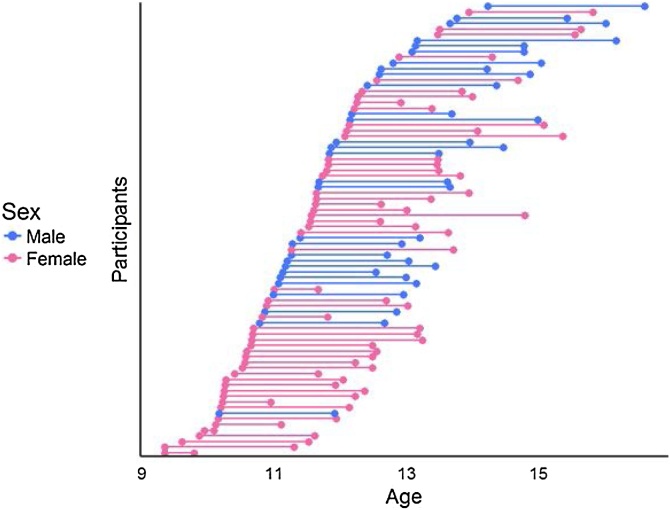
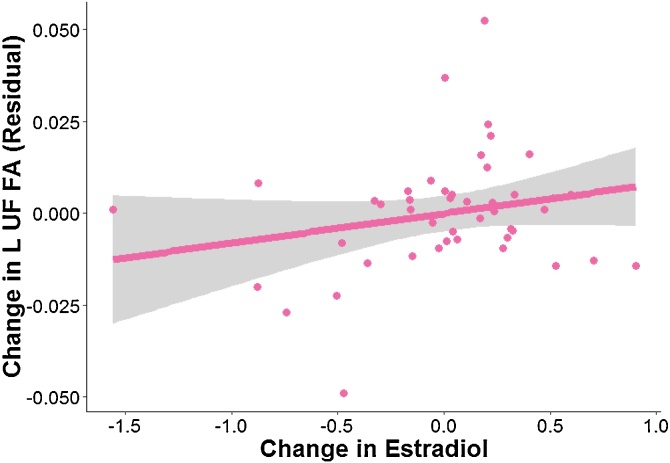
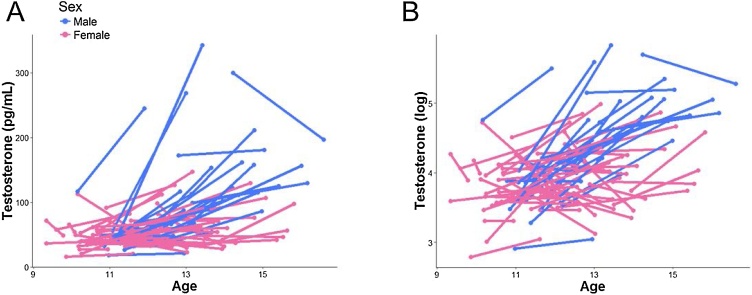
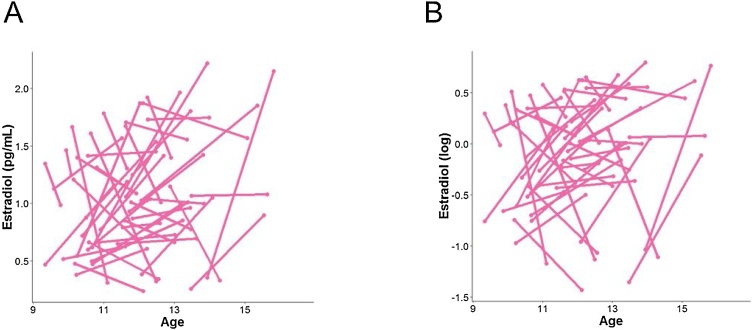
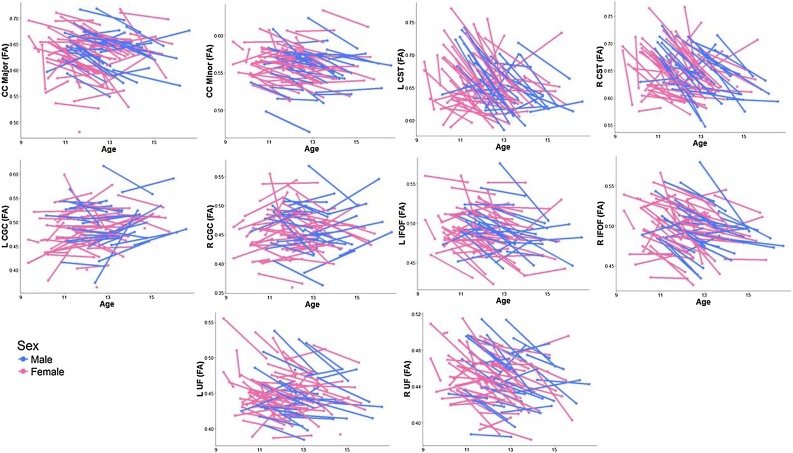
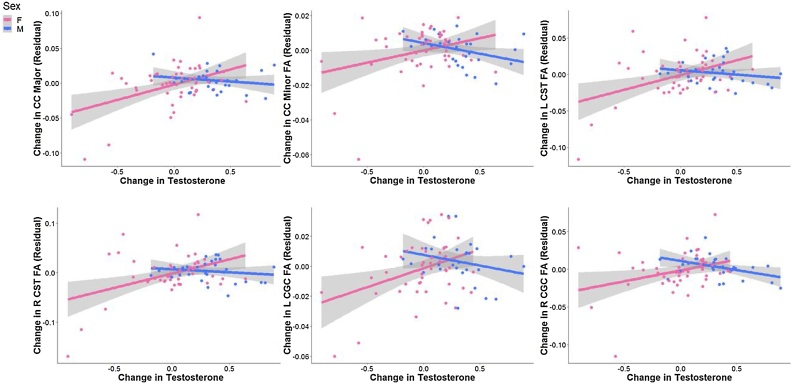
Adolescence is characterized by rapid brain development in white matter (WM) that is attributed in part to surges in gonadal hormones. To date, however, there have been few longitudinal investigations relating changes in gonadal hormones and WM development in adolescents. We acquired diffusion-weighted MRI to estimate mean fractional anisotropy (FA) from 10 WM tracts and salivary testosterone from 51 females and 29 males (ages 9-14 years) who were matched on pubertal stage and followed, on average, for 2 years. We tested whether interactions between sex and changes in testosterone levels significantly explained changes in FA. We found positive associations between changes in testosterone and changes in FA within the corpus callosum, cingulum cingulate, and corticospinal tract in females (all ps<0.05, corrected) and non-significant associations in males. We also collected salivary estradiol from females and found that increases in estradiol were associated with increases in FA in the left uncinate fasciculus (p = 0.04, uncorrected); however, this effect was no longer significant after accounting for changes in testosterone. Our findings indicate there are sex differences in how changes in testosterone relate to changes in WM microstructure of tracts that support impulse control and emotion regulation across the pubertal transition.
青春期的特点是大脑白质(WM)的快速发育,部分归因于性腺激素的激增。然而,迄今为止,很少有纵向研究将性腺激素变化与青少年 WM 发育联系起来。我们采集了扩散加权 MRI 数据,以从 10 个 WM 束中估计平均分数各向异性(FA),并从 51 名女性和 29 名男性(年龄 9-14 岁)的唾液中获取睾酮,这些个体按青春期阶段匹配,并平均随访 2 年。我们测试了睾酮水平变化与 FA 变化之间的性别交互作用是否能显著解释 FA 的变化。我们发现,在女性中,睾酮水平变化与胼胝体、扣带束和皮质脊髓束内 FA 的变化之间存在正相关(所有 p<0.05,校正后),而在男性中则无显著相关性。我们还从女性中采集了唾液雌二醇,并发现雌二醇的增加与左侧钩束的 FA 增加相关(p = 0.04,未校正);然而,在考虑到睾酮变化后,这种效应不再显著。我们的研究结果表明,在青春期过渡期间,支持冲动控制和情绪调节的束状 WM 微观结构的变化与睾酮变化的关系存在性别差异。