Key Laboratory of Agro-Ecological Processes in Subtropical Region, Hunan Research Center of Livestock & Poultry Sciences, South-Central Experimental Station of Animal Nutrition and Feed Science in Ministry of Agriculture, Institute of Subtropical Agriculture, The Chinese Academy of Sciences, Changsha, Hunan 410125, China.
University of Chinese Academy of Sciences, Beijing 100049, China.
Mediators Inflamm. 2020 May 2;2020:6062094. doi: 10.1155/2020/6062094. eCollection 2020.
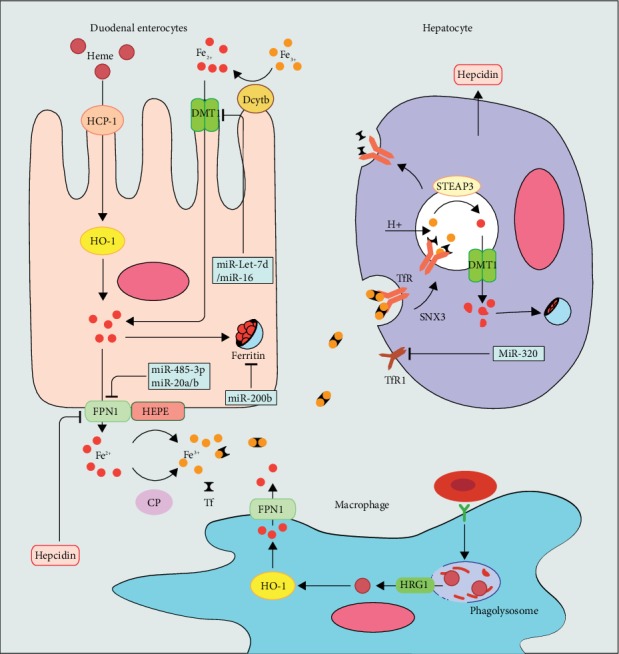
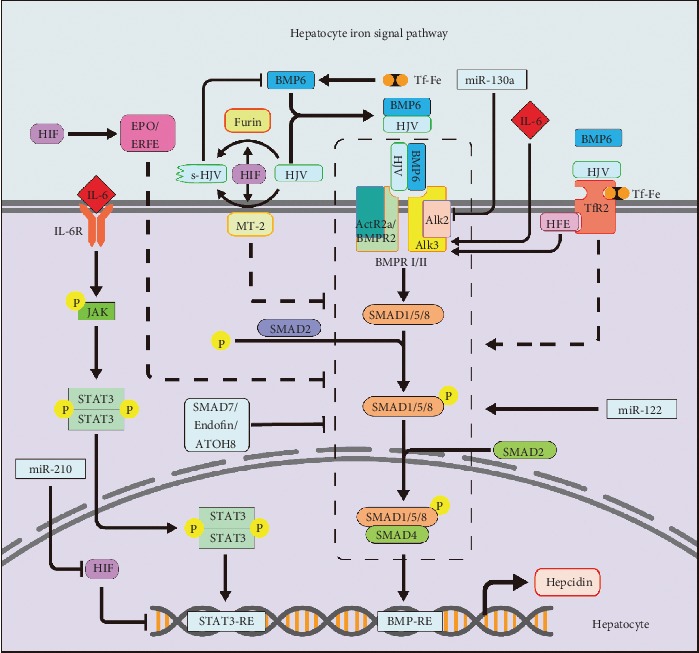
The liver is the organ for iron storage and regulation; it senses circulating iron concentrations in the body through the BMP-SMAD pathway and regulates the iron intake from food and erythrocyte recovery into the bloodstream by secreting hepcidin. Under iron deficiency, hypoxia, and hemorrhage, the liver reduces the expression of hepcidin to ensure the erythropoiesis but increases the excretion of hepcidin during infection and inflammation to reduce the usage of iron by pathogens. Excessive iron causes system iron overload; it accumulates in never system and damages neurocyte leading to neurodegenerative diseases such as Parkinson's syndrome. When some gene mutations affect the perception of iron and iron regulation ability in the liver, then they decrease the expression of hepcidin, causing hereditary diseases such as hereditary hemochromatosis. This review summarizes the source and utilization of iron in the body, the liver regulates systemic iron homeostasis by sensing the circulating iron concentration, and the expression of hepcidin regulated by various signaling pathways, thereby understanding the pathogenesis of iron-related diseases.
肝脏是铁储存和调节的器官;它通过 BMP-SMAD 途径感知体内循环铁浓度,并通过分泌铁调素来调节食物中铁的摄入和红细胞回收到血液中的铁。在缺铁、缺氧和出血的情况下,肝脏会降低铁调素的表达,以确保红细胞生成,但在感染和炎症期间会增加铁调素的排泄,以减少病原体对铁的利用。过量的铁会导致系统铁过载;它在神经系统中积累并损害神经细胞,导致帕金森综合征等神经退行性疾病。当某些基因突变影响肝脏对铁的感知和铁调节能力时,就会降低铁调素的表达,从而导致遗传性血色病等遗传性疾病。本文综述了体内铁的来源和利用、肝脏通过感知循环铁浓度来调节全身铁平衡以及各种信号通路对铁调素表达的调节,从而了解铁相关疾病的发病机制。