Matharan Martin, Mathis Stéphane, Bonabaud Sarah, Carla Louis, Soulages Antoine, Le Masson Gwendal
Department of Neurology, Nerve-Muscle Unit, CHU Bordeaux, Pellegrin Hospital, F-33096 Bordeaux, France.
ALS Center, CHU Bordeaux, Pellegrin Hospital, F-33096 Bordeaux, France.
Neurol Res Int. 2020 May 11;2020:1473981. doi: 10.1155/2020/1473981. eCollection 2020.
Amyotrophic lateral sclerosis (ALS), usually fatal in a few years, is a neurodegenerative disorder where the diagnostic delay, although variable according to the studies, remains too long. The main objective of this study was to determine the average time to diagnose ALS and the role of each physician, general practitioner (GP), or specialist (neurologist or not) involved in the management of these patients. The secondary objective was to propose some simple schemes to quickly identify an ALS suspicion with the aim to reduce this delay. . This retrospective study evaluated the diagnostic delay (and other intermediate delays) of 90 ALS patients registered in the ALS Center of Bordeaux (France) in 2013. The main clinical signs encountered (and their order of appearance) were studied.
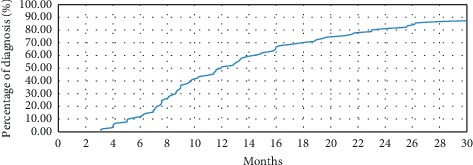
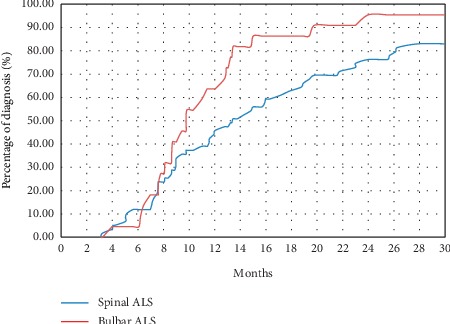
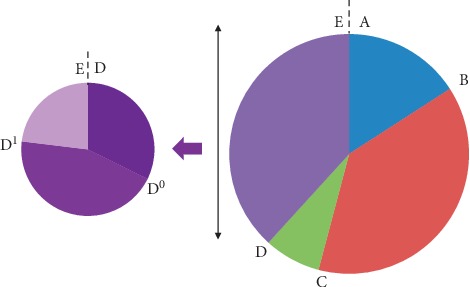
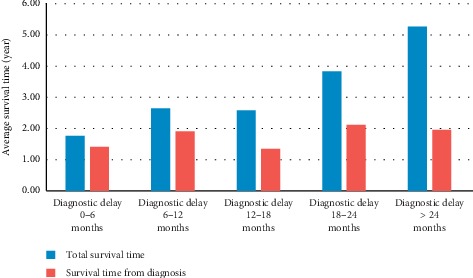
The average diagnostic delay was 17 months, with a median diagnostic delay of 12 months. The average diagnostic delay was 2.7 months between the first symptoms and the first complaint to GP, followed by an additional 6.5 month delay before the patient's first visit to a neurologist. This period could be shortened, especially if GP performed additional tests quickly (=0.01), as the time spent consulting various specialists often extends this crucial step. Overall, diagnostic delay accounted for 40% of the total duration of the disease progression.
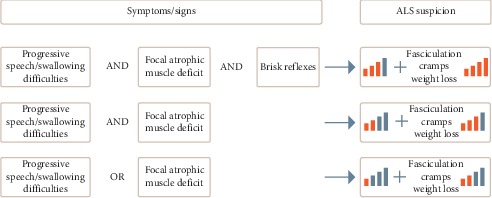
In relation to total survival time, the diagnostic delay of ALS appears to be proportionately very long, sometimes longer than that observed in previous studies (because it also included the total delay to diagnostic or treatment initiation). The rapid execution of useful additional tests by the first medical doctor, often GP (with the help of a neurologist), considerably reduces the diagnostic delay. The central role of GP seems to be crucial in the management of patients with ALS. The main objective is, of course, to initiate appropriate treatment and care as soon as possible. Finally, based on our results, we also provide a short practical diagram to help nonneurologist practitioners to quickly discuss the diagnosis of ALS in case of some specific symptoms ("red flags").
肌萎缩侧索硬化症(ALS)通常在几年内致命,是一种神经退行性疾病,尽管根据研究诊断延迟时间各不相同,但仍然过长。本研究的主要目的是确定ALS的平均诊断时间以及参与这些患者管理的每位医生(全科医生[GP]或专科医生[无论是否为神经科医生])的作用。次要目的是提出一些简单方案,以便快速识别ALS疑似病例,从而减少诊断延迟。这项回顾性研究评估了2013年在法国波尔多ALS中心登记的90例ALS患者的诊断延迟(以及其他中间延迟)。研究了所遇到的主要临床体征(及其出现顺序)。
平均诊断延迟为17个月,中位诊断延迟为12个月。从首次出现症状到首次向全科医生就诊的平均诊断延迟为2.7个月,随后在患者首次就诊神经科医生之前又有6.5个月的延迟。这一时期可以缩短,特别是如果全科医生能迅速进行额外检查(=0.01),因为咨询不同专科医生所花费的时间往往会延长这一关键步骤。总体而言,诊断延迟占疾病进展总时长的40%。
相对于总生存时间,ALS的诊断延迟似乎相当长,有时比之前研究中观察到的还要长(因为它还包括诊断或开始治疗的总延迟)。首位医生(通常是全科医生,在神经科医生的帮助下)迅速进行有用的额外检查,可显著减少诊断延迟。全科医生的核心作用在ALS患者管理中似乎至关重要。当然,主要目标是尽快开始适当的治疗和护理。最后,基于我们的研究结果,我们还提供了一个简短实用的图表,以帮助非神经科医生在出现某些特定症状(“红旗征”)时快速讨论ALS的诊断。