Zhang Yan, Chen Jiqiang, Chen Guangmei, Ma Chao, Chen Hongsong, Gao Xuyuan, Tian Zhenqi, Cui Shaowei, Tian Zhenya, Guo Jianying, Wan Fanghao, Zhou Zhongshi
State Key Laboratory for Biology of Plant Diseases and Insect Pests, Institute of Plant Protection, Chinese Academy of Agricultural Sciences, Beijing, China.
Guangxi Key Laboratory of Biology for Crop Diseases and Insect Pests, Institute of Plant Protection, Guangxi Academy of Agricultural Sciences, Nanning, China.
Front Physiol. 2020 May 7;11:355. doi: 10.3389/fphys.2020.00355. eCollection 2020.
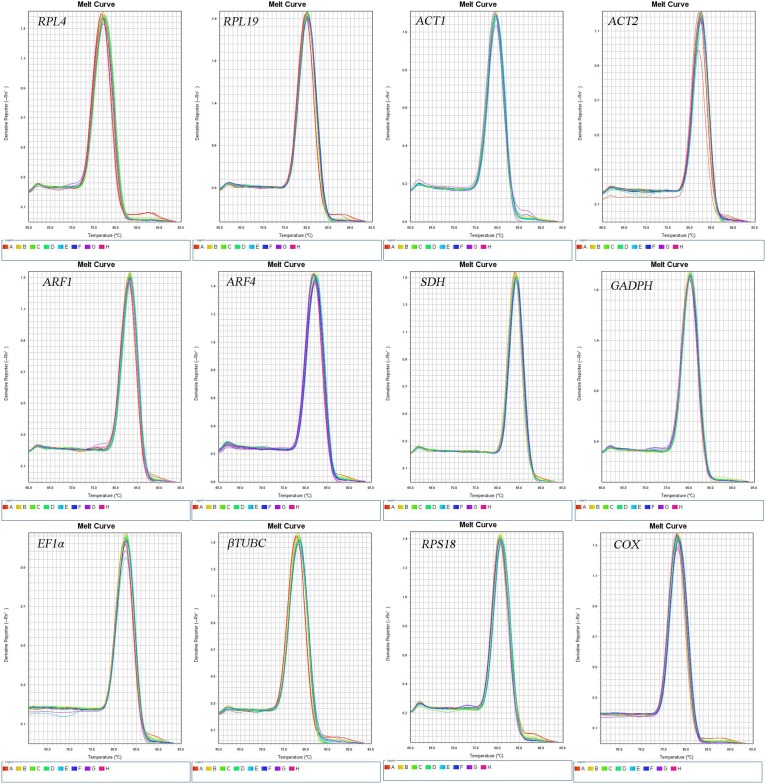
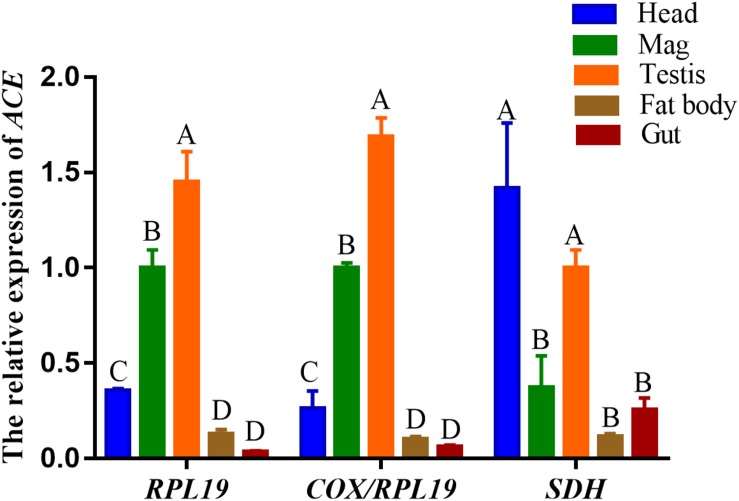
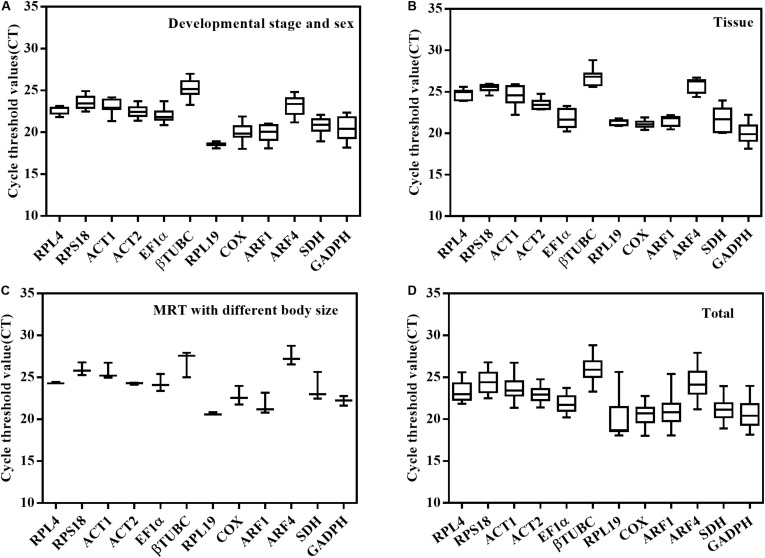
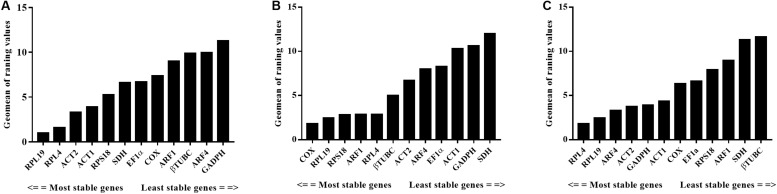
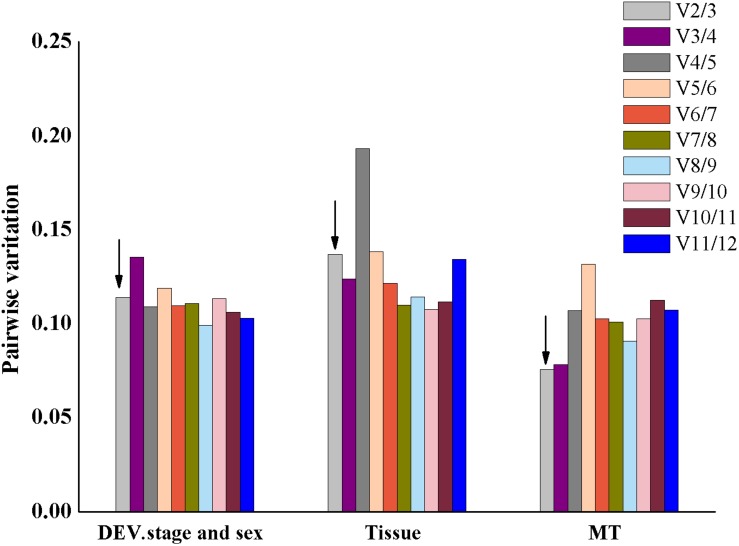
is an effective bio-control agent of the invasive common weed. By now, the reference genes in have not yet been screened and validated. The aim of this study was to screen for the most stable reference genes in different backgrounds, such as different developmental stages, sexes, tissues, and male reproductive system with different body sizes. We selected 12 common housekeeping genes involved in different biological processes, including , , , , , , , , , , α, and as the candidate reference genes. To analyze the stability of the candidate reference genes, we first used three dedicated algorithms, GeNorm, NormFinder, and BestKeeper, and further comprehensive ranking was provided by ReFinder. The results showed that and exhibited the least variation in different developmental stages/sexes and in male reproductive systems with different body sizes. proved to be most suitable for normalizing the gene expression levels in different tissues, and coincidentally, was also found to be second in terms of stability in this study. To the best of our knowledge, this is the first study to identify suitable reference genes for analyzing gene expression in ; thus, this study would lay the foundation for future research on the molecular physiology and biochemistry of and other insects.
是入侵性常见杂草的一种有效生物防治剂。到目前为止,[具体对象]中的内参基因尚未进行筛选和验证。本研究的目的是在不同背景下筛选最稳定的内参基因,如不同发育阶段、性别、组织以及不同体型的雄性生殖系统。我们选择了12个参与不同生物学过程的常见管家基因,包括[具体基因名称1]、[具体基因名称2]、[具体基因名称3]、[具体基因名称4]、[具体基因名称5]、[具体基因名称6]、[具体基因名称7]、[具体基因名称8]、[具体基因名称9]、[具体基因名称10]、α和[具体基因名称11]作为候选内参基因。为了分析候选内参基因的稳定性,我们首先使用了三种专门的算法,GeNorm、NormFinder和BestKeeper,并由ReFinder提供进一步的综合排名。结果表明,[具体基因1]和[具体基因2]在不同发育阶段/性别以及不同体型的雄性生殖系统中表现出最小的变异。[具体基因3]被证明最适合用于标准化不同组织中的基因表达水平,巧合的是,在本研究中,[具体基因3]在稳定性方面也排名第二。据我们所知,这是第一项为分析[具体对象]中的基因表达鉴定合适内参基因的研究;因此,本研究将为未来关于[具体对象]和其他昆虫的分子生理学和生物化学研究奠定基础。