Kivistik Carmen, Knobloch Jan, Käiro Kairi, Tammert Helen, Kisand Veljo, Hildebrandt Jan-Peter, Herlemann Daniel P R
Centre for Limnology, Estonian University of Life Sciences, Tartu, Estonia.
Zoological Institute and Museum, University of Greifswald, Greifswald, Germany.
Front Microbiol. 2020 May 8;11:683. doi: 10.3389/fmicb.2020.00683. eCollection 2020.
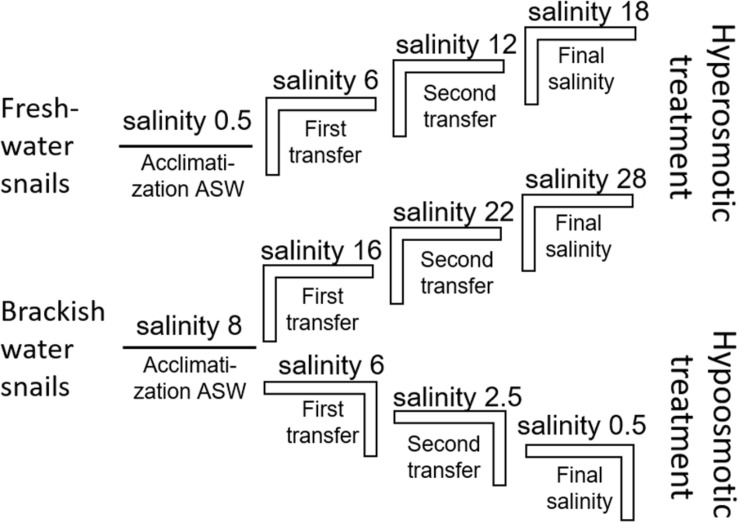
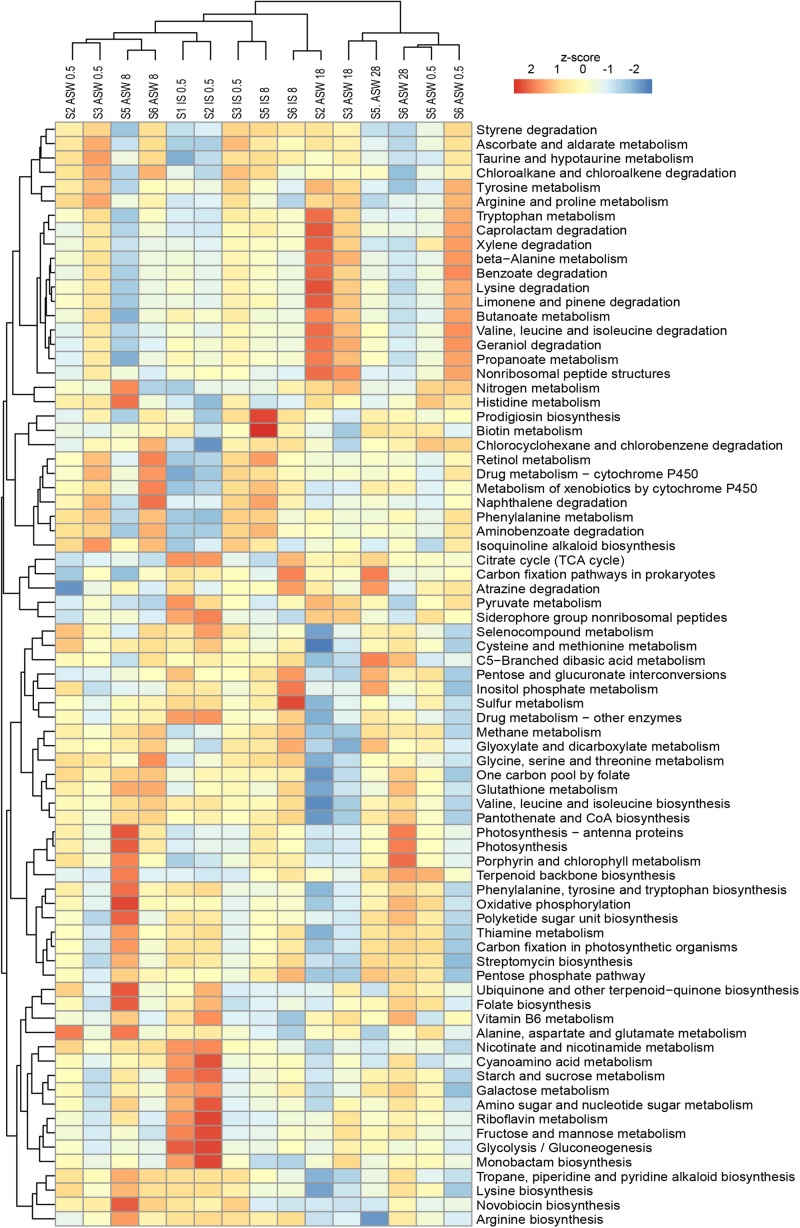
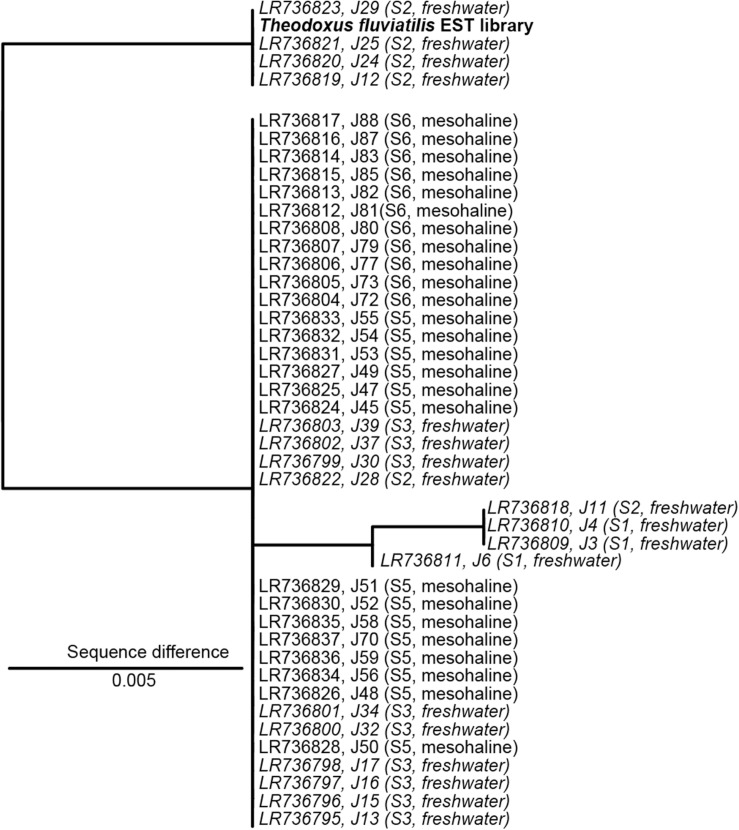
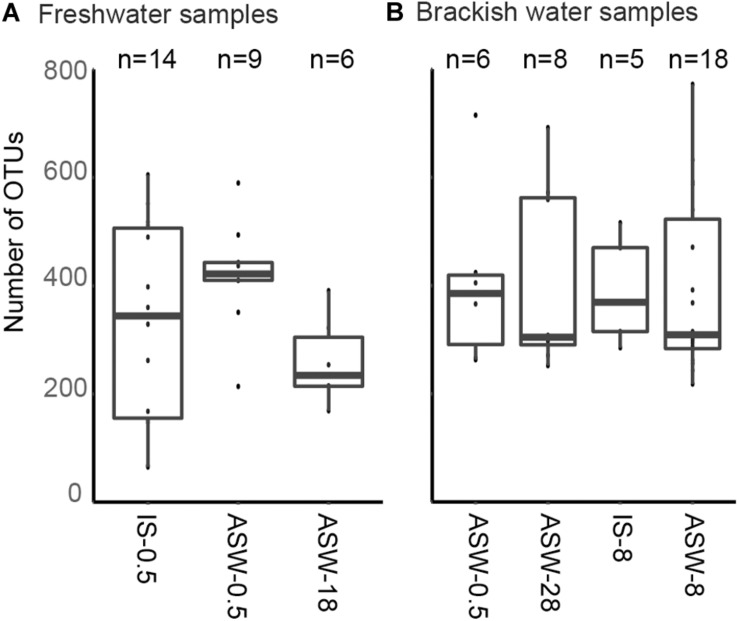
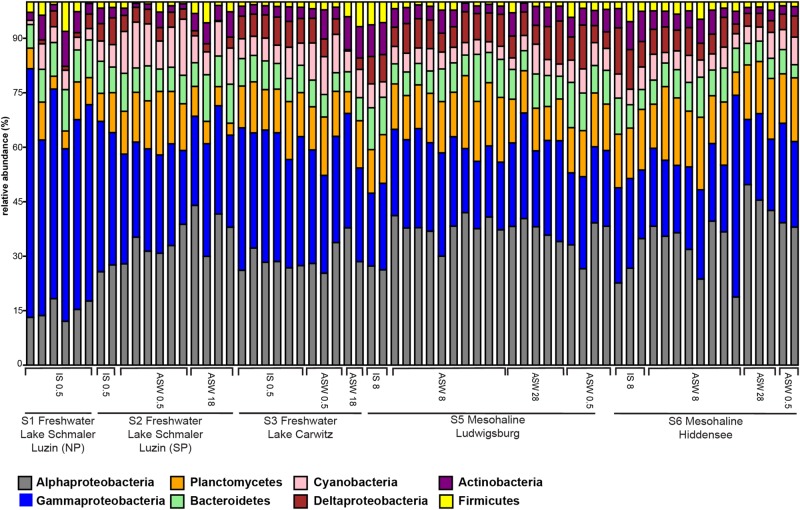
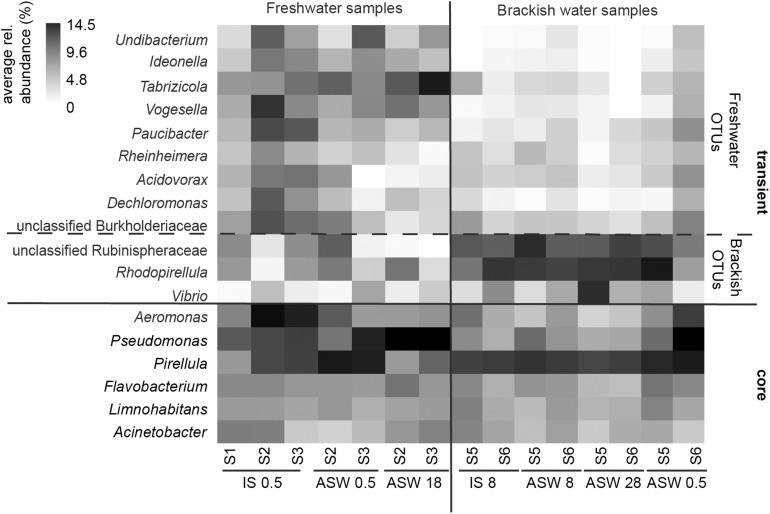
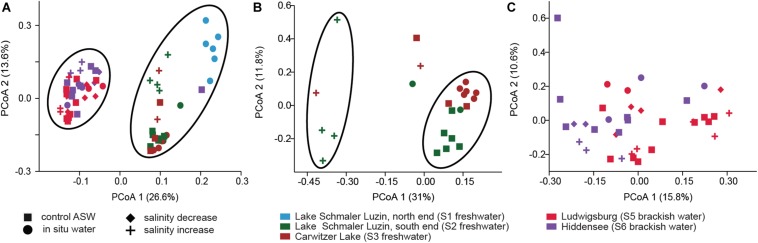
Differences in salinity are boundaries that act as barriers for the dispersal of most aquatic organisms. This creates distinctive biota in freshwater and brackish water (mesohaline) environments. To test how saline boundaries influence the diversity and composition of host-associated microbiota, we analyzed the microbiome within the digestive tract of , an organism able to cross the freshwater and mesohaline boundary. Alpha-diversity measures of the microbiome in freshwater and brackish water were not significantly different. However, the composition of the bacterial community within freshwater differed significantly compared with mesohaline and typical bacteria could be determined for the freshwater and the mesohaline digestive tract microbiome. An artificial increase in salinity surrounding these freshwater snails resulted in a strong change in the bacterial community and typical marine bacteria became more pronounced in the digestive tract microbiome of freshwater . However, the composition of the digestive tract microbiome in freshwater snails did not converge to that found within mesohaline snails. Within mesohaline snails, no cardinal change was found after either an increase or decrease in salinity. In all samples, , , , , and were among the most abundant bacteria. These bacterial genera were largely unaffected by changes in environmental conditions. As permanent residents in , they may support the digestion of the algal food in the digestive tract. Our results show that freshwater and mesohaline water host-associated microbiomes respond differently to changes in salinity. Therefore, the salinization of coastal freshwater environments due to a rise in sea level can influence the gut microbiome and its functions with currently unknown consequences for, e.g., nutritional physiology of the host.
盐度差异形成了边界,对大多数水生生物的扩散起到屏障作用。这在淡水和微咸水(中盐度)环境中造就了独特的生物群落。为了测试盐度边界如何影响宿主相关微生物群的多样性和组成,我们分析了一种能够跨越淡水和中盐度边界的生物——[具体生物名称未给出]消化道内的微生物组。淡水和微咸水中微生物组的α多样性指标并无显著差异。然而,与中盐度环境中的[具体生物名称未给出]相比,淡水中细菌群落的组成存在显著差异,并且可以确定淡水和中盐度消化道微生物组中的典型细菌。人为增加这些淡水蜗牛周围的盐度会导致细菌群落发生强烈变化,典型的海洋细菌在淡水[具体生物名称未给出]的消化道微生物组中变得更加显著。然而,淡水蜗牛消化道微生物组的组成并未趋同于中盐度蜗牛体内的微生物组。在中盐度蜗牛中,盐度升高或降低后均未发现根本性变化。在所有样本中,[具体细菌名称未给出]等是最丰富的细菌种类。这些细菌属在很大程度上不受环境条件变化的影响。作为[具体生物名称未给出]中的常住居民,它们可能有助于消化道内藻类食物的消化。我们的结果表明,淡水和中盐度水体中宿主相关的微生物组对盐度变化的反应不同。因此,海平面上升导致沿海淡水环境盐化可能会影响肠道微生物组及其功能,目前对宿主营养生理学等方面的未知后果尚不明确。