Departments of Oncology Research, Amgen Research, South San Francisco, CA, United States.
Pharmacokinetics and Drug Metabolism, Amgen Research, South San Francisco, CA, United States.
Front Immunol. 2020 May 8;11:832. doi: 10.3389/fimmu.2020.00832. eCollection 2020.
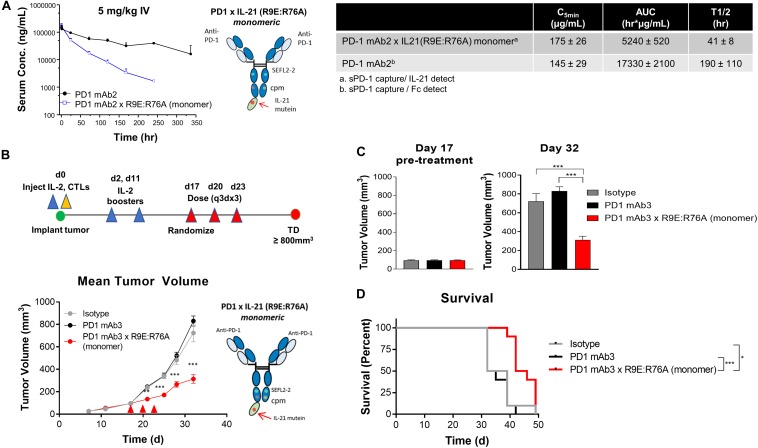
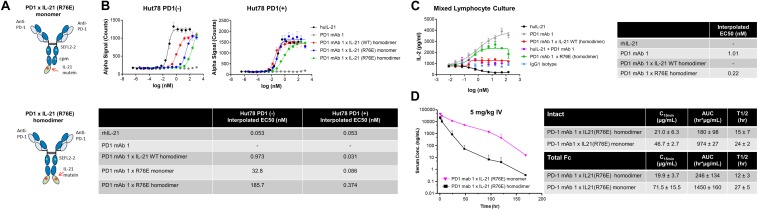
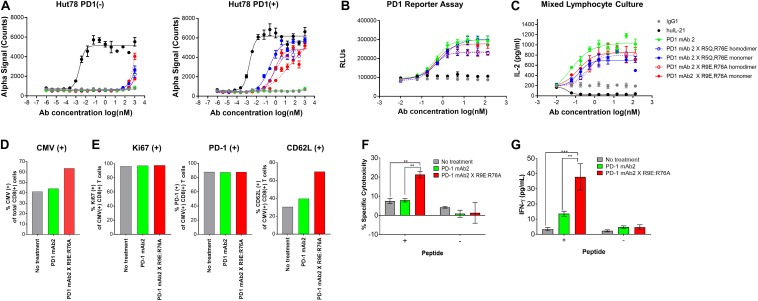
Inhibitors that block the programmed cell death-1 (PD-1) pathway can potentiate endogenous antitumor immunity and have markedly improved cancer survival rates across a broad range of indications. However, these treatments work for only a minority of patients. The efficacy of anti-PD-1 inhibitors may be extended by cytokines, however, the incorporation of cytokines into therapeutic regimens has significant challenges. In their natural form when administered as recombinant proteins, cytokine treatments are often associated with low response rates. Most cytokines have a short half-life which limits their exposure and efficacy. In addition, cytokines can activate counterregulatory pathways, in the case of immune-potentiating cytokines this can lead to immune suppression and thereby diminish their potential efficacy. Improving the drug-like properties of natural cytokines using protein engineering can yield synthetic cytokines with improved bioavailability and tissue targeting, allowing for enhanced efficacy and reduced off-target effects. Using structure guided engineering we have designed a novel class of antibody-cytokine fusion proteins consisting of a PD-1 targeting antibody fused together with an interleukin-21 (IL-21) cytokine . Our bifunctional fusion proteins can block PD-1/programmed death-ligand 1 (PD-L1) interaction whilst simultaneously delivering IL-21 cytokine to PD-1 expressing T cells. Targeted delivery of IL-21 can improve T cell function in a manner that is superior to anti-PD-1 monotherapy. Fusion of engineered IL-21 variants to anti-PD1 antibodies can improve the drug-like properties of IL-21 cytokine leading to improved cytokine serum half-life allowing for less frequent dosing. In addition, we show that targeted delivery of IL-21 can minimize any potential detrimental effect on local antigen-presenting cells. A highly attenuated IL-21 variant (R9E:R76A) fused to a PD-1 antibody provides protection in a humanized mouse model of cancer that is refractory to anti-PD-1 monotherapy. Collectively, our preclinical data demonstrate that this approach may improve upon and extend the utility of anti-PD-1 therapeutics currently in the clinic.
阻断程序性细胞死亡蛋白-1(PD-1)通路的抑制剂可以增强内源性抗肿瘤免疫,并显著提高多种适应证的癌症生存率。然而,这些治疗方法仅对少数患者有效。细胞因子可以延长抗 PD-1 抑制剂的疗效,然而,将细胞因子纳入治疗方案存在重大挑战。以重组蛋白形式给予时,细胞因子治疗通常与低反应率相关。大多数细胞因子半衰期短,限制了其暴露和疗效。此外,细胞因子可以激活负反馈调节途径,在免疫增强细胞因子的情况下,这可能导致免疫抑制,从而降低其潜在疗效。使用蛋白质工程改善天然细胞因子的类药性可以产生具有改善的生物利用度和组织靶向性的合成细胞因子,从而提高疗效并减少脱靶效应。我们使用结构引导工程设计了一类新型的抗体-细胞因子融合蛋白,由 PD-1 靶向抗体与白细胞介素-21(IL-21)细胞因子融合而成。我们的双功能融合蛋白可以阻断 PD-1/程序性死亡配体 1(PD-L1)相互作用,同时将 IL-21 细胞因子递送至 PD-1 表达的 T 细胞。IL-21 的靶向递送可以以优于抗 PD-1 单药治疗的方式改善 T 细胞功能。将工程化的 IL-21 变体融合到抗 PD-1 抗体上可以改善 IL-21 细胞因子的类药性,从而延长细胞因子的血清半衰期,减少给药频率。此外,我们表明靶向递送 IL-21 可以最大限度地减少对局部抗原呈递细胞的任何潜在不利影响。与 PD-1 抗体融合的高度衰减的 IL-21 变体(R9E:R76A)在对抗 PD-1 单药治疗耐药的人源化小鼠癌症模型中提供了保护。总之,我们的临床前数据表明,这种方法可以改进和扩展目前临床应用的抗 PD-1 疗法的效用。