Institute for Cancer and Genomic Sciences, College of Medicine and Dentistry, University of Birmingham, Birmingham B15 2TT, UK; Murdoch Children's Research Institute, The Royal Children's Hospital, Flemington Road, Parkville, VIC 3052, Australia; Department of Paediatrics, Faculty of Medicine, Dentistry and Health Sciences, University of Melbourne, Parkville, VIC 3052, Australia.
Institute for Cancer and Genomic Sciences, College of Medicine and Dentistry, University of Birmingham, Birmingham B15 2TT, UK.
Cell Rep. 2020 May 26;31(8):107691. doi: 10.1016/j.celrep.2020.107691.
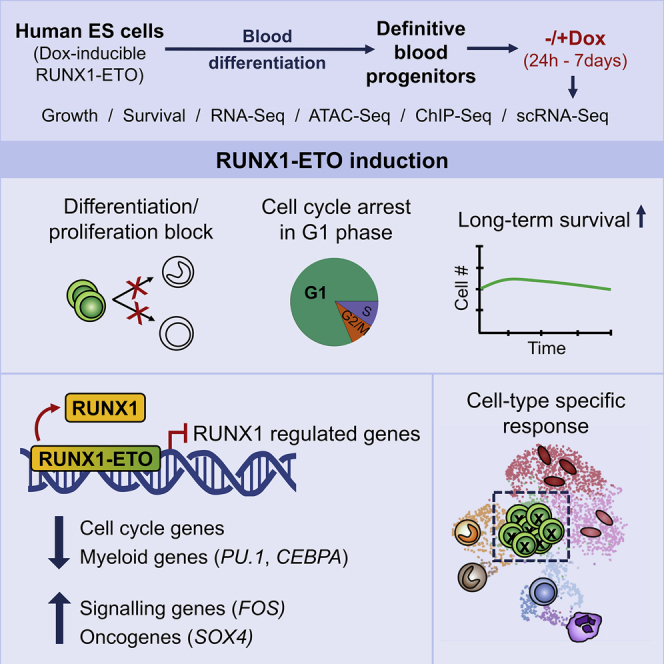
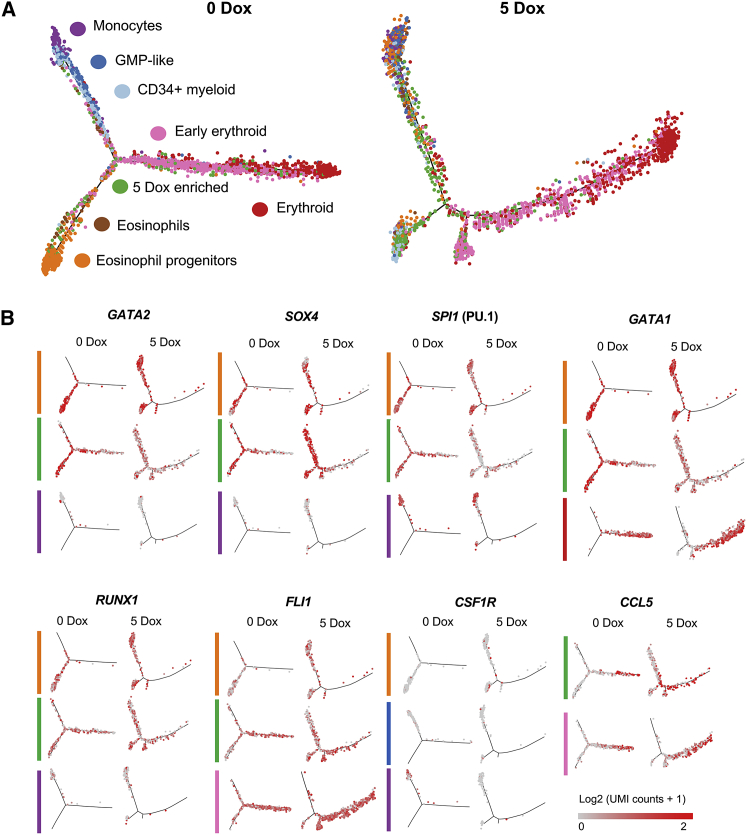
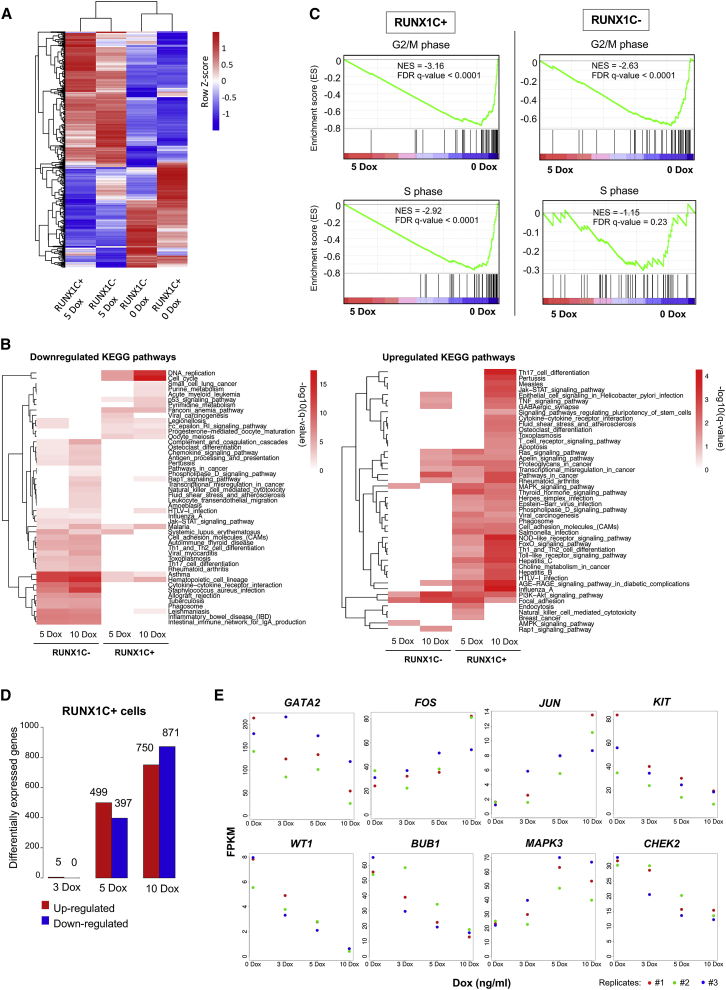
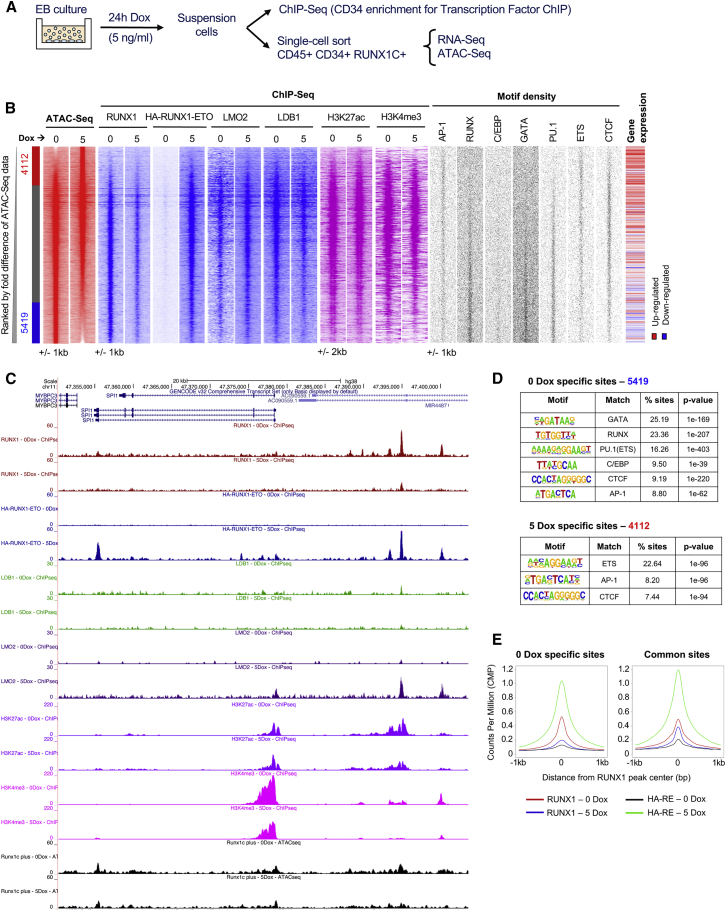
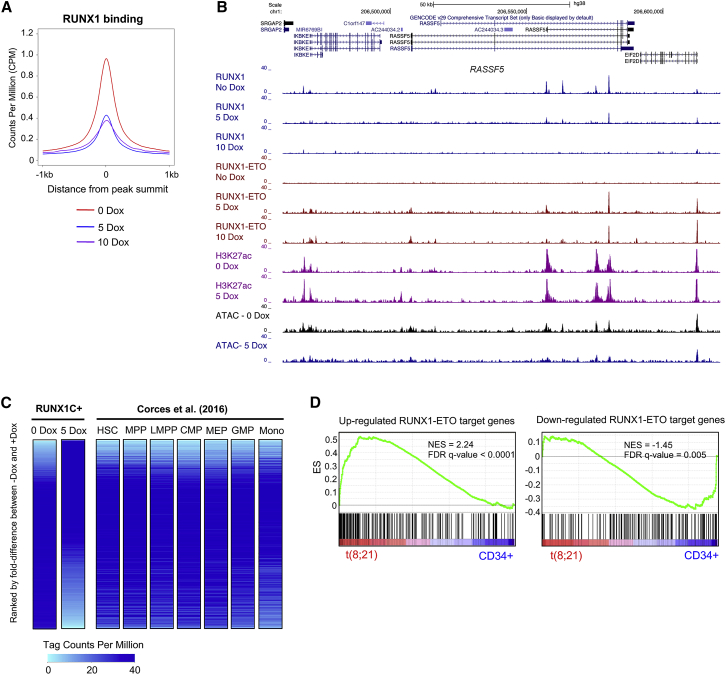
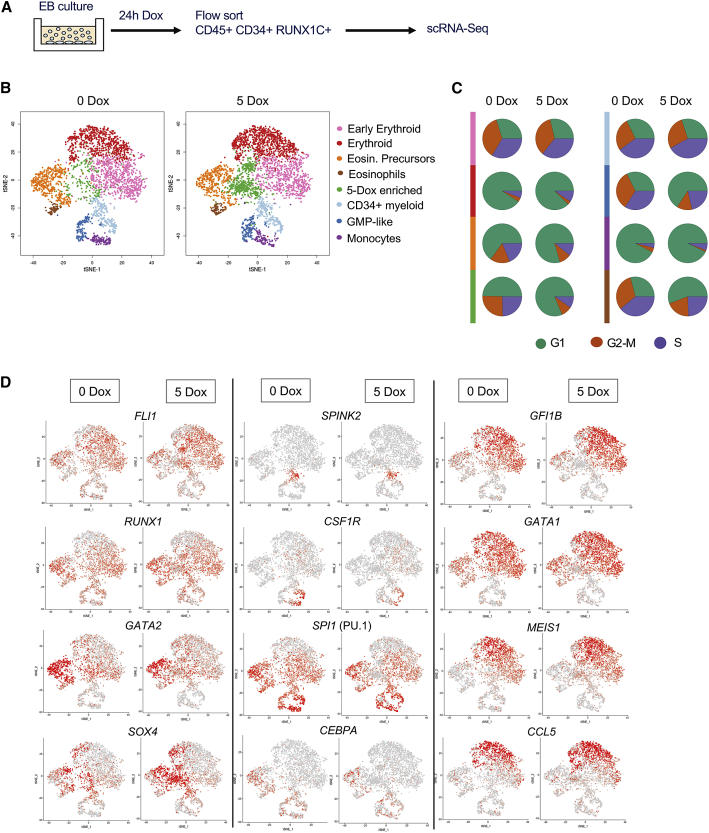
Acute myeloid leukemia (AML) is a hematopoietic malignancy caused by recurrent mutations in genes encoding transcriptional, chromatin, and/or signaling regulators. The t(8;21) translocation generates the aberrant transcription factor RUNX1-ETO (RUNX1-RUNX1T1), which by itself is insufficient to cause disease. t(8;21) AML patients show extensive chromatin reprogramming and have acquired additional mutations. Therefore, the genomic and developmental effects directly and solely attributable to RUNX1-ETO expression are unclear. To address this, we employ a human embryonic stem cell differentiation system capable of forming definitive myeloid progenitor cells to express RUNX1-ETO in an inducible fashion. Induction of RUNX1-ETO causes extensive chromatin reprogramming by interfering with RUNX1 binding, blocks differentiation, and arrests cellular growth, whereby growth arrest is reversible following RUNX1-ETO removal. Single-cell gene expression analyses show that RUNX1-ETO induction alters the differentiation of early myeloid progenitors, but not of other progenitor types, indicating that oncoprotein-mediated transcriptional reprogramming is highly target cell specific.
急性髓系白血病(AML)是一种造血系统恶性肿瘤,由转录、染色质和/或信号调节因子编码基因的反复突变引起。t(8;21)易位产生异常转录因子 RUNX1-ETO(RUNX1-RUNX1T1),其本身不足以引起疾病。t(8;21)AML 患者表现出广泛的染色质重编程,并获得了额外的突变。因此,直接和仅归因于 RUNX1-ETO 表达的基因组和发育效应尚不清楚。为了解决这个问题,我们采用了一种能够形成确定性髓系祖细胞的人类胚胎干细胞分化系统,以诱导方式表达 RUNX1-ETO。RUNX1-ETO 的诱导通过干扰 RUNX1 结合引起广泛的染色质重编程,阻止分化并阻止细胞生长,其中生长停滞在 RUNX1-ETO 去除后是可逆的。单细胞基因表达分析表明,RUNX1-ETO 的诱导改变了早期髓系祖细胞的分化,但不改变其他祖细胞类型的分化,表明致癌蛋白介导的转录重编程具有高度的靶细胞特异性。