Loke Justin, Assi Salam A, Imperato Maria Rosaria, Ptasinska Anetta, Cauchy Pierre, Grabovska Yura, Soria Natalia Martinez, Raghavan Manoj, Delwel H Ruud, Cockerill Peter N, Heidenreich Olaf, Bonifer Constanze
Institute for Cancer and Genomic Sciences, College of Medicine and Dentistry, University of Birmingham, B15 2TT Birmingham, UK.
Northern Institute for Cancer Research, University of Newcastle, Newcastle upon Tyne NE2 4HH, UK.
Cell Rep. 2017 May 23;19(8):1654-1668. doi: 10.1016/j.celrep.2017.05.005.
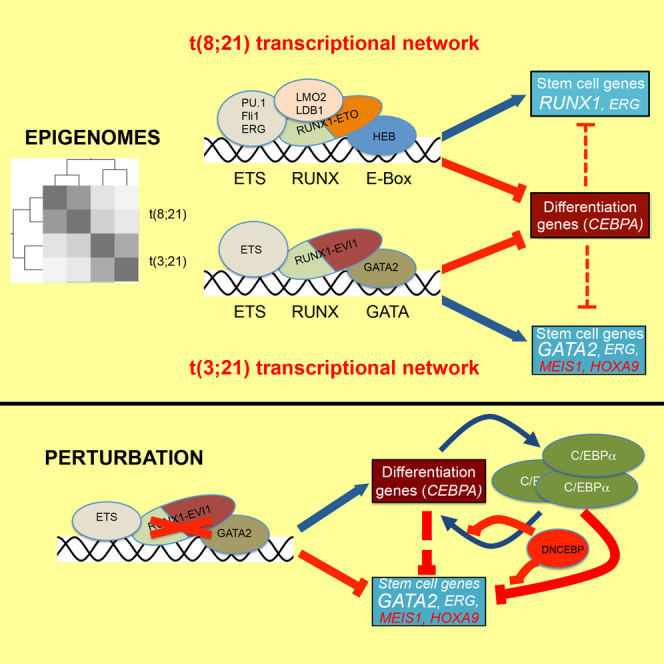
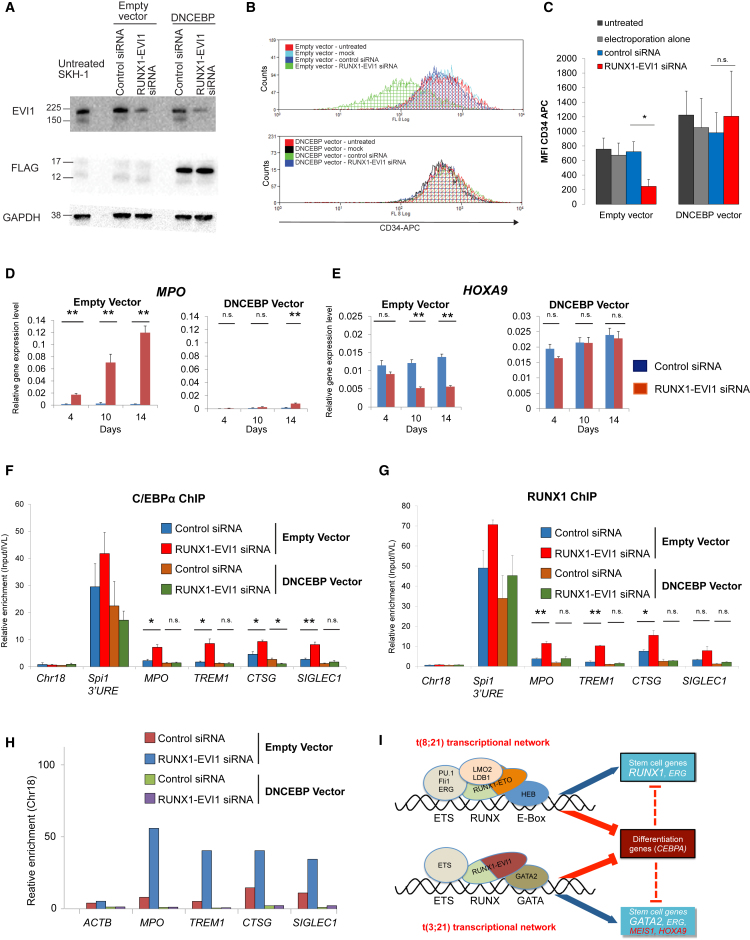
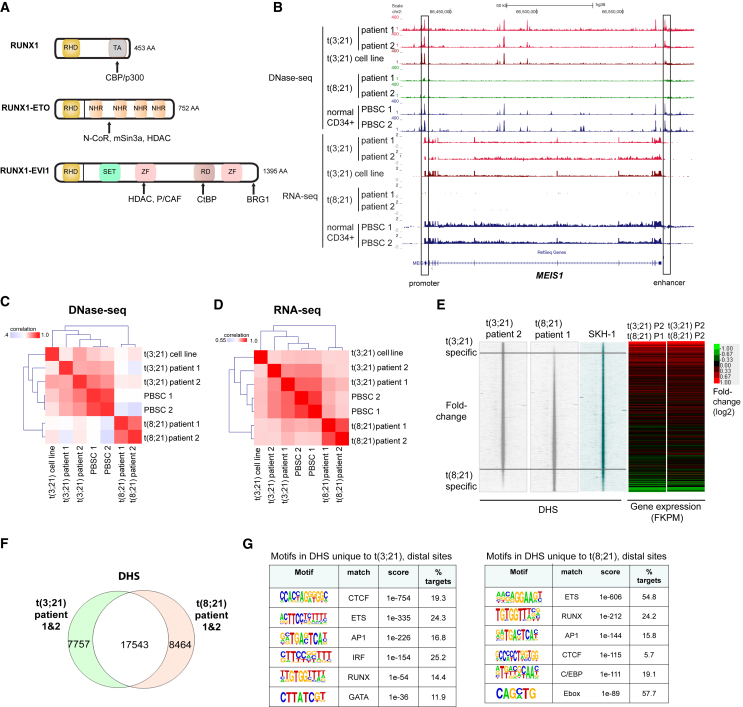
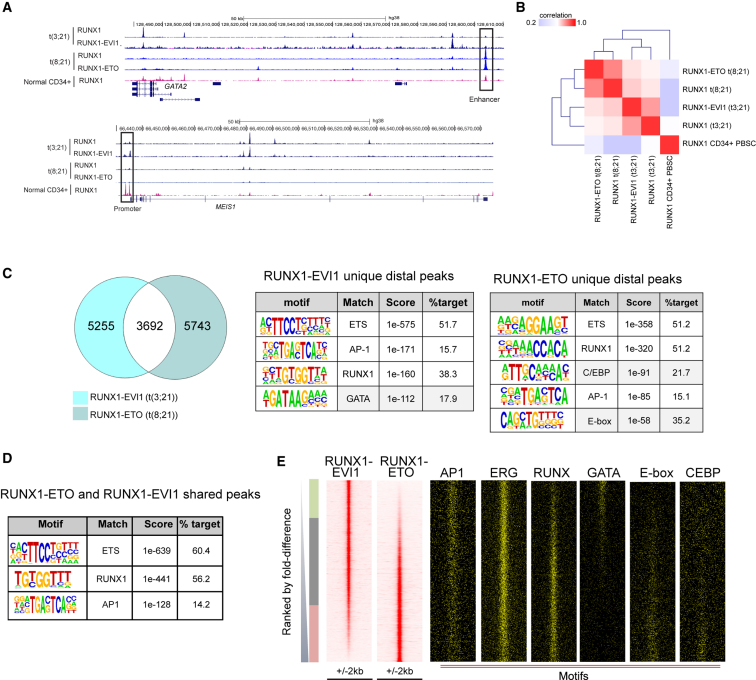
Acute myeloid leukemia (AML) is a heterogeneous disease caused by mutations in transcriptional regulator genes, but how different mutant regulators shape the chromatin landscape is unclear. Here, we compared the transcriptional networks of two types of AML with chromosomal translocations of the RUNX1 locus that fuse the RUNX1 DNA-binding domain to different regulators, the t(8;21) expressing RUNX1-ETO and the t(3;21) expressing RUNX1-EVI1. Despite containing the same DNA-binding domain, the two fusion proteins display distinct binding patterns, show differences in gene expression and chromatin landscape, and are dependent on different transcription factors. RUNX1-EVI1 directs a stem cell-like transcriptional network reliant on GATA2, whereas that of RUNX1-ETO-expressing cells is more mature and depends on RUNX1. However, both types of AML are dependent on the continuous expression of the fusion proteins. Our data provide a molecular explanation for the differences in clinical prognosis for these types of AML.
急性髓系白血病(AML)是一种由转录调节基因发生突变引起的异质性疾病,但不同的突变调节因子如何塑造染色质景观尚不清楚。在这里,我们比较了两种伴有RUNX1基因座染色体易位的AML的转录网络,这些易位将RUNX1 DNA结合域与不同的调节因子融合,即表达RUNX1-ETO的t(8;21)和表达RUNX1-EVI1的t(3;21)。尽管这两种融合蛋白含有相同的DNA结合域,但它们表现出不同的结合模式,在基因表达和染色质景观上存在差异,并且依赖于不同的转录因子。RUNX1-EVI1指导一个依赖于GATA2的干细胞样转录网络,而表达RUNX1-ETO的细胞的转录网络则更成熟,依赖于RUNX1。然而,这两种类型的AML都依赖于融合蛋白的持续表达。我们的数据为这些类型AML临床预后的差异提供了分子解释。