Department of Immunotherapeutics, The University of Tokyo Hospital, Bunkyo-ku, Tokyo, Japan
Cancer Immunology Data Multi-level Integration Unit, Medical Science Innovation Hub Program, RIKEN, Chuo-ku, Tokyo, Japan.
J Immunother Cancer. 2020 May;8(1). doi: 10.1136/jitc-2019-000375.
There is increasing evidence for the benefit of poly ADP ribose polymerase (PARP) inhibitors in a subset of high-grade serous ovarian carcinoma (HGSC) patients, especially those with homologous recombination (HR)-deficient tumors. However, new treatment strategies, such as immune checkpoint inhibition, are required for patients with HR-proficient tumors.
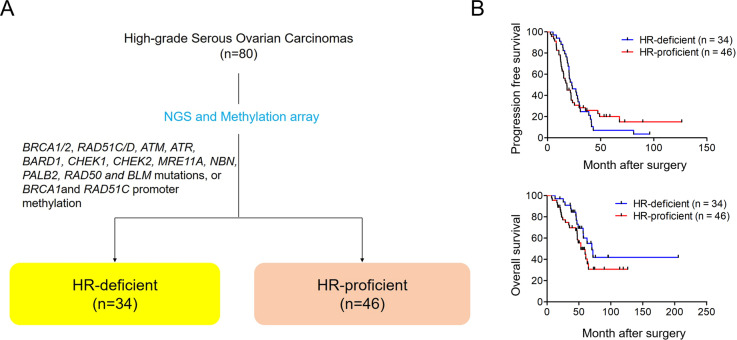
A total of 80 cases of HGSC were analyzed in this study. Whole exome and RNA sequencing was performed for these tumors. Methylation arrays were also carried out to examine and promoter methylation status. Mutations, neoantigen load, antigen presentation machinery, and local immune profile were investigated, and the relationships of these factors with clinical outcome were also analyzed.
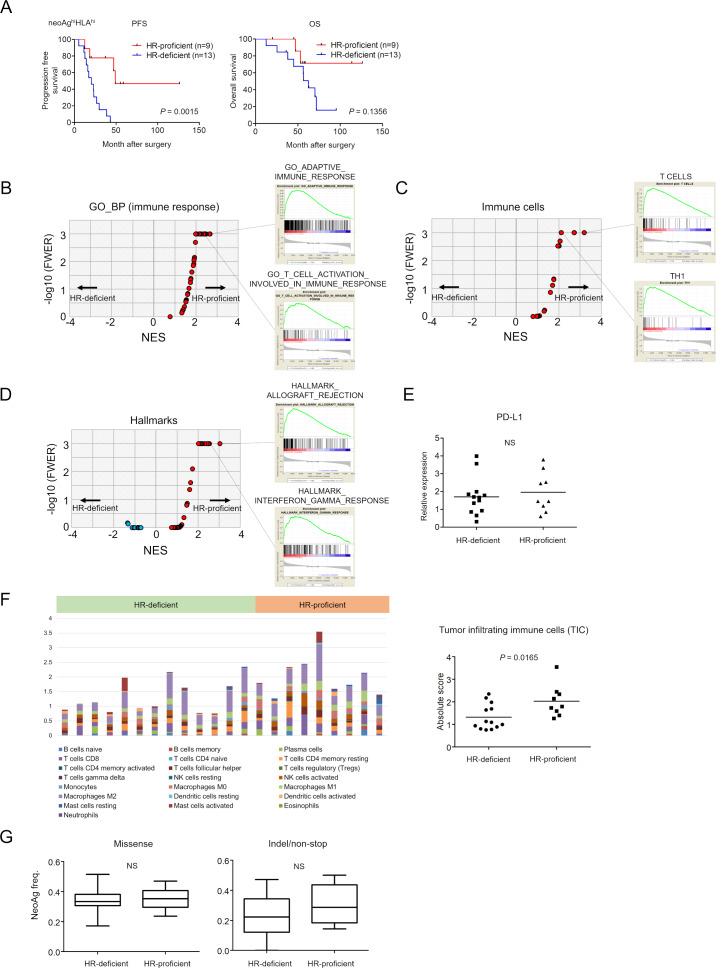
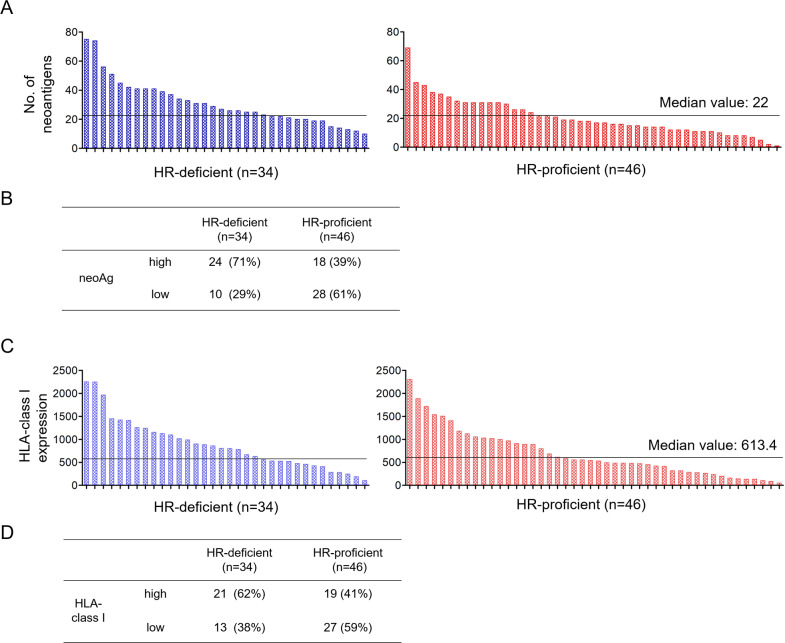
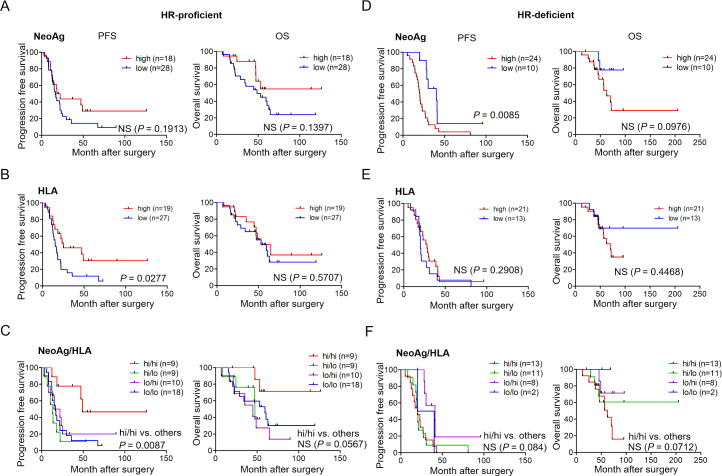
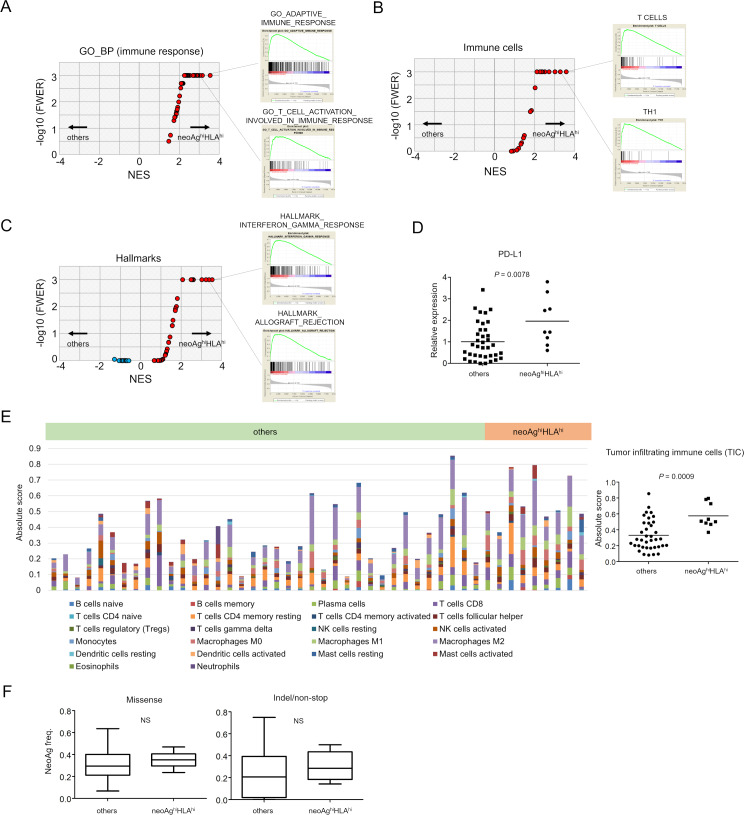
As expected, the numbers of predicted neoAgs were lower in HR-proficient (n=46) than HR-deficient tumors (n=34). However, 40% of the patients with HR-proficient tumors still had higher than median numbers of neoAgs and better survival than patients with lower numbers of neoAgs. Incorporation of human leukocyte antigen (HLA)-class I expression status into the survival analysis revealed that patients with both high neoAg numbers and high HLA-class I expression (neoAgHLA) had the best progression-free survival (PFS) in HR-proficient HGSC (p=0.0087). Gene set enrichment analysis demonstrated that the genes for effector memory CD8 T cells, TH1 T cells, the interferon-γ response, and other immune-related genes, were enriched in these patients. Interestingly, this subset of patients also had better PFS (p=0.0015) and a more T-cell-inflamed tumor phenotype than patients with the same phenotype (neoAgHLA) in HR-deficient HGSC.
Our results suggest that immune checkpoint inhibitors might be an alternative to explore in HR-proficient cases which currently do not benefit from PARP inhibition.
越来越多的证据表明,聚 ADP 核糖聚合酶(PARP)抑制剂对一部分高级别浆液性卵巢癌(HGSC)患者有益,尤其是那些同源重组(HR)缺陷型肿瘤患者。然而,对于 HR 功能正常的肿瘤患者,需要新的治疗策略,如免疫检查点抑制。
本研究共分析了 80 例 HGSC 患者。对这些肿瘤进行了全外显子和 RNA 测序。还进行了甲基化阵列检测以检查 和 启动子的甲基化状态。研究了突变、新抗原负荷、抗原呈递机制和局部免疫特征,并分析了这些因素与临床结果的关系。
正如预期的那样,HR 功能正常(n=46)的肿瘤中预测的新抗原数量低于 HR 缺陷型肿瘤(n=34)。然而,40%的 HR 功能正常的肿瘤患者仍然具有高于中位数的新抗原数量和比新抗原数量较低的患者更好的生存。将人类白细胞抗原(HLA)-I 类表达状态纳入生存分析表明,在 HR 功能正常的 HGSC 中,具有高新抗原数量和高 HLA-I 类表达(neoAgHLA)的患者具有最佳的无进展生存期(PFS)(p=0.0087)。基因集富集分析表明,这些患者的效应记忆 CD8 T 细胞、TH1 T 细胞、干扰素-γ反应和其他免疫相关基因的基因富集。有趣的是,与 HR 缺陷型 HGSC 中具有相同表型(neoAgHLA)的患者相比,这部分患者也具有更好的 PFS(p=0.0015)和更具 T 细胞浸润的肿瘤表型。
我们的结果表明,免疫检查点抑制剂可能是 HR 功能正常的病例的一种替代治疗方法,这些病例目前不能从 PARP 抑制中获益。