Henry Ford Hospital, Detroit, MI, USA.
Oakland University, Rochester, MI, USA.
Neurorehabil Neural Repair. 2020 Jul;34(7):616-626. doi: 10.1177/1545968320926164. Epub 2020 May 28.
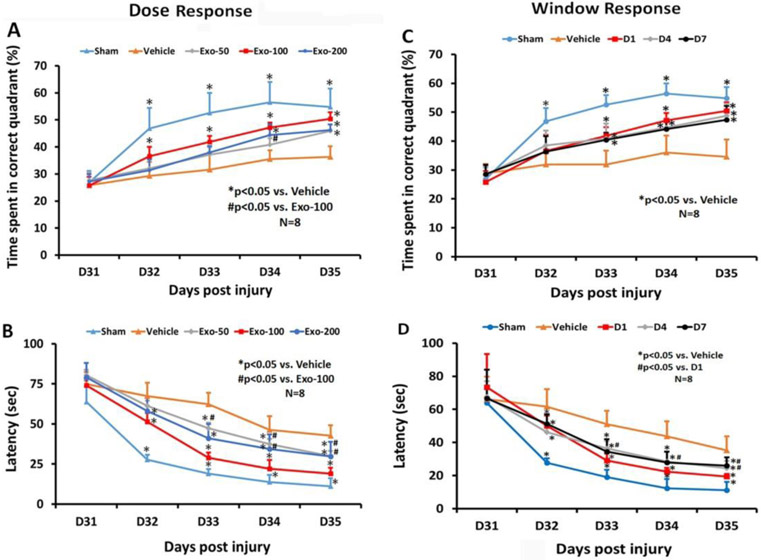
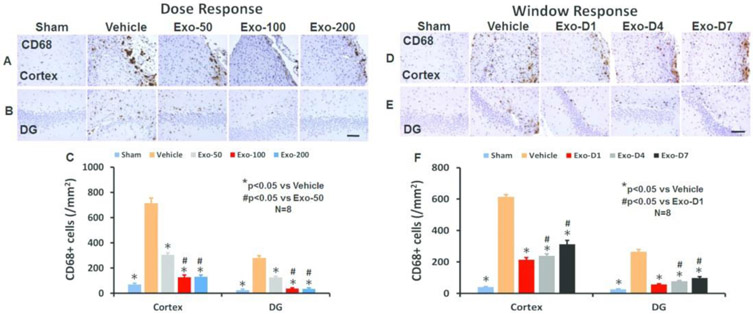
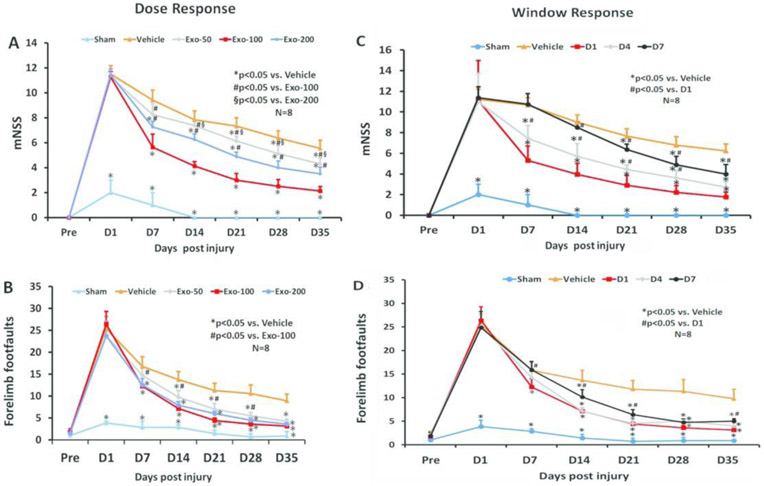
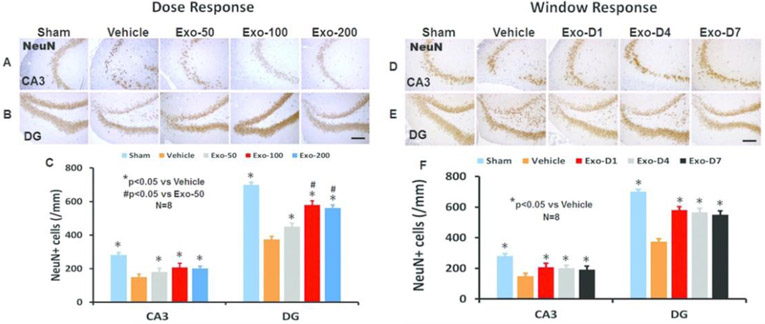
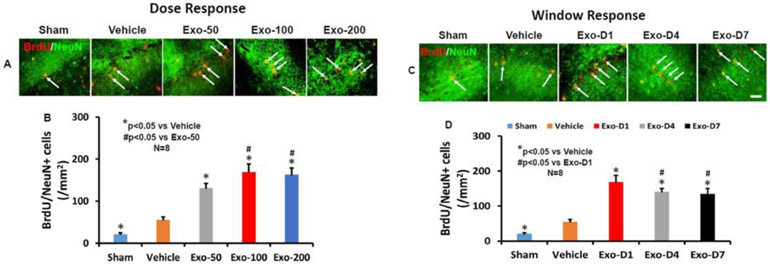
Mesenchymal stem cell (MSC)-derived exosomes play a critical role in regenerative medicine. To determine the dose- and time-dependent efficacy of exosomes for treatment of traumatic brain injury (TBI). Male rats were subjected to a unilateral moderate cortical contusion. In the dose-response study, animals received a single intravenous injection of exosomes (50, 100, 200 µg per rat) or vehicle, with treatment initiated at 1 day after injury. In the therapeutic window study, animals received a single intravenous injection of 100 µg exosomes or vehicle starting at 1, 4, or 7 days after injury. Neurological functional tests were performed weekly after TBI for 5 weeks. Spatial learning was measured on days 31 to 35 after TBI using the Morris water maze test. Compared with the vehicle, regardless of the dose and delay in treatment, exosome treatment significantly improved sensorimotor and cognitive function, reduced hippocampal neuronal cell loss, promoted angiogenesis and neurogenesis, and reduced neuroinflammation. Exosome treatment at 100 µg per rat exhibited a significant therapeutic effect compared with the 50- or 200-µg exosome groups. The time-dependent exosome treatment data demonstrated that exosome treatment starting at 1 day post-TBI provided a significantly greater improvement in functional and histological outcomes than exosome treatments at the other 2 delayed treatments. These results indicate that exosomes have a wide range of effective doses for treatment of TBI with a therapeutic window of at least 7 days postinjury. Exosomes may provide a novel therapeutic intervention in TBI.
间充质干细胞(MSC)衍生的外泌体在再生医学中发挥着关键作用。为了确定外泌体治疗创伤性脑损伤(TBI)的剂量和时间依赖性疗效。雄性大鼠接受单侧中度皮质挫伤。在剂量反应研究中,动物接受单次静脉注射外泌体(每只大鼠 50、100、200μg)或载体,损伤后 1 天开始治疗。在治疗窗口研究中,动物接受单次静脉注射 100μg 外泌体或载体,起始时间为损伤后 1、4 或 7 天。TBI 后每周进行一次神经功能测试,持续 5 周。TBI 后第 31-35 天使用 Morris 水迷宫测试测量空间学习能力。与载体相比,无论剂量和治疗延迟如何,外泌体治疗都显著改善了感觉运动和认知功能,减少了海马神经元细胞丢失,促进了血管生成和神经发生,减少了神经炎症。与 50μg 或 200μg 外泌体组相比,每只大鼠 100μg 外泌体的治疗效果显著。时间依赖性外泌体治疗数据表明,TBI 后 1 天开始的外泌体治疗在功能和组织学结果方面的改善明显大于其他 2 个延迟治疗的外泌体治疗。这些结果表明,外泌体治疗 TBI 的有效剂量范围很广,损伤后至少有 7 天的治疗窗。外泌体可能为 TBI 提供一种新的治疗干预措施。