Kapural Leonardo, Gupta Mayank, Paicius Richard, Strodtbeck Wyndam, Vorenkamp Kevin E, Gilmore Christopher, Gliner Bradford, Rotte Anand, Subbaroyan Jeyakumar, Province-Azalde Rose
Carolina's Pain Institute, Winston-Salem, North Carolina, USA.
Department of Anesthesiology, Wake Forest University, School of Medicine, Winston-Salem, North Carolina, USA.
Clin Transl Gastroenterol. 2020 Feb;11(2):e00133. doi: 10.14309/ctg.0000000000000133.
Chronic abdominal pain (CAP) can arise from multiple conditions, including inflammatory disorders, trauma because of injury or surgery, or structural or functional causes. This prospective, single-arm study was designed to evaluate the safety and efficacy of 10-kHz spinal cord stimulation (SCS) in patients with intractable CAP over a 12-month follow-up period.
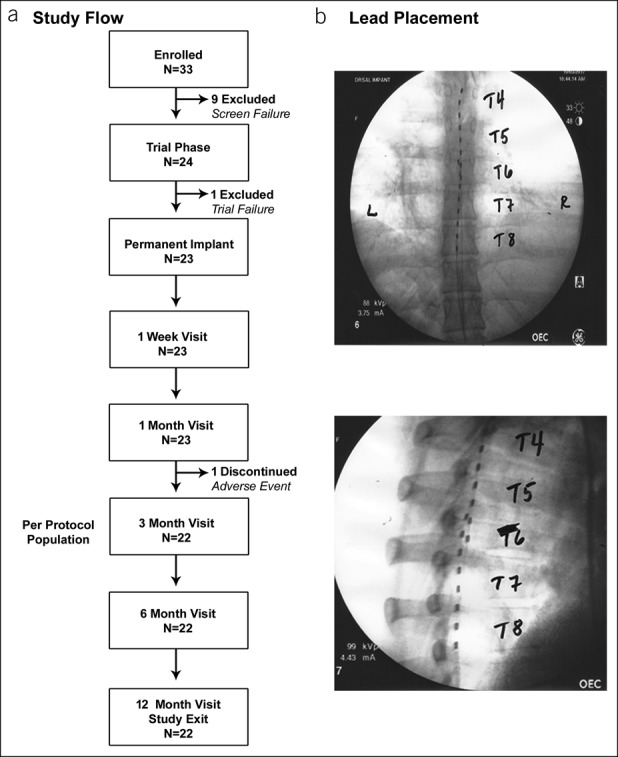
Subjects with CAP who had been refractory to conventional medical treatment for at least 3 months resulting in self-reported pain scores of ≥5 cm on a 10-cm visual analog scale were enrolled at 4 centers in the United States. Study subjects underwent a trial stimulation lasting up to 14 days with epidural leads implanted from the vertebral levels T4 through T8. Subjects who had ≥40% pain relief during the trial stimulation period were implanted with a Senza system (Nevro Corp., Redwood City, CA) and followed up to 12 months after surgery.
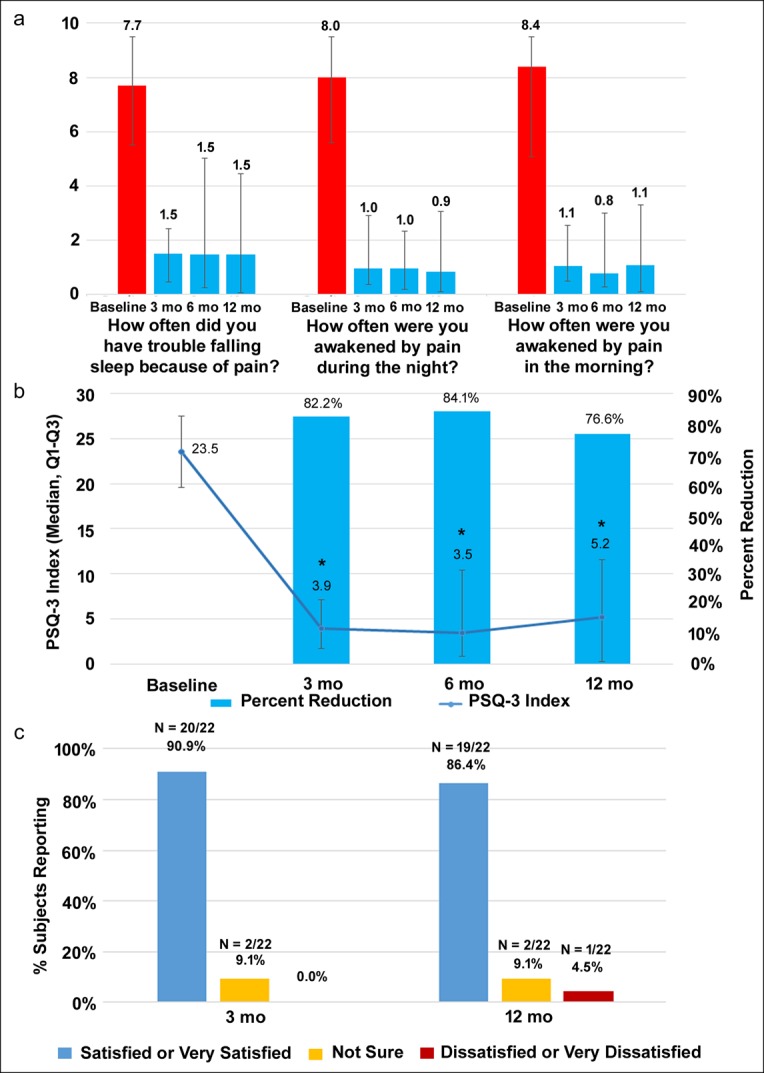
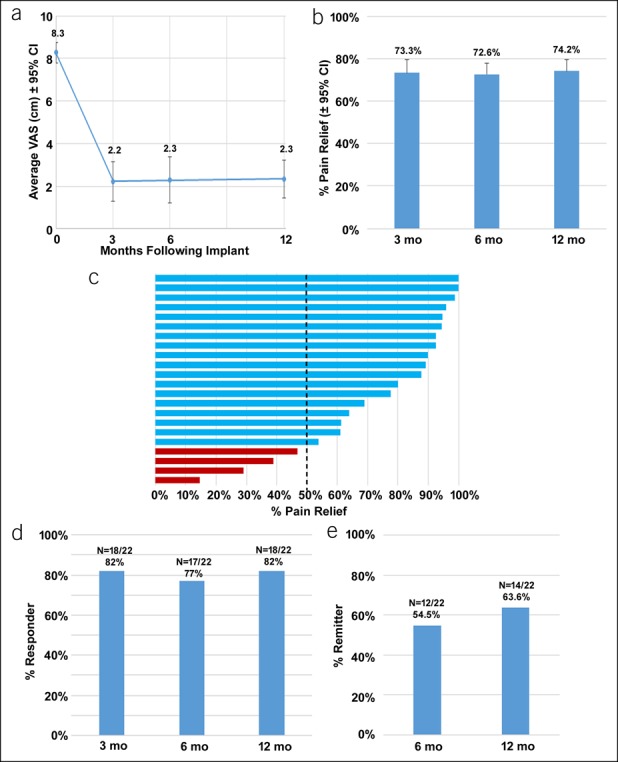
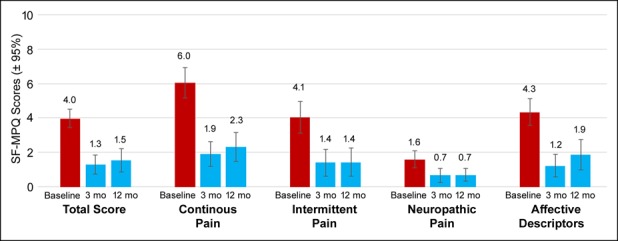
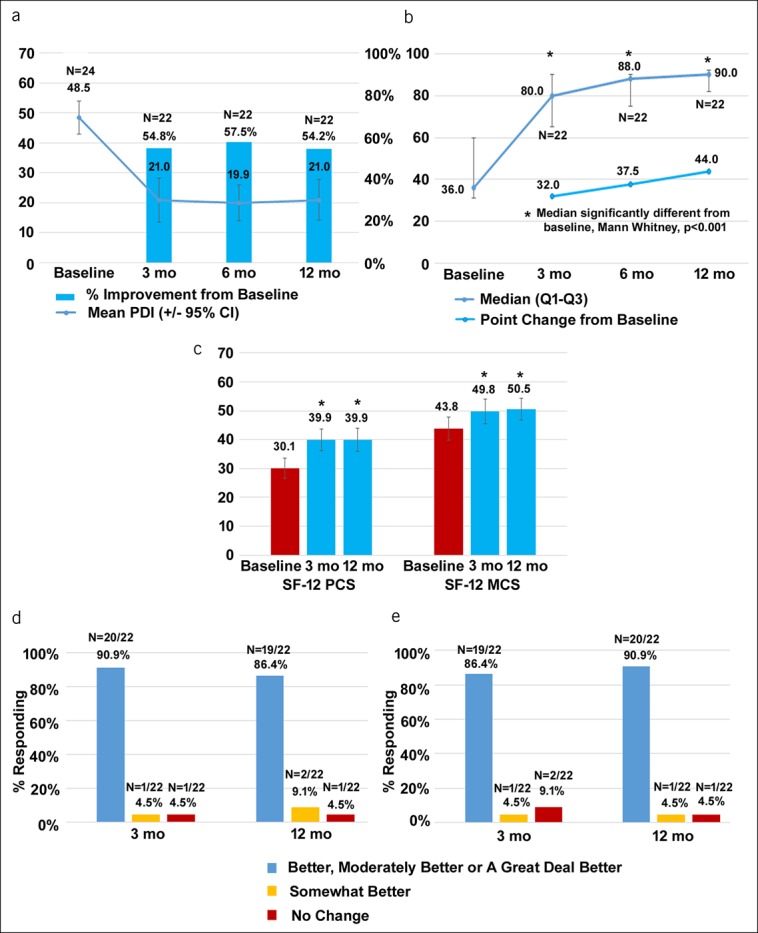
Twenty-three of 24 subjects (95.8%) had a successful trial stimulation and proceeded to a permanent implant. After 12 months of treatment with 10-kHz SCS, 78.3% of subjects were responders (pain relief of ≥50%) and 14 of 22 subjects (63.6%) were remitters (sustained ≤3.0-cm visual analog scale scores). Secondary outcomes, including assessments of disability, mental and physical well-being, sleep quality, perception of improvement, and satisfaction, showed that 10-kHz SCS greatly improved the quality of life of patients with CAP. Observationally, most subjects also reported concurrent reduction or resolution of nausea and/or vomiting.
10-kHz SCS can provide durable pain relief and improve the quality of life in patients with CAP.
慢性腹痛(CAP)可由多种情况引起,包括炎症性疾病、因受伤或手术导致的创伤,或结构或功能原因。这项前瞻性单臂研究旨在评估10千赫脊髓刺激(SCS)在难治性CAP患者中进行12个月随访期的安全性和有效性。
在美国4个中心招募了患有CAP且对传统药物治疗至少3个月无效、在10厘米视觉模拟量表上自我报告疼痛评分≥5厘米的受试者。研究对象接受了长达14天的试验性刺激,通过从T4至T8椎体水平植入硬膜外导联。在试验性刺激期间疼痛缓解≥40%的受试者植入了Senza系统(Nevro公司,加利福尼亚州红木城),并在术后随访12个月。
24名受试者中有23名(95.8%)试验性刺激成功并进行了永久性植入。经过10千赫SCS治疗12个月后,78.3%的受试者有反应(疼痛缓解≥50%),22名受试者中有14名(63.6%)病情缓解(视觉模拟量表评分持续≤3.0厘米)。包括残疾评估、心理和身体健康、睡眠质量、改善感知和满意度在内的次要结果表明,10千赫SCS极大地改善了CAP患者的生活质量。通过观察发现,大多数受试者还报告恶心和/或呕吐同时减轻或消失。
10千赫SCS可为CAP患者提供持久的疼痛缓解并改善生活质量。