
脊髓刺激治疗源于盆腔和腹部区域的顽固性内脏疼痛:对难治性疼痛患者一种可能新适应症的叙述性综述
Spinal Cord Stimulation for Intractable Visceral Pain Originating from the Pelvic and Abdominal Region: A Narrative Review on a Possible New Indication for Patients with Therapy-Resistant Pain.
作者信息
Bieze Matthanja, van Haaps Annelotte Pauline, Kapural Leonardo, Li Sean, Ferguson Kris, de Vries Ralph, Schatman Michael E, Mijatovic Velja, Kallewaard Jan Willem
机构信息
Department of Anesthesiology and Pain Management, Amsterdam UMC Location University of Amsterdam, Amsterdam, the Netherlands.
Department of Anesthesia and Pain Management, Toronto General Hospital, University Health Network, Toronto, Ontario, Canada.
出版信息
J Pain Res. 2024 Feb 19;17:691-736. doi: 10.2147/JPR.S445616. eCollection 2024.
AIM
Visceral pain, characterized by pain that is diffuse and challenging to localize, occurs frequently and is difficult to treat. In cases where the pain becomes intractable despite optimal medical management, it can affect patients' Quality of Life (QoL). Spinal Cord Stimulation (SCS) has emerged as a potential solution for intractable visceral pain.
PURPOSE
In this narrative review, we collected all evidence regarding the efficacy of SCS for visceral pain across various underlying conditions.
METHODS
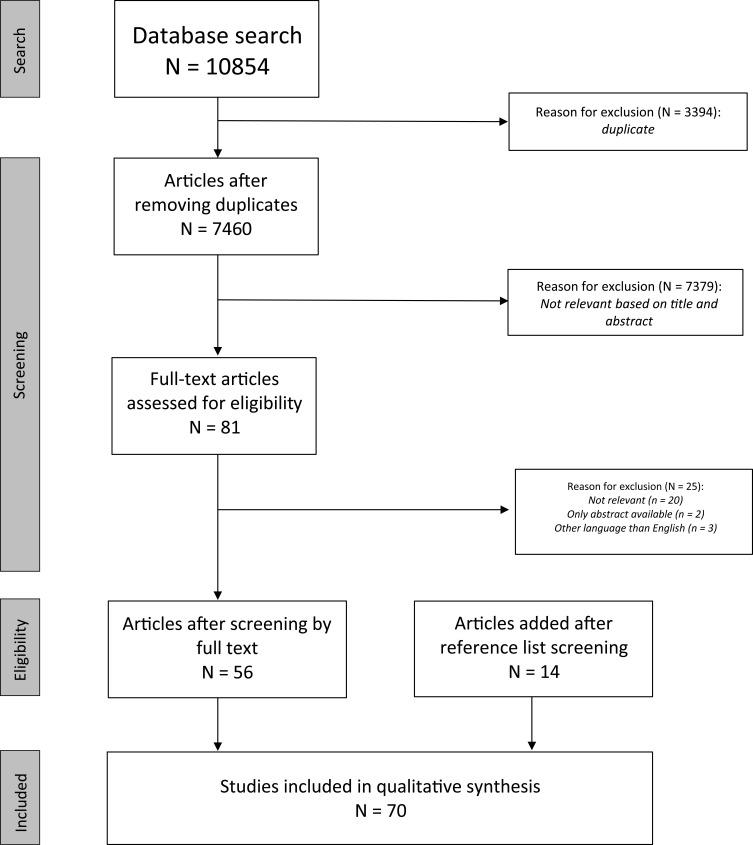
A comprehensive literature search was conducted in PubMed, Embase, and Web of Science in which articles published from October 1st, 1963 up to March 7th, 2023 were identified.
RESULTS
Seventy articles were included in this review of which most were retrospective cohort studies, case series and case reports. The studies, often with a small number of participants, reported on SCS for chronic pancreatitis, anorectal pain and bowel disorders, gynaecological diagnoses, visceral pelvic pain, urological disorders and finally general visceral pain. They found positive effects on pain and/or symptom relief, opioid consumption, anxiety and depression and QoL. Complications occurred frequently but were often minor and reversible.
CONCLUSION
Better screening and selection criteria need to be established to optimally evaluate eligible patients who might benefit from SCS. A positive outcome of a sympathetic nerve block appears to be a potential indicator of SCS effectiveness. Additionally, women receiving SCS for endometriosis had a better outcome compared to other indications. Finally, SCS could also relief functional symptoms such as voiding problems and gastroparesis. Complications could often be resolved with revision surgery. Since SCS is expensive and not always covered by standard health insurance, the incorporation of cost-analyses is recommended. In order to establish a comprehensive treatment plan, including selection criteria for SCS, rigorous prospective, possibly randomized and controlled studies that are diagnosis-oriented, with substantial follow-up and adequate sample sizes, are needed.
目的
内脏痛表现为疼痛弥漫且难以定位,频繁发生且难以治疗。在尽管进行了最佳药物治疗但疼痛仍难以控制的情况下,会影响患者的生活质量(QoL)。脊髓刺激(SCS)已成为治疗顽固性内脏痛的一种潜在解决方案。
目的
在本叙述性综述中,我们收集了关于SCS在各种潜在病症中治疗内脏痛疗效的所有证据。
方法
在PubMed、Embase和Web of Science中进行了全面的文献检索,确定了1963年10月1日至2023年3月7日发表的文章。
结果
本综述纳入了70篇文章,其中大多数是回顾性队列研究、病例系列和病例报告。这些研究通常参与者数量较少,报告了SCS用于慢性胰腺炎、肛肠疼痛和肠道疾病、妇科诊断、盆腔内脏痛、泌尿系统疾病以及最后一般性内脏痛的情况。他们发现SCS对疼痛和/或症状缓解、阿片类药物消耗、焦虑和抑郁以及生活质量有积极影响。并发症频繁发生,但通常较轻微且可逆。
结论
需要建立更好的筛查和选择标准,以最佳地评估可能从SCS中受益的合格患者。交感神经阻滞的阳性结果似乎是SCS有效性的一个潜在指标。此外,与其他适应症相比,接受SCS治疗子宫内膜异位症的女性效果更好。最后,SCS还可以缓解诸如排尿问题和胃轻瘫等功能症状。并发症通常可以通过翻修手术解决。由于SCS费用昂贵且并非总是由标准医疗保险覆盖,建议纳入成本分析。为了制定包括SCS选择标准在内的综合治疗方案,需要进行严格的前瞻性、可能随机对照且以诊断为导向的研究,并进行大量随访和足够的样本量。
 Zotero 插件