Ohdo Taro, Takahashi Koichi
Graduate School of Science and Technology, Shinshu University, Asahi, Matsumoto, Japan.
Department of Biology, Faculty of Science, Shinshu University, Matsumoto, Japan.
AoB Plants. 2020 Apr 15;12(3):plaa014. doi: 10.1093/aobpla/plaa014. eCollection 2020 Jun.
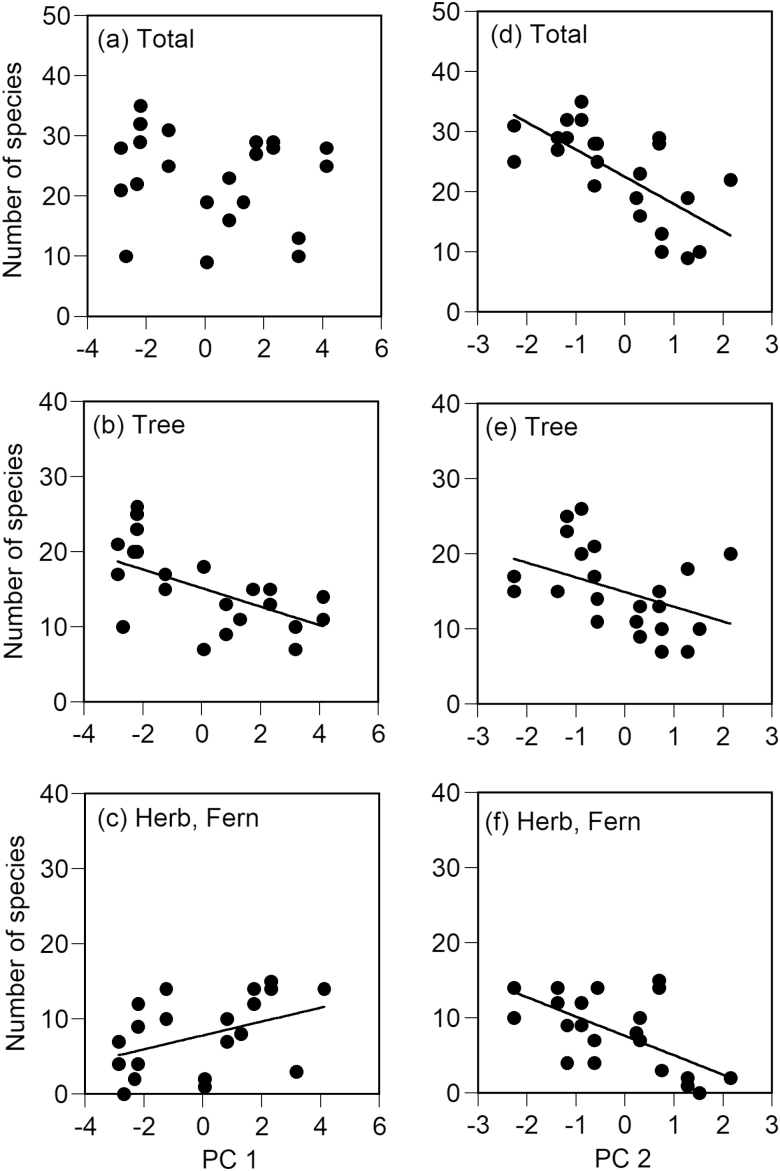
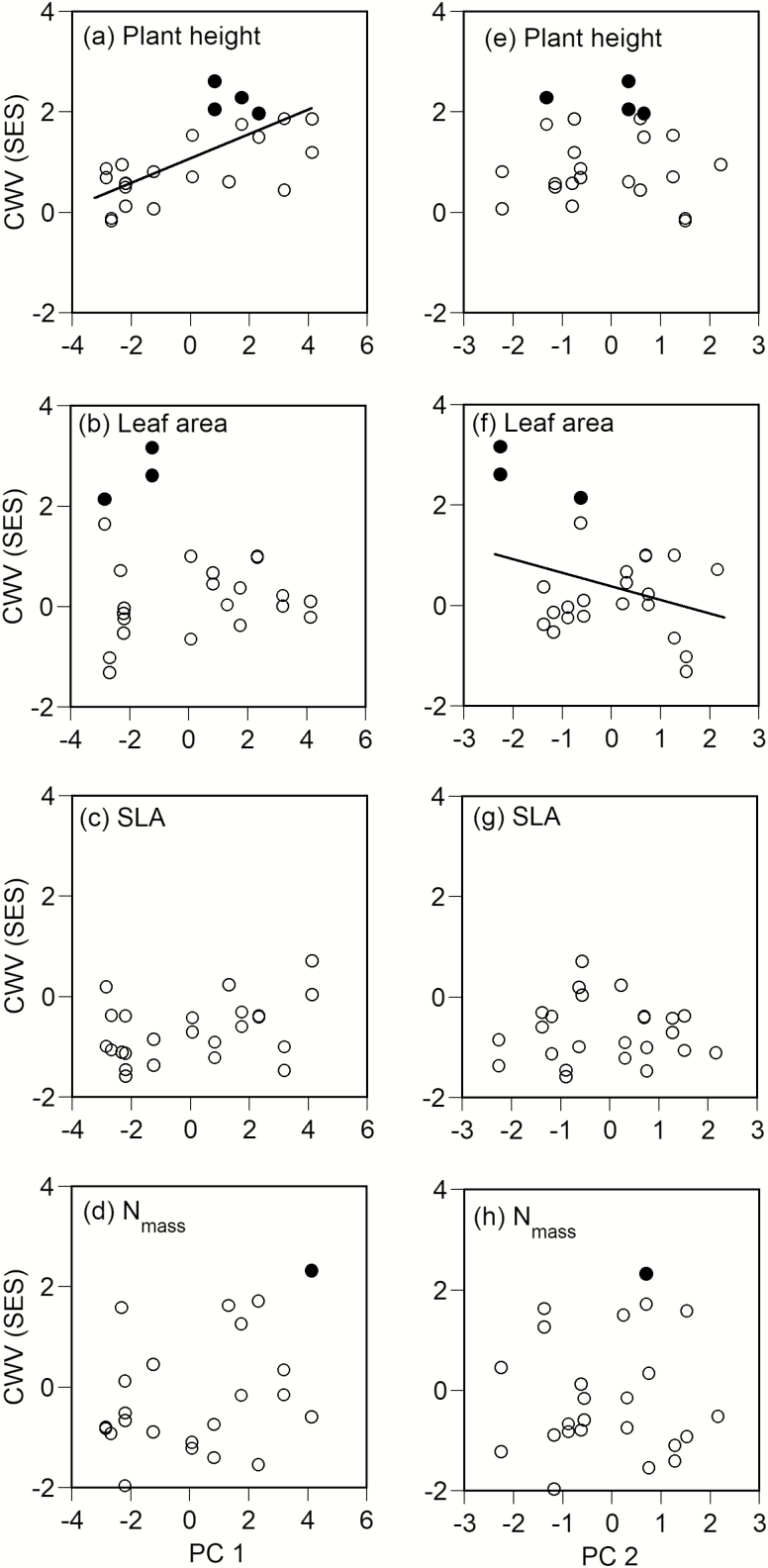
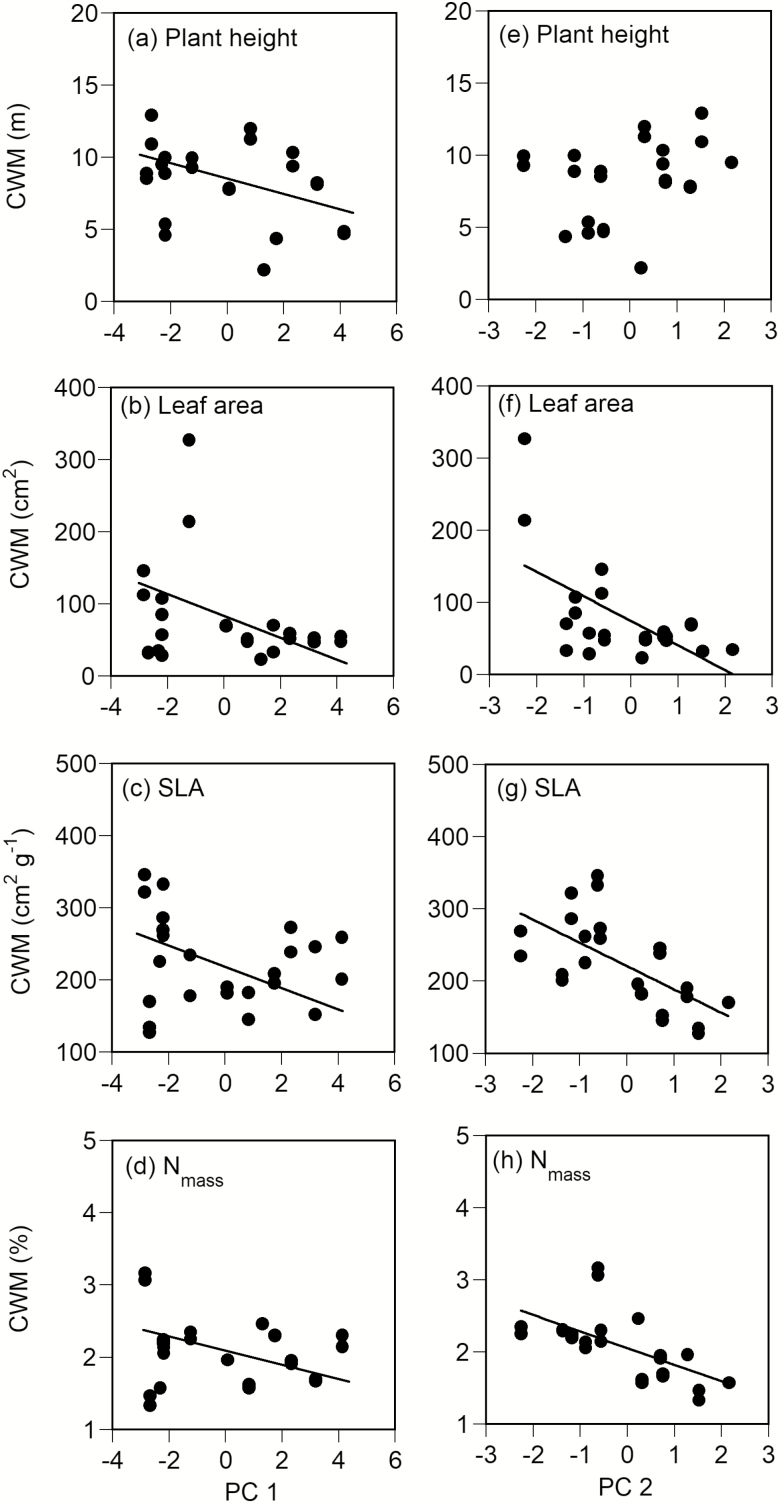
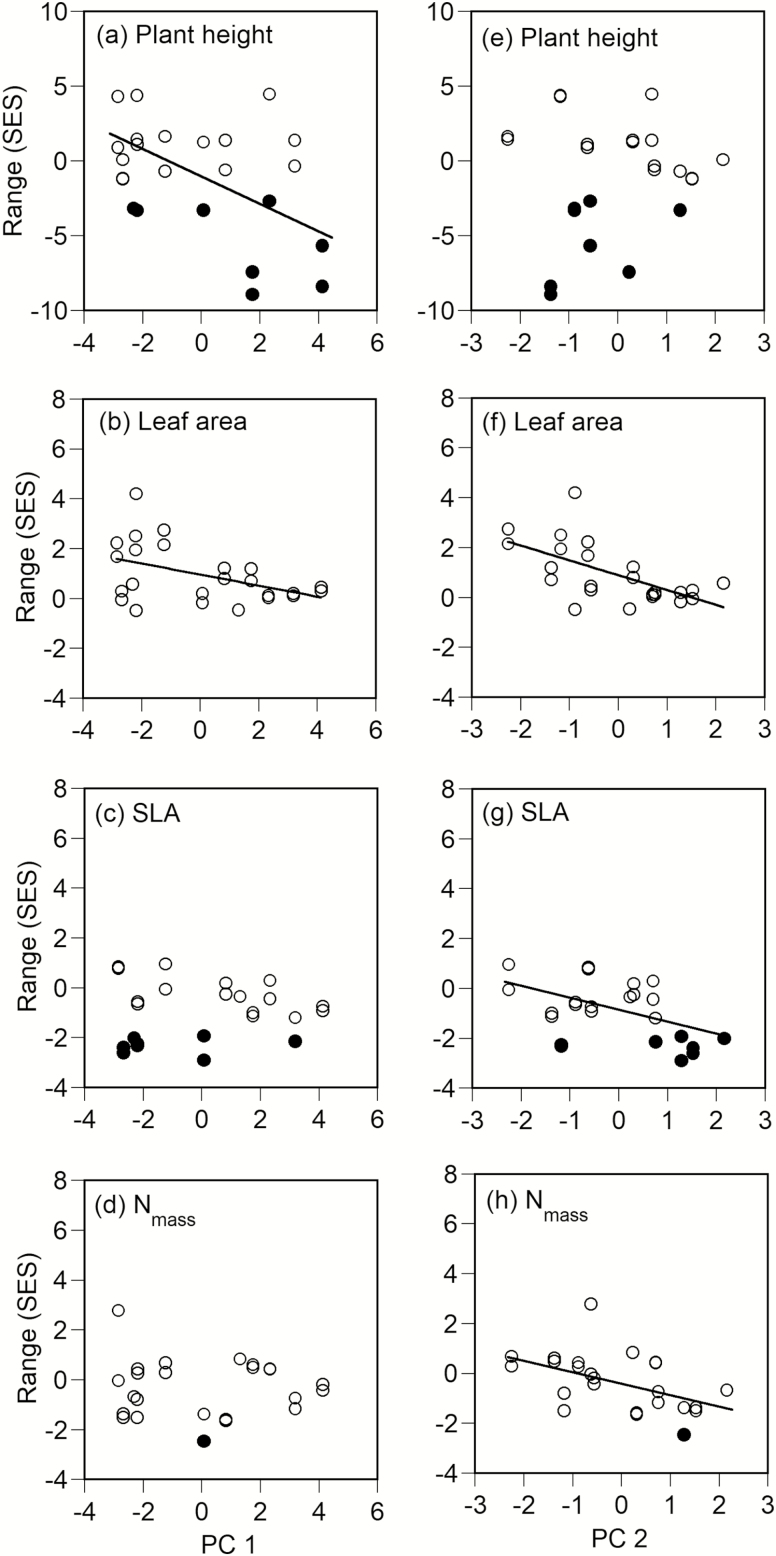
Environmental filters affect community assembly through the functional traits of species. However, the process of community assembly remains unclear because of the complex interactions among the many biotic and abiotic factors. This study aimed to examine the community assembly process of vascular plants along gradients of elevation (45‒2500 m a.s.l.) and soil nitrogen availability. This study examined the trait distribution patterns of four functional traits (plant height, leaf area, specific leaf area and leaf nitrogen concentration) of vascular plants (trees, herbs and ferns) in central Japan, using null model testing. The number of species decreased and increased at high elevations for tree species and herb and fern species, respectively. The numbers of both tree species and herb and fern species were positively correlated with soil nitrogen availability. Community-weighted means (CWMs) of the four traits decreased with elevation. CWMs and ranges of the three leaf traits were positively correlated with soil nitrogen availability. The community-weighted variance of plant height was higher at higher elevations, indicating that niche differentiation of vertical stratum in habitats with a low canopy was important for community assembly. This study suggests that severe climatic conditions reduce the number of tree species and the canopy height at high elevations, leading to increases in the number of herb and fern species due to increased light intensity at the forest floor. The elevational change of leaf traits also indicates the change of adaptive leaf traits. It further suggests that lower nitrogen availability decreases the number of tree, herb and fern species by excluding those species with leaf traits unsuited to lower nitrogen availability. Therefore, community structure is most likely regulated by both elevation and soil nitrogen availability.
环境过滤通过物种的功能性状影响群落构建。然而,由于众多生物和非生物因素之间复杂的相互作用,群落构建过程仍不清楚。本研究旨在探讨维管植物沿海拔梯度(45 - 2500米海拔)和土壤氮有效性的群落构建过程。本研究利用零模型检验,研究了日本中部维管植物(乔木、草本和蕨类)的四个功能性状(株高、叶面积、比叶面积和叶片氮浓度)的性状分布模式。乔木物种在高海拔处物种数量减少,而草本和蕨类物种在高海拔处物种数量增加。乔木物种以及草本和蕨类物种的数量均与土壤氮有效性呈正相关。四个性状的群落加权均值(CWMs)随海拔升高而降低。三个叶片性状的CWMs和范围与土壤氮有效性呈正相关。株高的群落加权方差在较高海拔处更高,表明在低树冠栖息地中垂直层的生态位分化对群落构建很重要。本研究表明,恶劣的气候条件减少了高海拔处的乔木物种数量和树冠高度,由于林冠层光照强度增加,导致草本和蕨类物种数量增加。叶片性状的海拔变化也表明了适应性叶片性状的变化。进一步表明,较低的氮有效性通过排除那些具有不适合低氮有效性叶片性状的物种,减少了乔木、草本和蕨类物种的数量。因此,群落结构很可能受海拔和土壤氮有效性共同调节。