Department of Microbiology, Oregon State University.
Institute of Parasitology, Biology Centre of the Czech Academy of Sciences, České Budějovice, Czech Republic.
Genome Biol Evol. 2020 Aug 1;12(8):1258-1276. doi: 10.1093/gbe/evaa109.
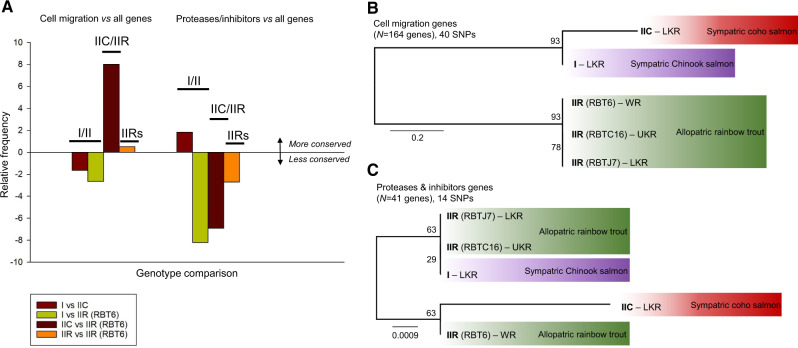
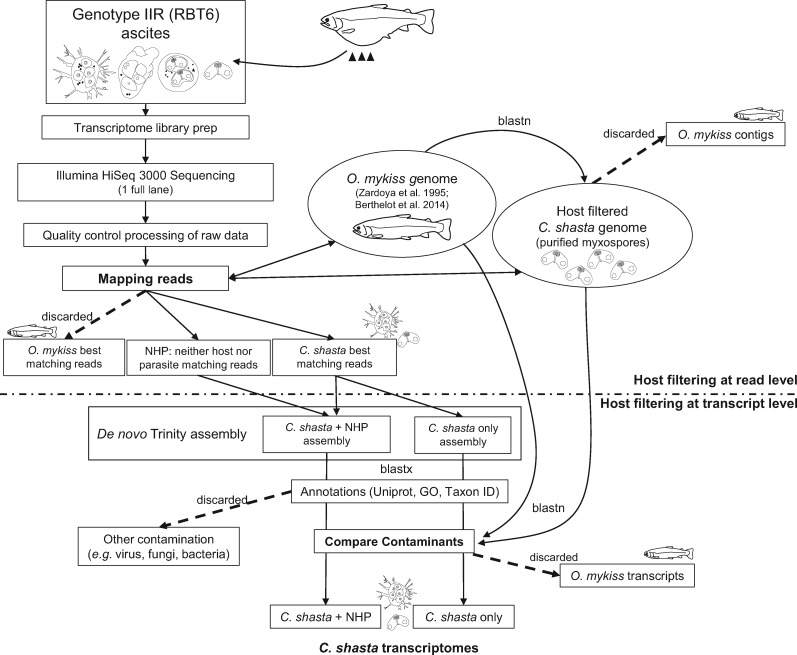
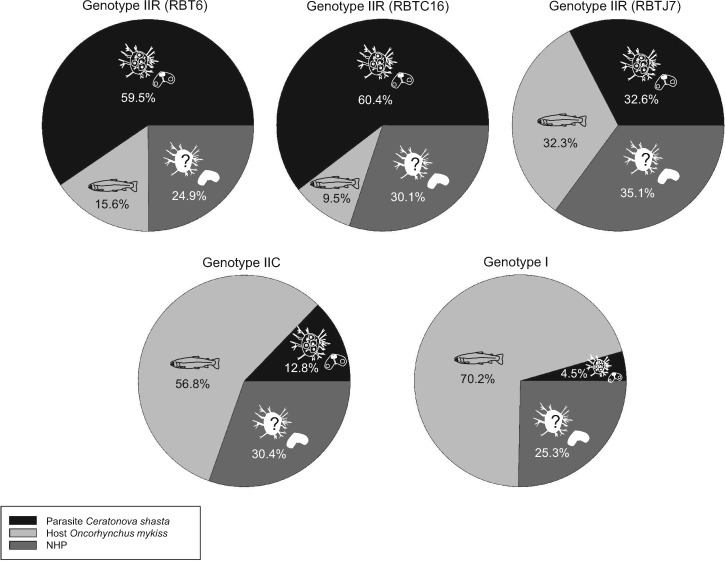
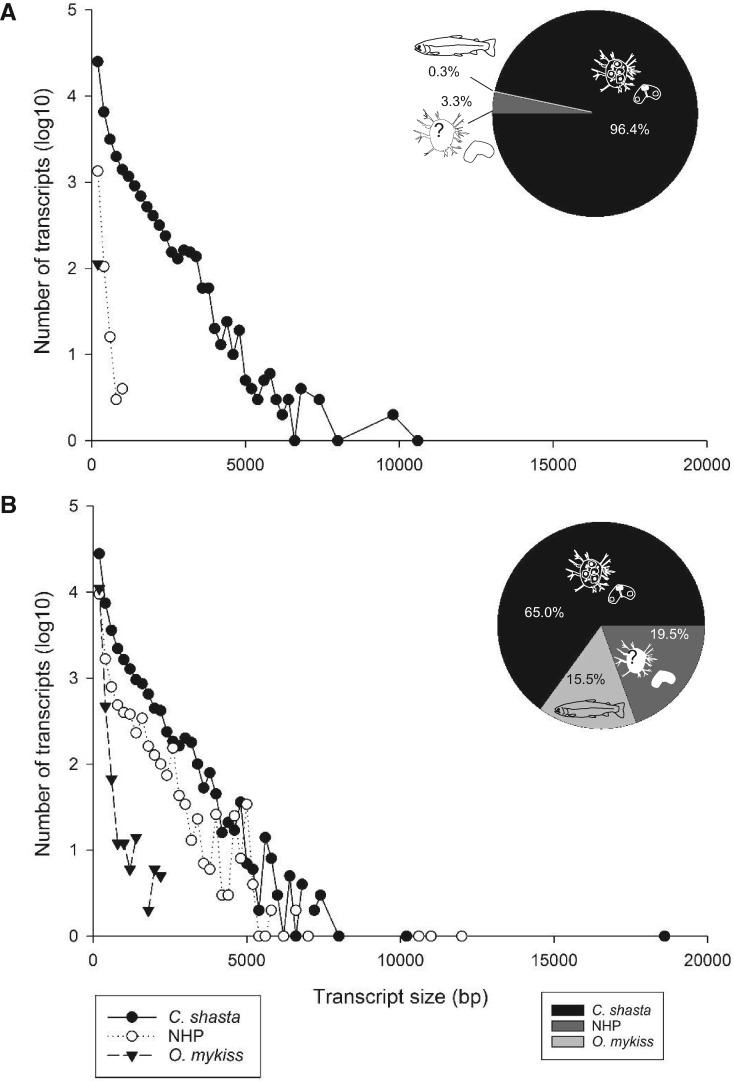
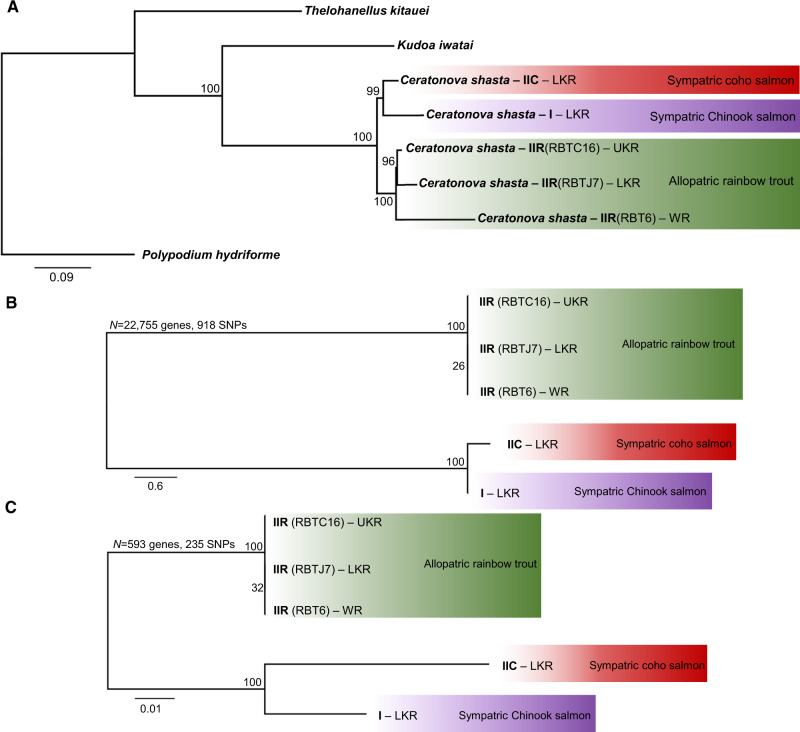
Ceratonova shasta is an important myxozoan pathogen affecting the health of salmonid fishes in the Pacific Northwest of North America. Ceratonova shasta exists as a complex of host-specific genotypes, some with low to moderate virulence, and one that causes a profound, lethal infection in susceptible hosts. High throughput sequencing methods are powerful tools for discovering the genetic basis of these host/virulence differences, but deep sequencing of myxozoans has been challenging due to extremely fast molecular evolution of this group, yielding strongly divergent sequences that are difficult to identify, and unavoidable host contamination. We designed and optimized different bioinformatic pipelines to address these challenges. We obtained a unique set of comprehensive, host-free myxozoan RNA-seq data from C. shasta genotypes of varying virulence from different salmonid hosts. Analyses of transcriptome-wide genetic distances and maximum likelihood multigene phylogenies elucidated the evolutionary relationship between lineages and demonstrated the limited resolution of the established Internal Transcribed Spacer marker for C. shasta genotype identification, as this marker fails to differentiate between biologically distinct genotype II lineages from coho salmon and rainbow trout. We further analyzed the data sets based on polymorphisms in two gene groups related to virulence: cell migration and proteolytic enzymes including their inhibitors. The developed single-nucleotide polymorphism-calling pipeline identified polymorphisms between genotypes and demonstrated that variations in both motility and protease genes were associated with different levels of virulence of C. shasta in its salmonid hosts. The prospective use of proteolytic enzymes as promising candidates for targeted interventions against myxozoans in aquaculture is discussed. We developed host-free transcriptomes of a myxozoan model organism from strains that exhibited different degrees of virulence, as a unique source of data that will foster functional gene analyses and serve as a base for the development of potential therapeutics for efficient control of these parasites.
沙斯塔白头鱼虫是一种重要的粘孢子虫病原体,影响北美洲西北太平洋地区鲑鱼的健康。沙斯塔白头鱼虫存在宿主特异性基因型的复杂群体,其中一些具有低到中等毒力,而有一种基因型在易感宿主中引起严重的、致命的感染。高通量测序方法是发现这些宿主/毒力差异遗传基础的有力工具,但由于该群体的分子进化速度非常快,产生了强烈分化的序列,难以识别,并且不可避免地受到宿主污染,因此对粘孢子虫进行深度测序具有挑战性。我们设计并优化了不同的生物信息学管道来解决这些挑战。我们从不同鲑鱼宿主的不同毒力的沙斯塔白头鱼虫基因型中获得了一套独特的、全面的、无宿主的粘孢子虫 RNA-seq 数据。对转录组范围的遗传距离和最大似然多基因系统发育的分析阐明了谱系之间的进化关系,并表明了已建立的沙斯塔白头鱼虫基因型鉴定的内部转录间隔区标记的分辨率有限,因为该标记无法区分来自银鲑和虹鳟的生物学上不同的基因型 II 谱系。我们进一步基于与毒力相关的两个基因群(细胞迁移和蛋白水解酶及其抑制剂)中的多态性分析了数据集。开发的单核苷酸多态性调用管道在基因型之间识别了多态性,并表明运动和蛋白酶基因的变异与沙斯塔白头鱼虫在其鲑鱼宿主中的不同毒力水平相关。讨论了将蛋白水解酶作为水产养殖中粘孢子虫靶向干预有前途的候选物的潜在用途。我们从表现出不同毒力程度的菌株中开发了粘孢子虫模式生物的无宿主转录组,作为独特的数据来源,将促进功能基因分析,并为开发有效的寄生虫控制治疗方法提供基础。