Department of Oral and Maxillofacial Surgery, The Affiliated Stomatology Hospital of Southwest Medical University, Luzhou, China.
State Key Laboratory of Oral Diseases, West China Hospital of Stomatology, Sichuan University, Chengdu, China.
Cell Prolif. 2020 Jun;53(6):e12834. doi: 10.1111/cpr.12834. Epub 2020 May 28.
Advanced glycation end products (AGEs) are considered a cause of diabetic osteoporosis. Although adipose-derived stem cells (ASCs) are widely used in the research of bone regeneration, the mechanisms of the osteogenic differentiation of ASCs from diabetic osteoporosis model remain unclear. This work aimed to investigate the influence and the molecular mechanisms of AGEs on the osteogenic potential of ASCs.
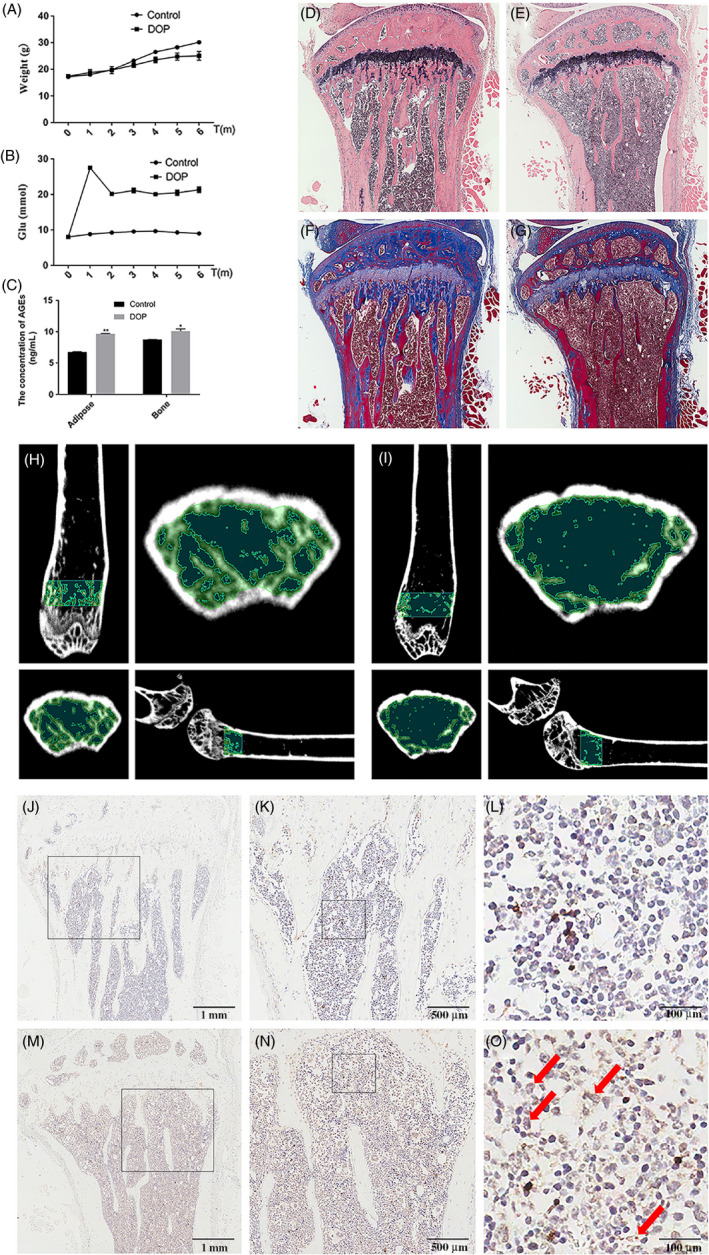
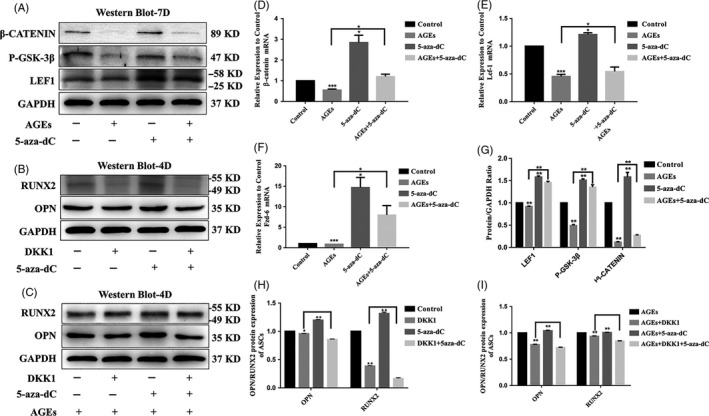
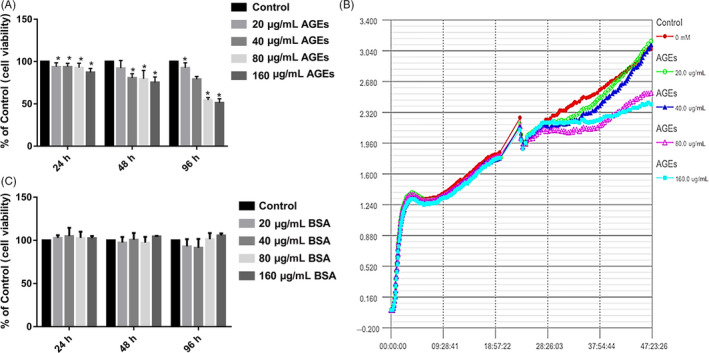
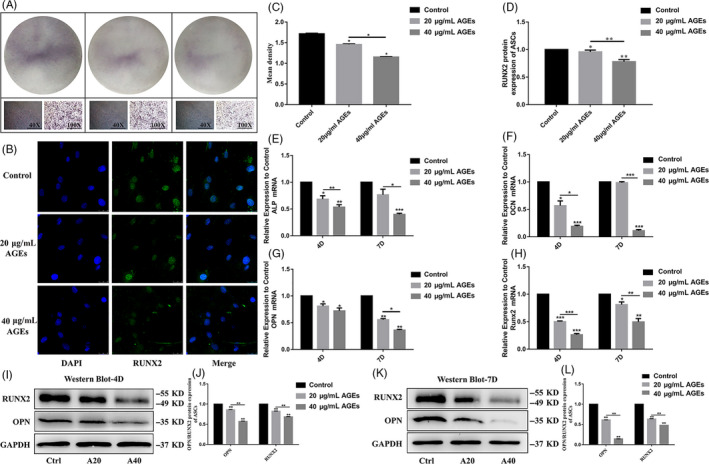
Enzyme-linked immunosorbent assay was used to measure the change of AGEs in diabetic osteoporotic and control C57BL/6 mice. ASCs were obtained from the inguinal fat of C57BL/6 mice. AGEs, 5-aza2'-deoxycytidine (5-aza-dC) and DKK-1 were used to treat ASCs. Real-time cell analysis and cell counting kit-8 were used to monitor the proliferation of ASCs within and without AGEs. Real-time PCR, Western blot and Immunofluorescence were used to analyse the genes and proteins expression of osteogenic factors, DNA methylation factors and Wnt/β-catenin signalling pathway among the different groups.
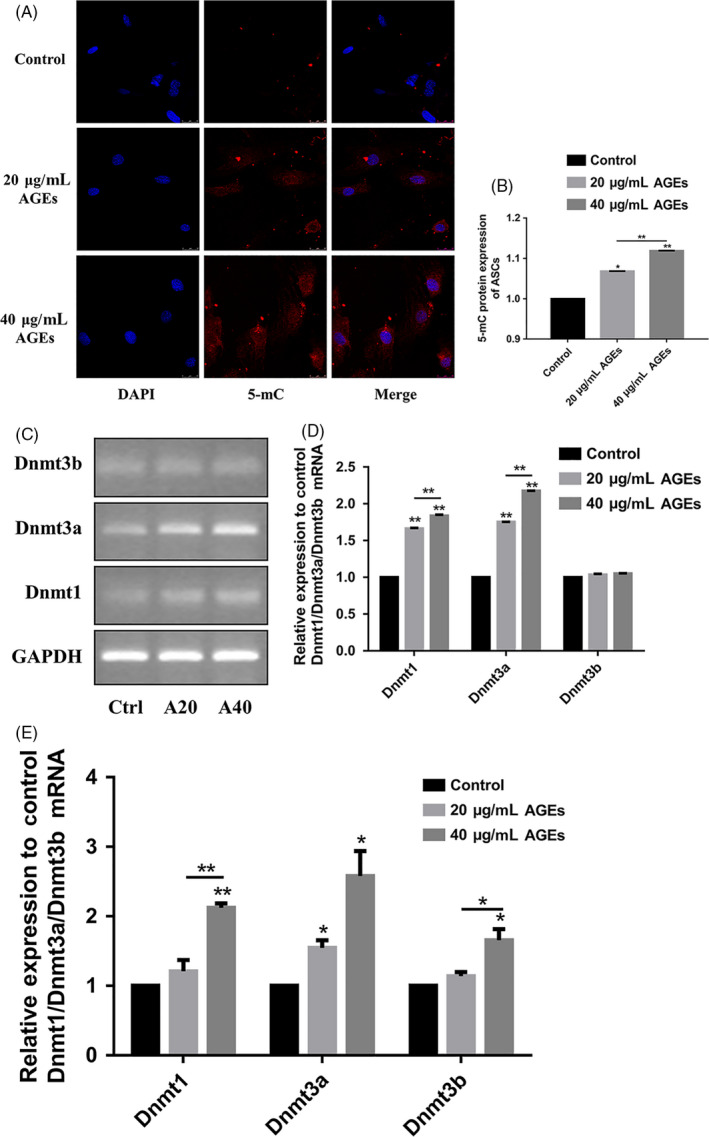
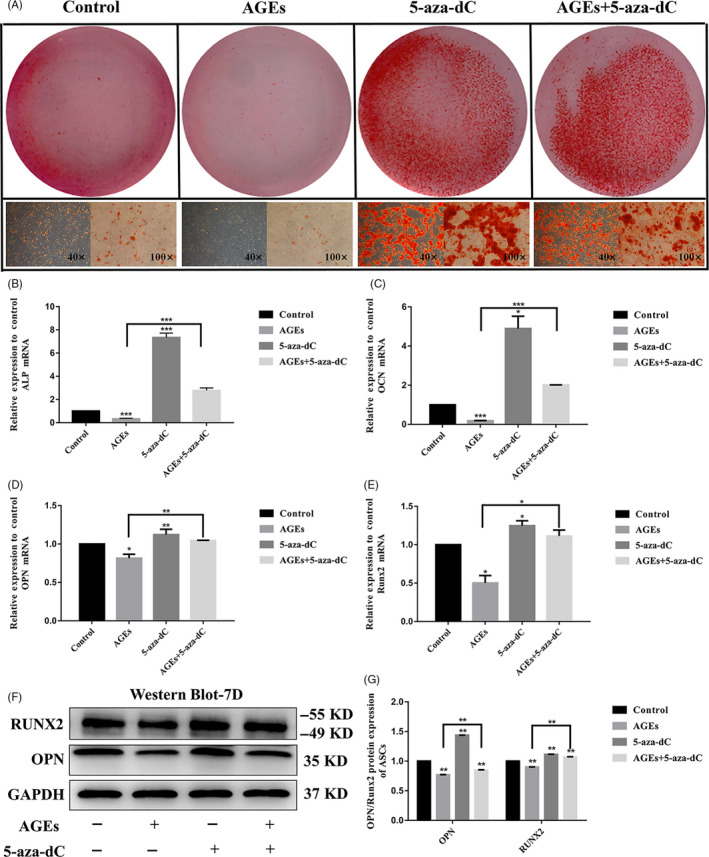
The AGEs and DNA methylation were increased in the adipose and bone tissue of the diabetic osteoporosis group. Untreated ASCs had higher cell proliferation activity than AGEs-treatment group. The expression levels of osteogenic genes, Opn and Runx2, were lower, and mineralized nodules were less in AGEs-treatment group. Meanwhile, DNA methylation was increased, and the Wnt signalling pathway markers, including β-Catenin, Lef1 and P-GSK-3β, were inhibited. After treatment with 5-aza-dC, the osteogenic differentiation capacity of ASCs in the AGEs environment was restored and the Wnt signalling pathway was activated during this process.
Advanced glycation end products inhibit the osteogenic differentiation ability of ASCs by activating DNA methylation and inhibiting Wnt/β-catenin pathway in vitro. Therefore, DNA methylation may be promising targets for the bone regeneration of ASCs with diabetic osteoporosis.
晚期糖基化终产物(AGEs)被认为是糖尿病性骨质疏松症的一个病因。脂肪来源的干细胞(ASCs)广泛应用于骨再生研究中,但糖尿病骨质疏松模型中 ASC 成骨分化的机制尚不清楚。本研究旨在探讨 AGEs 对 ASC 成骨潜能的影响及其分子机制。
酶联免疫吸附试验(ELISA)用于测量糖尿病骨质疏松症和对照 C57BL/6 小鼠的 AGEs 变化。ASCs 从 C57BL/6 小鼠腹股沟脂肪中获得。用 AGEs、5-氮杂-2′-脱氧胞苷(5-aza-dC)和 DKK-1 处理 ASCs。实时细胞分析和细胞计数试剂盒-8 用于监测有无 AGEs 存在时 ASCs 的增殖。实时 PCR、Western blot 和免疫荧光用于分析不同组中成骨因子、DNA 甲基化因子和 Wnt/β-catenin 信号通路的基因和蛋白表达。
糖尿病骨质疏松症组脂肪和骨组织中的 AGEs 和 DNA 甲基化增加。未经处理的 ASCs 的细胞增殖活性高于 AGEs 处理组。AGEs 处理组中成骨基因 Opn 和 Runx2 的表达水平较低,矿化结节较少。同时,DNA 甲基化增加,Wnt 信号通路标志物包括β-Catenin、Lef1 和 P-GSK-3β 受到抑制。用 5-aza-dC 处理后,AGEs 环境中 ASC 的成骨分化能力得到恢复,在此过程中激活了 Wnt 信号通路。
体外 AGEs 通过激活 DNA 甲基化和抑制 Wnt/β-catenin 通路抑制 ASCs 的成骨分化能力。因此,DNA 甲基化可能是糖尿病骨质疏松症 ASCs 骨再生的有希望的靶点。